All posts by Edward Staskus

Edward Staskus is a freelance writer from Sudbury, Ontario. He lives in Lakewood, Ohio. His crime thrillers "Cross Walk" and "Bomb City" can be found on Amazon.

All in the Family

By Ed Staskus

   Matt Poska twisted around in his seat, glaring at and swatting his brother’s hand off his shoulder. “Keep your hands off me” he said. “Who the hell do you think you are? You touch me again, there’s going to be trouble.” He couldn’t have been more to the point, although he didn’t necessarily want there to be a fight. He wanted his brother, however, to know exactly how he felt. Matt hadn’t trusted him for a long time and now disliked him on top of it. He knew having finally sold their mother’s house that push was coming to shove. The sooner the better, he thought.

   Ignoring Matt, his brother extended a warm salesman’s smile and a firm hand to the attorney on the other side of the big desk. “Call me Ray,” Raimondas said. He shook hands with the attorney. Ray’s new teeth glistened like Chiclets. His thinning hair was combed straight back.

   “You’ve got a nice tan for this time of year,” the attorney said. His hair was streaked with gray, his skin was grayish, and he was wearing a dark suit that might have been gray. A blizzard was blowing in from Lake Erie. The attorney’s back was to the window. Matt glanced through the window at snow whirling in the cold.

   “The wife and I just got back from two weeks in Jamaica,” Ray said. “We had a great time, great place.”

   “How’s the new car?” Ruta asked, shooting a venomous glance at her brother.

   “Couldn’t be better, drives like a charm, no problems.”

   “Just so I am clear about this, you three are related, brothers and sisters?” the attorney asked.

   “We used to be related,” Matt said.

   Their mother Irena’s problems began the day after their father’s funeral. She lost her appetite and couldn’t sleep. She had been married for sixty four years. She met her husband-to-be in Germany in a refugee camp after World War Two. They met again after both of them emigrated to the same small mining town in Canada. There had been no future for them in Europe. There were good-paying jobs in the Sudbury Basin. They got married in 1949 and were able to get into the United States in the late 1950s. It was where they raised their three children. They had been hard-working and by and large happy.

   Irena fell down in the kitchen in the middle of the night two years after her husband died. She had been thirsty and looking for something cold in the fridge. She fractured her right leg and lay on the ceramic tile floor until Ruta found her in the morning. She spent ten days at the Cleveland Clinic in Avon, two weeks recuperating at the Welsh Home in Rocky River, and a month of physical therapy at home.

   A year later she was back on her feet. She and Ruta visited relations in Toronto. She drove some of the way there and back on the New York Thruway. But the next year she had a mini-stroke and never drove again. Ray’s son Tyler convinced her to give up her Ford Taurus, telling her it was unsafe for her to be on the road. “You shouldn’t be driving,” Ray piped in. She signed it over to Tyler, but was sorry to see it gone. The car had represented independence, whether she drove it or not.  After it was gone she rarely left the house.

   Tyler immediately sold the Ford Taurus, even though it was more new than not. He bought a Toyota 4Runner. “This is more like it, not like that granny mobile,” he told his girlfriend. She didn’t like it when he told her to keep her dog out of the SUV, especially when he called her dog a mutt.

   When Irena caught Covid-19 she spent three weeks at the Cleveland Clinic in Avon. She was never the same after she got home. She had been in good health all her life, having grown up on a farm in Lithuania, but she was in her 90s. She craved salt, even though she had high blood pressure. Ray indulged her craving for it.

   “Stop bringing her those salted nuts,” Matt told his brother every time he saw a bowl of them in the house. “Are you trying to kill her?” He was exasperated. He threw the nuts away, but they always came back, along with bags of Malley’s chocolates and bottles of Gatorade.

   When she died the cause of death was listed as natural causes. Her last week was spent talking with ghosts during her wakeful hours and lost in dreams the rest of the time. Broken mirrors littered her memories. The real world no longer meant anything to her. Her greatest desire was to join her husband. Her last day was spent shutting down. She was tired and died of old age.

   Matt, Ray, and Ruta were in Saul Ammon’s legal office in the Marlowe Building on Detroit Ave. in downtown Lakewood, Ohio. Matt and Ruta both lived in Lakewood. Their mother had lived further west in well-heeled Rocky River. Their brother Ray lived in a new development in Sheffield Lake, even further west. They had sold their mother’s house, but Ray hadn’t lived up to their mother’s will. He had given Matt and Ruta half of what the will spelled out. He told them he was the trustee and had power of attorney and was doing what he thought best.

   “You mean best for you, like stealing all of mom’s savings and CD’s,” Ruta said. She was seething.

   Ray shrugged it off like it was something everybody did. He was never going to give his siblings access to their mother’s financial records. He wasn’t going to give them any of the nearly two hundred thousand dollars he had realized on the sly in the past two years. He wanted it to be understood he had his reasons, but he wasn’t going to talk about them. They didn’t need to know anything, although he wanted everybody to know he was honest as the day was long. 

   “Mom said she wanted to pay me for everything I was doing for her.”

   “You’re saying she paid you so much in two years that on the day she passed away she had less than nine thousand dollars left in the bank,” Ruta said. “She wasn’t a fool and I’m not a fool, either. Where are all her savings? If she hadn’t died she would have found out she was a pauper. How was she going to pay her bills?”

   “I have to take care of Tyler.”

   Ray’s son Tyler was a part-time drug dealer and a full-time party boy. He wasn’t able to stay out of jail or hold down a steady job. He had been fired from one job after another for thievery and lack of effort. Ray had been paying Tyler’s rent and bills for almost a year.

   “I took care of mom 24/7,” Ray said.

   “You are a liar,” Ruta said. “I was at her house every day. When she broke her leg I lived with her for a month. When she got a stroke I lived with her for another month. When she got the Covid I lived with her again. All I ever saw you do was run in, make her the same ham and cheese sandwich day after day, make sure she had taken her medications, and run out. You never stayed more than ten or fifteen minutes.”

   “How about all the times I took her to see doctors?”

   “I took her most of the time.”

   “I did everything for mom but nobody appreciates it. Matt didn’t do anything.”

   “Let’s stop arguing and get down to business,” Matt said. “I’m not going to go after you for what you did with mom’s Third Federal accounts. Our lawyer has told us it would be costly and time consuming. I don’t want it preying on my mind for however many years it might take.”

   Ruta didn’t say anything. Matt had asked her to sit tight until they wrapped up getting their share of the proceeds from the sale of their mother’s house. She had agreed, although she hadn’t told him she had talked to the Lakewood Law Department about elder abuse. She was going to someday make Ray pay for what he had done.

   Ray had been a problem for a long time. In the 1980s he fell deep in debt to a bookie who worked out of a back room at the Mentor Diner. Day after day none of his horses paid off. His bookie kept a strict ledger and got impatient. When Ray got married to a rich girl from Columbus their wedding reception was a gala. At the end of the day they had collected nearly forty two thousand dollars. Ray paid his bookie the thirty nine thousand dollars he owed him but neglected to tell his wife about it. When she started shopping for a house, planning the down payment, he had to spill the beans. They had been married fifty eight days on that day. She left him on the fifty ninth day and went home to Columbus. He never saw her again. The divorce was certified by mail.

   He dated several women after that, each one of them breaking it off with him after a year-or-so. He finally married Anita, a Jayne Mansfield with a family, who were two children by two passing boyfriends. They had a third child, who was Tyler. Anita was a beautician and a part-time actress. She was also an alcoholic. Three years after they divorced she drank herself to death. Ray married a woman named Karen soon afterwards. They both believed greed was good and lived the good life together.

   Ray put his greed to work when it dawned on him his mother had dementia and was dying. Her trustee was a second cousin who had long worked for Jones Day, one of the biggest law firms in the United States. Ray’s wife had a nephew who was an ambulance chaser in Pittsburgh. He drew up new trustee paperwork. Irena signed the documents without knowing what she was signing. The ambulance chaser also drew up new power of attorney paperwork. Irena signed those documents, too. Ray became the trustee and got power of attorney into his hands.

   He took the new power of attorney paperwork to a hair salon. Ray knew the manager from his marriage to Anita. He asked her to witness the document. She did, and so did a customer they asked, in return for a bottle of shampoo. Ray was pleased with his work that day, although he didn’t know his sister Ruta got her hair done at that same salon. One day, in passing, the manager told her about Ray and the documents. Ruta wrangled affidavits from her and the customer.

   “We have got two separate affidavits that swear you got their signatures on the power of attorney documents fraudulently,” Matt said. “They say mom was never present for them to witness her signature.”

   The lawyer pushed the two affidavits across his desk. Ray didn’t look at them. He looked at Matt.

   “What do you want?” he asked. 

   “You used your power of attorney to empty mom’s accounts at Third Federal but I don’t want to drive myself crazy over that,” Matt said. “What I want is, I want you to pay us the full amount that Ruta and I are due from the sale of the house, like it says in mom’s will.”

   “And if I don’t?”

   “If you don’t I will leave this office, go to City Hall, and file a criminal complaint with the Clerk of Court.” 

   “Can we make a deal?” Ray asked.

   “I’m not selling any alibis,” Matt said.

   “Remember me? I’m your brother.”    

   “I’ve got better things to do than remember you. Save your breath to cool your soup.”

   “Give me a break.”

   “No,” Matt said. “The banks are open right now. We’ll wait one hour. Bring certified checks. If you’re not back in an hour, I’ll go straight to City Hall.”

   “You know I didn’t do anything wrong,” Ray said, beside himself. “This is just a rip-off. I need that money. Tyler needs it, too. Karen might divorce me if she finds out about this, do you know that? Is that what you want? You want to see me homeless? The two of you, you’re both evil.”

   “Is that so?” Matt said. He knew Ray’s talk was horseradish.

   Ray shot Matt a dirty look. He was the kind of mother’s son who got mad when anybody didn’t believe whatever he was saying. Ray believed everything he conjured up, no matter what. He couldn’t distinguish between truth and lies anymore and so he couldn’t distinguish between right and wrong anymore. To be on the safe side, whenever he caught himself telling the truth, he reflexively told an untruth to keep his hand in. 

   It was a few minutes short of an hour when Ray returned and tossed two certified checks down on the lawyer’s desk. Matt slid one over to his sister.

   “You know we’re never going to see each other again after this,” Ray said, vexed and angry. Everybody’s got plans until you get hit in the face, he thought to himself bitterly.

   “That doesn’t make any difference anymore,” Matt said. “Go away and stay away.”

   “I can’t believe he would do that to mom,” Ruta said when Ray was gone. “Everything about this is too bad, really bad, but I don’t think he’s ever going to change. He’ll just find somebody else to fleece and blame whoever is handy.”

   “You’re probably right,” Matt said. “At least the joker has left the building,”

Ed Staskus posts monthly on 147 Stanley Street http://www.147stanleystreet.com, Made in Cleveland http://www.clevelandohiodaybook.com, Down East http://www.redroadpei.com, and Lithuanian Journal http://www.lithuanianjournal.com

“Cross Walk” by Ed Staskus

“A Cold War thriller that captures the vibe of mid-century NYC.” Sam Winchell, Beyond Fiction

Available on Amazon: https://www.amazon.com/dp/B0CRPSFPKP

Late summer and early autumn, New York City, 1956. Stickball in the streets and the Mob on the make. President Eisenhower on his way to Ebbets Field for the opening game of the World Series. A killer waits in the wings. A Hell’s Kitchen private eye scares up the shadows.

A Crying of Lot 49 Publication

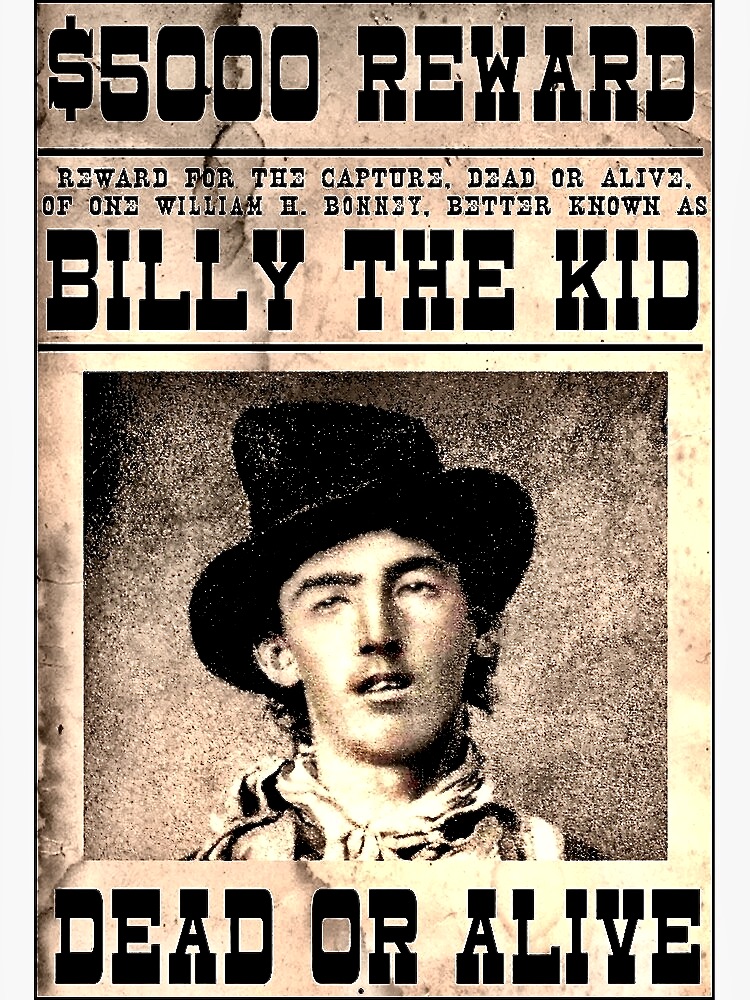
I Shot the Outlaw Billy the Kid

By Ed Staskus

   My name wasn’t always Johnny Cahill, just like Billy’s name wasn’t always Billy the Kid. Before I shot Billy my name was Johann Kallweit. I was from Konigsberg, a port city on the Baltic Sea in Prussian Lithuania. My older brother Pranciskus had left Konigsberg seven years earlier and gone to America. He worked in New York City for some months, after which he took the new transcontinental Pacific Railroad to Omaha, from where he happened upon a wagon train and ended up in the Arizona Territory. He took up blacksmithing. He shod horses for soldiers and rustlers. He lived outside Bonita, one hundred-some miles northeast of Tucson, sharing his adobe house with a Mexican girl, near the Army post at Camp Grant. 

   The Mexican girl tended the beans and corn, the cooking and housework, and gathered buffalo chips for fuel. She washed his clothes at a creek bank, setting up rocks and building a fire, putting a zinc pail filled with water over the fire. She soaked the clothes in another tub and laid them down on a flat rock, soaping them and then pounding them. After rinsing them in the creek she cooked them in the zinc tub. After rinsing them again she hung them on sage bushes to dry.

   My brother was known as Francis “Windy” Cahill in Arizona. After it was all over his undertaker told me he was called Windy because he talked more than most men. “He talked too damn much,” the undertaker said. “I always told him the more you say the more likely you are to say something foolish. I told him to talk low but he wouldn’t listen. He was always calling Billy a pimp. That’s what got him killed.”

   Billy the Kid was born Henry McCarty. He was begotten in New York City in 1859, the same year as me in Konigsberg. He was the same age as me, almost twenty two years old, when he died on July 14,1881, in Fort Sumner, New Mexico, on a cloudless night. Everybody thought the lawman Pat Garrett killed him. Everybody was wrong.

   Henry McCarty was born on the east coast but when his father died the family moved to Indianapolis, where his mother met a new man. They uprooted to New Mexico to help with her cough. She died of tuberculosis a year later. In the end the southwestern air didn’t do her any good. The new man abandoned her two boys, leaving them orphans. Henry was 14 years old. He found work at a boarding house. When he was caught stealing food the man of the house beat him. When he robbed a Chinese laundry he was beaten and arrested. After he escaped by shimmying up a chimney, he stole clothes and handguns from his stepfather. They never saw each other again.

   “People thought me bad before, but if ever I am truly free, I’ll let them know what bad means,” the boy becoming Billy the Kid said.

   After I landed in New York City I stayed for two weeks, learning more of my English. My bunkmate on the steamship voyage across the Atlantic Ocean had been an Englishman. He got me started. I spent my time in the city getting my bearings and seeing the sights. The sprawl was everywhere, dirty and crowded. There were more people than ever I imagined existed. There were tenements shoulder to shoulder. The rich lived in townhouses and mansions. I stayed on the Bowery where there were flophouses. It was where I met Nigger Dan. He was the first black man I ever saw. He let me touch his oily coiled hair.

   We were in a Canal Street oyster bar eating shellfish and drinking lukewarm beer when he asked me what my plans were. I told him about my brother, about how I hadn’t heard from him but once in seven years. When I said I was going out west to try and find him, he said, “There ain’t nuthin’ here for me. Mind if I tag along?” He had no parents or relations. I told him I would be happy to have a companion.

   We  took the same Pacific Railroad to Omaha and the same trail to Arizona that my brother had taken. When we got to Bonita, I found out while stopping in a saloon that he was dead. Billy the Kid, who by that time was going by the name of William Bonney, had killed him more than three years before.

   “Your brother was always at Billy, elbowing him, calling him a worm and such,” the bartender told me. “Your brother was a big man with big hands. Billy wasn’t, more on the small side, looked even younger than he was. When Billy called your brother a son a of a bitch, Francis threw him down to the floor, pumping his fists into his face. Billy grabbed for his revolver, they struggled for it, and when Billy got a firm grip on it he shot your brother twice. He died the next day.”

   A barfly listening in piped up, “He had no choice. He had to use his equalizer.” 

   Billy the Kid was arrested for the shooting by the Justice of the Peace. He was detained and held in the Camp Grant guardhouse but escaped before a U. S. Marshall could get there to take him to Tucson.

   “Where did he go?” I asked.

   “New Mexico Territory,” the bartender said. “He got in with the Regulators and did some cold-blooded work in the Lincoln County War. He shot and killed Bill Brady the County Sheriff and one of his deputies. Billy’s not exactly wanted for killing your brother, but he got wanted dead or alive for killing that sheriff, at least until Pat Garrett ran him to earth down near Stinking Springs. He shot and killed Charlie Bowdre but took the Kid alive. He was tried and sentenced to hang back in May, but he busted loose, killing two more sheriff’s deputies on his way out the door. Pat Garrett is birddogging him right now.”

   “I like to dance, but not up in the air,” Billy the Kid said, laughing and kicking his legs.

   When the Lincoln County War was over, Lew Wallace, the governor of the New Mexico Territory, pardoned all the Regulators, except for Billy the Kid.  One day he got a letter. It was from Billy. It said, “I have no wish to fight any more. Indeed I have not raised an arm since your proclamation. As to my character, I refer to any of the citizens, for the majority of them are my friends and have been helping me all they could. I am called Kid Antrim but Antrim is my stepfather’s name. Waiting for an answer I remain your obedient servant.”

   “Who’s this Pat Garrett?” I asked.

   “The new sheriff there in Lincoln County. He took over from Brady. He’s from the south, I heard down Alabama way. He was a buffalo hunter in Texas for a while, then a cowboy driving cattle in New Mexico. He’s friends with Pete Maxwell up there, who’s got a big spread, just like Billy is friends with Pete, too. Hell, Billy was at Pat’s wedding two years ago.”

   Pat Garrett and Juanita Martinez got married in the fall of 1879. After the ceremony, while they were dancing at the reception celebrating their wedding, she collapsed, dying the next day. She was 19 years old. Billy the Kid helped bury her. Three months later Pat Garrett married Apolinaria Gutierrez. She survived the ceremony and reception and was already nursing a newborn.

   “Where can I find Billy the Kid,” I asked.

   “It’s a ways to go,” the bartender said, “about 20 days of steady riding. It’s no secret what his whereabouts are, except nobody knows exactly where. How to go is go east to Las Cruces, where you can rest and feed your horses, and then north to Fort Sumner. The spring run-off was good this year, so you’ll find plenty of water. Be careful about Billy, he rides with four or five other outlaws, and he’s got a hair trigger temper.”

   Nigger Dan and I rode out to my brother’s adobe house to see where he had lived. There was nobody there. The Mexican girl was long gone. The beans and corn in her garden had gone bad, the leaf tissues shriveled and choked with weeds. My brother’s old dirty clothes were piled up in a corner. I was inside the house when a band of Indians rode up. They were Apache’s. One of them rode his horse into the house but when he found out he couldn’t sit up straight, bumping his head on the ceiling, he got off the horse and led it outside. I followed him.  

   All the Indians had Springfield rifles and well-filled cartridge belts. Two of them had pistols in holsters. The Indian who had gotten off his horse stepped up to me, put his hand under my chin, and pushed my head back. He reached for his Bowie knife. There was a clicking sound behind him. It was Nigger Dan at the far front corner of the house thumbing the hammers back on the Parker Brothers double-barreled shotgun in his hands.

   The Indian in front of me put his knife away. He tapped his hands lightly on the top of his head before getting back on his horse. They rode away. We watched them until there was nothing to see. They were renegades. Most of the Apache’s had been forcibly moved onto the barren San Carlos reservation. We got on our horses and rode the other way.

   Three weeks later we were in Fort Sumner. It was something like a town with mud-brick houses spread out helter-skelter. There was  a dry goods store, a saloon, a livery stable and a smith, and a jailhouse, but no fort. It had been an Army post once, protecting settlers in the Pecos River valley and rounding up natives for resettlement. After Kit Carson corralled all the Indians he could find and pushed them onto the Bosque Redondo, the military base was abandoned. The cattle baron Pete Maxwell bought the post and rebuilt the officer’s quarters into a 20-room house.

   “I tell you, stay your eye on the big house, amigo,” a vaquero told us, looking down at us from his flat-horned saddle. He was riding a black stock horse and wearing a low-crowned hat, a bolero jacket, and buckskin shoes with spurs. “That Billy, he visit there many times.”

   We rode up to and around the big house. A squat man came around a spool of new barbed wire and asked us what we wanted. He  walked with a limp. He was chewing and spitting tobacco. “Get the hell away from here,” he said when I asked about Billy the Kid. “Don’t come back.”

   We went back that night. The word at the close to hand saloon was that Pat Garrett and two deputies were nearby. It could only mean Billy the Kid was nearby. I had gotten an old Whitworth sniper rifle in Omaha. It was the kind of rifle used by Confederate sharpshooters during the American Civil War. The graybeard selling it told me it was the very rifle that claimed the life of Major General John Sedgwick at Spotsylvania Courthouse on May 9, 1864. He was one of the highest-ranking Union officers killed during the war.

   Just before he was shot through the heart, sitting on his horse surveying the battle, after being warned that he was a target, Major General John Sedgwick’s last words were, “They couldn’t hit an elephant at this distance.”

   The Whitworth was a British single-shot muzzleloader. Queen Victoria had fired the first shot from the first of the guns manufactured in1860. She hit the bulls eye at 400 yards. I poured powder into the muzzle of the rifle and pushed a ball down on top of the powder. I tapped it snug with a ramrod. I wouldn’t be able to get off a second shot so I didn’t fill my pocket with more balls and powder.

   We waited for sundown before approaching Pete Maxwell’s big house. A dog barked and I tossed him a slice of prairie-chicken. “Billy be in a room around the back if he be anywhere,” Nigger Dan said. There was a grove of Ponderosa Pines around the back. I climbed halfway up one of the trees. From there I had a good view of all the bedroom windows. Nigger Dan handed the Whitworth up to me.

   It was after midnight when I saw three men creeping through the Ponderosa Pines. One of them went to the back door and stepped into murk beside it. The other two men went around to the front of the house. Some minutes later somebody carrying a candle went into one of the bedrooms and woke up the sleeper. The man carrying the candle was Pat Garrett. The sleeping man was Pete Maxwell. I could see them talking. A slender man wearing a vest and a battered top hat walked up to the back door and went inside.

   It was soon enough that the man in the top hat appeared in the doorway of Pete Maxwell’s bedroom. “Pete, who’s in there?” the man asked in Spanish. It was Billy the Kid. He was carrying a handgun and a slice of beef skewered on a knife.

   “Who is it?” Pat Garrett whispered to Pete Maxwell.

   “That’s him,” Pete Maxwell said.

   When Billy the Kid realized that somebody other than Pete Maxwell was in the shadows, he raised his handgun, aiming at Pat Garrett’s chest. 

   “Who’s that?” he demanded again as the lawman drew his revolver.

   Even though I was an indifferent Lutheran, I quickly made the sign of the cross before squeezing the trigger. As I did I confessed to the shooting, so that I would become a witness to it rather than the man who carried out the deed.

   Pat Garrett fired a split second after I fired my Whitworth. My lead ball hit Billy the Kid in the chest. Pat Garrett’s bullet hit him in the same spot an instant later. The outlaw went down like a gut-shot grouse.

   “He didn’t say anything,” Pat Garrett said. “A struggle or two, a little strangling sound as he gasped for breath, and the Kid was with his many victims. It was the first time, during all his life of peril, that he ever lost his presence of mind, or failed to shoot first.”

   The lawman hadn’t listened closely enough. What Billy the Kid truly said while choking on a mouthful of blood was, “I never was no leader of a gang, I was for Billy all the time.” He died after speaking his peace.

   We helped bury him the next day in Fort Sumner’s old military cemetery, between his wrongdoing partners Tom O’Folliard and Charlie Bowdre. One tombstone was erected over the three graves with the epitaph “Pals” carved into it. I whispered “Geh zum teufel” while tossing a handful of dirt into the open pit.

   It sometimes happens that even in Hell the damned aren’t always happy, just like the saved aren’t always happy in Heaven. I was sure Billy the Kid was damned. I wasn’t sure he was happy with his fate when it came to eternity, but I didn’t care overmuch about it. I had done what I had to do and revenged my brother by killing the man who took his life. 

   Nigger Dan and I set our sights on California. We heard it was a paradise with fertile land and ready access to water. The land was still cheap enough, even though many new settlers were pouring in. I took a stab at a map, spearing the County of Orange with my finger.

   “We could try a citrus farm there,” I said.

   “That sounds fine, mighty fine,”” Nigger Dan said as we rode our horses under a milky blue sky on a fine day down to the coastal plain of the Los Angeles Basin. He sang a song while we rode. It was from the American enslavement days. “Go down in the lonesome valley, my Lord, go down in the lonesome valley and meet my Jesus there. My brother, want to get religion? Go down in the lonesome valley.”

Ed Staskus posts monthly on 147 Stanley Street at http://www.147stanleystreet.com, Made in Cleveland http://www.clevelandohiodaybook.com, Down East http://www.redroadpei.com, and Lithuanian Journal http://www.lithuanianjournal.com. To get the site’s monthly feature in your in-box click on “Follow.”

“Cross Walk” by Ed Staskus

“A Cold War thriller that captures the vibe of mid-century NYC.” Sam Winchell, Beyond Fiction

Available on Amazon: https://www.amazon.com/dp/B0CRPSFPKP

Late summer and early autumn, New York City, 1956. Stickball in the streets and the Mob on the make. President Eisenhower on his way to Ebbets Field for the opening game of the World Series. A killer waits in the wings. A Hell’s Kitchen private eye scares up the shadows.

A Crying of Lot 49 Publication

Thunder Road

   By Ed Staskus

   The best thing about living in North Collinwood the summer before I shuffled off to my freshman year at St. Joseph’s High School was the Race Place that had opened at the beginning of the year on East 185th St. It was a five-minute walk away. It was in what had once been a corner candy store. On one plate glass window was plastered “Speed Action Fun Excitement!” The other window said, “Come in! This is where it’s all happening!” Inside the front door was a counter, some stools along the near side wall, pinball machines on the other wall, and an eight-lane racecourse. The track was laid out on top of sheets of plywood that were set on saw horses.

  I wasn’t allowed a boy cave at home. The home of slot car racing was the next best thing. I made Race Place my home away from home.

   The track was bare bones, There were no pretend bushes or trees. There were no miniature buildings or midgets in the bleachers. There were no trains tooting their friendly way to the next station. Racing slot cars was girding your loins and going fast as hell, leaving the other guy eating your dust. It was thrills and spills sans any real blood. No bones got broken, although feelings got bruised black and blue every day.

   A man wearing a pork pie hat, and smoking a cigar more often than not, sat on a stool behind the counter. His name was Ralph. Sometimes he wore a t-shirt that said, “I Like Beer and Maybe Three People.” He never said hello or goodbye. Nobody knew where he lived or how old he was. Nobody knew what he looked like, exactly, behind the cloud of stogie smoke obscuring his face. He took our spare change in return for time on the track, which was by the quarter hour, rented shabby slot cars to the poverty-stricken, and sold 10-ounce bottles of Coke from a cooler behind him.

   There was a poster on the wall next to the cooler. It said, “Drink Coca-Cola.” The picture was of a cutie pie smiling from ear to ear and dressed like a princess in a low-cut white dress, wearing forearm gloves, and a jewel-encrusted crown. There was a bottle of Coca-Cola in her hand. “Refresh…Add Zest” was written at the bottom of the poster.

   Slot cars are miniature electric powered race cars guided by a slot in the track on which they run. The cars are 1:32 scale. A blade extends from the bottom of the car into the slot. We used hand-held squeeze controllers to speed up and slow down the low-voltage motors inside the cars. The front wheels ran with the post in its guide-slot, but the rear wheels were free to drift and slide. When they started to slide was when you wanted to put metal to the petal. When you got it right was when the car ended up pointing straight down the straightaway coming out of a curve. The challenge was taking curves as fast as possible without losing your grip of the slot and spinning out. When that happened you de-slotted, flying off the track, everybody ducking out of the way, and laughing their heads off. 

   I went to the slot car track with my friends, who were Ignas, Gediminas, Justinas, and the two Tommy’s. Everybody called Ignas Iggy. We called Gediminas Eddie while Justinas was just himself. He tried on several nicknames, but we told him nicknaming yourself was not cool. Tommy One Shoe and Tommy Two Shoes were twins. For some reason nobody ever found out, their mother named both of them Tommy. She was a no-explaining woman. They were Irish, not Lithuanian like the rest of us. The twins were hard to tell apart at the best of times, until the morning one of them forgot his one of his shoes. By the time he boarded the CTS bus to school it was too late. He shuffled around all that day wearing one shoe and wearing a hole in his shoeless sock. The nuns didn’t bother hitting him with their rulers. They shook their heads, instead. “Poor little retard kid,” one of them whispered to another. He was so embarrassed a red dot like a freckle popped up on the tip of his nose. The next day it was still there. It never went away. After that there was no trouble telling the twins apart.

   Our slot cars were fast as lightning, close to 15 MPH flat out. The scale miles were more like 500 MPH. The cars were always shooting off the track. Everybody had nitro on the brain and wanted to go faster and faster. “If you’re in control you’re not going fast enough,” is what Tommy Two Shoes said. “Straight roads are for fast cars,” Tommy One Shoe said in return. “Turns are for fast drivers, like me.” Whenever Two Shoes took on One Shoe head-to-head, One Shoe always won. 

   “What’s behind you doesn’t matter,” he told his brother every time he won. He was the fastest thing on four tiny wheels. He started wearing a phony racing car helmet. He took a lot of teasing about it, but didn’t care.

   “Run your car, not your mouth,” Tommy Two Shoes retorted. He rubbed castor oil on the warmed-up engine of his Lotus-Ford  to make it smell more authentic. He added racing emblems from a decal sheet. There was an itsy-bitsy driver in the open cockpit. Itsy-bitsy was modeled after Graham Hill. Tommy painted a devil-may-care whisker-thin moustache on it. He was turning himself into the Smokey Yunick of the slots, improvising and modifying. No matter what he did, though, he couldn’t beat his brother’s yellow Mustang with ‘The Boss’ emblazoned on the sides of it. The pony car was nearly unbeatable with Tommy One Shoe in the driver’s seat.

   He was training for the national Ford-Aurora Model Motoring competition. First prize was a full-size Thunderbird Sports Roadster. “If I win I might let my dad drive it sometimes,” he said. “I know I can do it. I’m going to be numb to the competition.” He was 12 years old. If he won he was going to be the only grade schooler in the world with his own real-life muscle car.

   The first toy racing cars made by the Lionel Train Company rolled off the assembly line in 1912. They were powered by raised electric rails. Then World War One happened. The assembly line stopped dead. In 1938 Bachman Brothers made the “Motorcycle Cop & Car Speedway.” it was a single track with vehicles made from tin. Two keys were included, and the cars were powered by winding them up with the keys.

   After World War Two British hobbyists began to toy with them again, except this time they fitted them with handmade stop-gap motors. The motors were the size of a dime. A fragment of iron was the magnet. In 1954 Great Britain’s Southport Model Engineering Society built an electric slotted course nearly 60 feet long. “Slot car” was coined to set the new racers apart from the earlier “rail cars.”  

   The summer that I burned up the neighborhood race track and destroyed two slot cars by virtue of aggressive cornering and excessive speed, there were close to 4,000 tracks in the country. Revell, Scalextrix, and Aurora were selling hundreds of millions of dollars’ worth of cars and equipment annually. Boys’ Life magazine had slot cars written about and advertised in every edition.

   Ed Shorer, the only Jewish kid in our neighborhood, with a head of curls and quick hands on the controller, couldn’t get enough of his new hobby. “I was ditching Hebrew school one day when I was 12 years old and I wandered into a hobby shop,” he said. By the time he left he was hooked. “As a result, I never got my bar mitzvah.”

   Scalextric came out with models fashioned after the Maserati 250F and the Ferrari 375. Their Grand Prix-themed cars were unbeatable, at least until they went up against Aurora’s “Model Motoring” line-up. By 1963 the Aurora “Thunderjet-500” was the slot car to beat. When push came to shove, however, success on the track came down to who had the hot hand on the controller.

   Whenever the competition got over-heated among us we heard Ralph at the counter somewhere behind his cloud of stogie smoke break in, “All right, boys, the No. 1 rule is have fun.” He didn’t care who had the hot hand.

   “I have more fun when I win,” Tommy One Shoe declared, not paying attention to the ruckus, and never taking his eyes off the track.

   I had a Cleveland Press paper route that paid the piper. I was blowing through my savings, but I couldn’t help myself. I delivered my papers in the afternoon as fast as I could, never breaking stride, hurling runner-banded newspapers out of my shoulder-slung bag onto porches. I never looked back to see if any of them rolled into the bushes. As soon as I was done I hustled to the slot car track, where I raced until dinnertime, when I hurried back home. My parents were by-the-rules Eastern Europeans and my sister, brother, and I were expected to be in our seats for cold beetroot soup and cepelinai, otherwise known as potato dumplings with a meat center, exactly on time. We ate our zeppelins larded with sour cream and pork cracklings.

   By the middle of summer, I was delivering my newspapers faster than ever. Lines had been forming at the slot car raceway. Everybody and their brother wanted in on the action. Polk’s Model Craft Hobbies, the biggest hobby store in New York City, estimated it was becoming as popular as model railroading. There was a new 475-foot track in nearby Long Island. Elvis Presley raced there, not that it mattered. We were listening to Jan and Dean.

   “We both popped the clutch when the light turned green, you should have heard the whine from my screamin’ machine, Dead Man’s Curve, I could hear ‘em say, won’t come back from Dead Man’s Curve,” Jan and Dean warned.

   Labor Day weekend that summer was the weekend of our slot car blow-out. Most of us were going to start high school the following Tuesday. We didn’t know if or when we would be racing again. The Cleveland National Air Show came back to town that weekend, after a fifteen-year hiatus, but no matter how many Blue Angels did however many aerobatic tricks we were going to be doing our own kind of high-flying. We got started on Saturday morning and wrapped it up on Sunday afternoon. Inside the Race Place we didn’t hear a single sonic boom all weekend.

   We made up our own racing program, which was a round-robin tournament. There were eight of us. Ralph smoothed the way by letting us have two slot lanes for the weekend. By the end of Saturday Tommy One Shoe and I were on top of the leader board. By Sunday afternoon everybody else was out and there was one last do-or-die race left. Tommy One Shoe lowered his pony car into the inside slot. I lowered my Scalextric Shelby Cobra into the slot next to the Ford Mustang. The race was set for ten laps.

   “One, two, three, go!” Iggy called out from a stool behind us. He was acting as referee, even though he didn’t know refereeing from a hole in the wall. He had brought a small, checkered flag with him that he waved around like a madman.

   I was a year older than Tommy One Shoe and no greenhorn on the track, but I never stood a chance. I didn’t know he practiced day and night on his own homemade track. I didn’t know he rehearsed going into turns and coming out of them. I didn’t know he used fine grit sandpaper to rough up his wheels to improve their handling. By his standards I was a babe in the woods, which is where I ended up.

   I also didn’t know he had upgraded the magnets on his car. He wasn’t going to be flying off the merry-go-round anytime soon. No sooner did I fall behind a half-lap after three laps than I was forced to speed up. It didn’t do me any good. After seven laps I was behind by almost a full lap. I sped up some more. My Shelby was screaming down the track, but every time I checked on Tommy’s Mustang, he was inching farther ahead.

   I knew my goose was cooked. I inevitably de-slotted, flipping high up into outer space. My sports car went crashing into the far wall, where the body of it broke away from the chassis, and the engine fell behind a pinball machine. Tommy One Shoe slowed down on the last lap, took a victory lap, jumped up on his stool, and raised his arms above his head making V’s with his fingers. The stool wobbled and toppled over. Tommy went head over heels, but Ralph was walking past and snagged him out of the air by the back of his collar before his phony helmet hit the floor.

   “Watch your step, champ,” he said, setting him straight.

   When high school started I still raced weekends and over the Thanksgiving and Christmas holidays, but after the New Year I put my slot gear away. I had gotten straight A’s all through grade school without even trying. Halfway through my freshman year I was getting straight C’s without even trying. I could see the handwriting on the wall. My parents made sure to let me know they were unhappy.

   Tommy One Shoe entered and won slot car races all over northeastern Ohio for a few years but never won the Ford Thunderbird he wanted. I thought he might be disappointed after all the work he had put into his hobby, but I was wrong. “Winning isn’t the point, even though somebody has got to get to the finish line first,” he said.  He had become a philosopher as well as a slot car champion. “Wanting to win is the point.”

Ed Staskus posts monthly on 147 Stanley Street http://www.147stanleystreet.com, Made in Cleveland http://www.clevelandohiodaybook.com, Atlantic Canada http://www.redroadpei.com, and Lithuanian Journal http://www.lithuanianjournal.com

“Cross Walk” by Ed Staskus

“Captures the vibe of mid-century NYC, from stickball in the streets to the Mob on the make.” Sam Winchell, Beyond Fiction

Available on Amazon: https://www.amazon.com/dp/B0CRPSFPKP

Late summer and early autumn. New York City, 1956. President Eisenhower on his way to the opening game of the World Series. A hit man waits in the wings. A Hell’s Kitchen private eye scares up the Cold War shadows.

A Crying of Lot 49 Publication

Front Row Seat

By Ed Staskus

   The documentary “Night and Fog” is 32 minutes long, unless it’s watched thirty times in a row, which makes it 16 hours long. I was studying literature and film at Cleveland State University in the late 1970s when I saw it for the first time and the thirtieth time. It had been made twenty years earlier by the French filmmakers Jean Cayrol and Alain Resnais. It is about the Nazi concentration camps of the 1940s, specifically Majdanek and Auschwitz. It is a monster movie without the pretend.

   The reason I watched “Night and Fog” thirty times successively by myself in a small dim room wasn’t because I was especially interested in World War Two or the Holocaust. In fact, the documentary spooked the hell out of me. Dennis Giles, the one and only professor of film in the Communications Department at Cleveland State University, had suggested I write a paper about it. He made me a teacher’s assistant so I could have a closet-sized office on the 16th floor of Rhodes Tower down the hall from his office. In return, I screened motion pictures for his film classes, which was hardly a chore. The rest of the time, which was most of the time, was my own. 

   Nazi Germany and its Axis allies built thousands of concentration camps and other incarceration and extermination sites between 1933 and 1945. They stayed busy as killer bees. Majdanek was outside Lublin, Poland and run by the SS. The SS were the black-uniformed and self-described “political soldiers” of the Nazi Party. There were many gallows and seven gas chambers. Auschwitz was also in Poland, a complex of forty camps. It was run by the SS, too. It had more gallows and more gas chambers. The camps were what the Nazis called the “Final Solution to the Jewish Question.” They asked themselves the question and dreamed up the answer among themselves. The camps were also the solution about what to do with gypsies, homosexuals, Russian prisoners, and anybody else who got in the way of the Third Reich.

   My teacher’s assistant office was no-frills cinderblock, like the grind houses of the 1960s and 70s, which were old movie houses in bad neighborhoods showing low-budget horror movies. I was given access to a 16mm projector and a spotless copy of the documentary. It was the only thing clean about it. If the Nazis thought they were cleaning up the world, they had a dirty way of doing it. There was a method to their madness, but it was madness, nevertheless.

   Dennis Giles graduated from the University of Texas with a master’s degree. His thesis was “The End of Cinema.” He got a Ph.D. from Northwestern University and then showed up in Cleveland. He was tall, thin, lanky, dressed like a beatnik, and smoked like a chimney. He lived in Ohio City near the West Side Market. The neighborhood was a mess, but in the past ten years the Ohio City Redevelopment Association had gotten more than a hundred structures restored or redeveloped. Houses were being refurbished by the young upper middle-class, proto Yuppies, leading to complaints of gentrification. 

   If Dennis Giles was part of the gentrification, he didn’t look the part. He looked scruffy as a beatnik. He looked like he had spent too much time watching movies by himself. He was a member of the National Film Society. He liked to say film was art and television was furniture. He didn’t mean the furniture was any good, either.

   It took me a few days to figure out how to tackle the project. I finally decided to do a shot-by-shot analysis, zeroing in on how the shots were the brick and mortar of the scenes and sequences. I reasoned that if I tried writing about the gruesome nature of the subject, I would never get out of the weeds.

   The film goes back and forth between past and present, between black-and-white and color, with some of it shot by the filmmakers and some of it stock footage. The first shot is of a deadpan sky. The camera tracks downwards to a dreary landscape. It then tracks to the right and stops on strands of barbed wire. The second shot is of a field with a line of trees on the horizon. “An ordinary field with crows flying over it,” the narrator says. But it’s not an ordinary field. The camera again tracks to the right revealing posts with more barbed wire strung from post to post. The wire is electrified. The third shot tracks from an open road once more to the right to another tangle of more wire.

   After a while the tracking shots to the right and the wire everywhere start to look like a normal landscape. “An ordinary village, a church steeple, and a fairground. This is the way to a concentration camp,” the narrator says. When he says “steeple” the shot on screen is of an observation tower, machine guns at the ready.   

   The city of Siaulai is in the north of Lithuania, which is north of Poland. It is home to the Hill of Crosses. It is place of pilgrimage, established in the 19th century as a symbol of resistance to Russian rule. There are more than 100,000 big and small crosses on the hill. During World War Two almost every single Jew who lived in Siaulai bore his own cross. Most of the natives didn’t worry about them. They had more than enough of their own problems to worry about, squeezed between the Nazis and the Communists.

   My father was born in the mid-1920s and grew up in Siailiai. His father was the police chief who was swept up by the Russians in 1941 and deported to a Siberian labor camp for ideological reasons. He never stood a chance. He died of starvation the next year. My father was in his mid-teens. He had to take over the family farm. When the Germans invaded, capturing and imprisoning vast numbers of Red Army troops, he applied for and was granted labor rights to a dozen of them. There were severe manpower shortages. The Russians worked 12-hour days and slept in the barn. When they groused about the work, he passed out Bulgarian cigarettes and bottles of vodka. When they escaped, the Germans gave him more men and told him to lock the barn doors.

   The first part of “Night and Fog” is about the rise of fascist ideology in Germany. The second part contrasts the good life of loyal Germans to the travails of the concentration camp prisoners.  The third part details the sadism of the captors. The fourth part, all in black-and-white, is about gas chambers and piles of bodies. It is nothing if not dreadful. Even the living are bags of bones in their dingy barracks. The Nazis shaved everybody’s heads before they gassed them. They said it was for lice prevention and that the gas chambers were showers. They collected and saved the hair. It was used to make textiles at factories in occupied Poland. The last part is about the liberation of the camps and the bearing of responsibility.

   Everybody, even the next-door neighbors, said they didn’t know anything about the camps, or if they did, were just following orders. “We SS men were not supposed to think about these things,” said Rudolf Hoss, the commandant at Auschwitz. “We were all trained to obey orders without even thinking, so that the thought of disobeying an order would simply never have occurred to anybody, and somebody else would have done it just as well if I hadn’t. I never gave much thought to whether it was wrong. It just seemed a necessity.”

   The next shots of the film are of the rail lines to the camps and their gates. “All those caught, wrongly arrested, or simply unlucky make their way towards the camps,” the narrator says. “They are gates which no one will enter more than once.” The train tickets were all one-way. There was a 16-foot wide sign above the entrance gate to Auschwitz that said, “Work Makes One Free.” It didn’t say what kind of work.

   After World War Two started and the Nazis incorporated the Baltics into the Reich Ostland, there were about 240,000 Jews in Lithuania, about 10% of the population. The first thing the Einsatzgruppen did was start gunning them down in the countryside, aided by Lithuanian auxiliaries. By August 1941 most of them were dead or gone to ground. Then the SS killers started in the cities. There wasn’t a lot of search-and-destroy involved, so the grim business didn’t take long. 

   “Gangs of Lithuanians roamed the streets of Vilnius looking for Jews with beards to arrest,” said Efraim Zuroff, who didn’t wear a beard but whose wife and two sons were taken to Likiskis Prison and shot. Karl Jaeger, the commander of an Einsatzgruppen unit that did its work in Vilnius, kept an account book of their work. On September 1, 1941, he recorded those recently killed as “1,404 Jewish children, 1,763 Jews, 1,812 Jewesses, 109 mentally sick people, and one German woman who was married to a Jew.” When the war finally ended there were only 10,000-some Jews left in Lithuania, slightly more than 0% of the population. It was the largest-ever loss of life of any group in that short a period in the history of the country.

   The middle shots and scenes of the film are without narration. They show crowds of disheveled people being strong-armed into boxcars. The last shot is of a father leading his three children along a railroad platform. The father looks resigned and the children look bewildered. They are shoved into a boxcar. “Anonymous trains, their doors well-locked, a hundred deportees to every wagon,” the narrator says. “Neither night nor day, only hunger, thirst, and madness.”

   The Nazis occupied Siauliai in 1941. All the Jews were made to wear a yellow Star of David on their chests. Their children were forbidden to go to school. Their businesses were taken away from them. At the end of summer, the Einsatzgruppen and Lithuanian auxiliaries rounded up more than a thousand Jews, took them to a forest, ordered them to strip, and shot them down like dogs. They shoved their naked bodies into open pits. When the shooters left, they took all the watches, jewelry, wallets, and purses with them. “Today the sun shines,” the narrator says in the 70th shot of the film, tracking through the sunlit trees. “Go slowly along, looking for what? Traces of the bodies that fell to the ground?”

   The rest of the town’s Jews were made to move into a ghetto. Two years later two thousand adults and a thousand children were transported to Auschwitz and gassed. The next year the few of them left were sent to the Stutthof concentration camp. That finished off the Jews in Siauliai, once and for all.

   Nearing the end of the film the narrator asks, “How discover what remains of the reality of those camps, shrill with cries, alive with fleas, nights of chattering teeth, when they were despised by those who made them and eluded those who suffered there?” One of the last shots is of a macerated man lying on his side on the ground and drinking something from a bowl. “The deportee returns to the obsession of his life and dreams, food.” The next shot is of a dead man, legs akimbo in the mud, ignored by those around him. “Many are too weak to defend their ration against thieves and blows. They wait for the mud or snow. To lie down somewhere, anywhere, and die one’s own death.”

   My father fled Siauliai for East Prussia when the Red Army swarmed the country in 1944. His two sisters and mother were already on the run. One of his sisters made it to Germany, the other sister didn’t, going into hiding, while his mother was arrested and sent to Siberia, where she remained for the next ten years. Even though he fled with almost nothing except a handful of cash, a few family photographs, and a change of clothes, he had nothing to lose. The Russians would have shot him on the spot if they had captured him.

   Like most Lithuanians my father had no use for Jews. He never had a good word to say about them. He never let on to me, and never talked about went on in Siauliai, except as it related to his family, but I caught enough snatches of talk at parties, community events, and get-togethers to know what the score was. My father wasn’t a bad man, just like most Lithuanians weren’t bad men and women. He wasn’t any different than most people. He worked hard to support his family, community, and country. He was a Boy Scout leader and helped get the local church and parochial school built.

   The film ends with aerial shots of Auschwitz. It is 1945. The war is almost over. “There is no coal for the incinerators The camp streets are strewn with corpses.” One of the last sequences shows captured Nazi soldiers lined up by Allied forces outside a concentration camp. All of them look sullen and demoralized. Many of the soldiers are women. They carry rail thin corpses slung over their shoulders, throwing them into a pit, and going back for more. You never realize how thick the murk is until it lifts. Prisoners barely alive but suddenly free stand next to useless strands of rusting barbed wire. 

   In a Nuremberg courtroom one after another Nazi official says he was not responsible. “Who is responsible then?” the narrator asks. The Master Race all look like somebody’s bland Uncle Ernie. Nobody responsible says anything, although many at least were convicted of war crimes and hung. They should have been broken on the wheel and quartered for their evil deeds.

   Short of cannibalism, what the Nazis did to those they herded into their concentration camps was the worst thing they could have done. After I finished my thirtieth viewing of every shot, scene, and sequence in the film, I wrote my paper and turned it in. I got an A- for misspelling some words. I got to keep my cubbyhole. I knew I wouldn’t watch the documentary ever again. 

   One groundhog day after another had gotten me down in the dumps. Enough was enough. I returned my print of “Night and Fog” to the university library. I caught my breath and went for a walk in the brimming light of day.

A version of this story appeared in Literary Heist Magazine.

Ed Staskus posts monthly on 147 Stanley Street http://www.147stanleystreet.com, Made in Cleveland http://www.clevelandohiodaybook.com, Atlantic Canada http://www.redroadpei.com, and Lithuanian Journal http://www.lithuanianjournal.com

“Cross Walk” by Ed Staskus

“Captures the vibe of mid-century NYC, from stickball in the streets to the Mob on the make.” Sam Winchell, Beyond Fiction

Available on Amazon: https://www.amazon.com/dp/B0CRPSFPKP

Late summer and early autumn. New York City, 1956. President Eisenhower on his way to the opening game of the World Series. A hit man waits in the wings. A Hell’s Kitchen private eye scares up the shadows.

A Crying of Lot 49 Publication

Cooking Up Trouble

By Ed Staskus

   “Mom, you know it’s not dinner without a napkin,” Matt said. He was on the third floor on his cell phone talking to his mother Terese who was in the first- floor kitchen. She answered on the land line. She had made a 3-course dinner for him and taken it upstairs a minute earlier. 

   She made dinner and took it upstairs to him every night, at least on those nights he was at home. When he wasn’t, she caught a break. She would then quick fry some chicken and kick back in front of the TV. She liked B & W movies, mostly comedies and melodramas. Her husband worked split shifts. She had the house to herself those nights to laugh it up at the funny parts and cry at the sad parts.

   Terese was my mother-in-law. She was a self-taught chef. She got the bug from her mother Stefanija, who had emigrated from Lithuania to the United States after World War Two. Stefanija worked in the kitchen of Stouffer’s flagship restaurant in downtown Cleveland for the rest of her working life. After she retired, she compiled her favorite Lithuanian recipes and published them in a book called “Kvieciu Prie Stalo.” It means “We Welcome You to the Table.”

   Terese taught herself well enough that she could make anything, from sloppy joes at feed-the-poor kitchens to wedding cakes for millionaires. She only ever thumbed through cookbooks when she had to. No matter that she was intrepid and skilled, having conceived and operated several restaurants, as well as working as a pastry chef and a caterer, she had to play dumb waiter once a day.

   “I’ll bring one right up to you,” she said to her son. What else could she do? After all, she had taught him his table manners.

   Matt lived on carry out dinners except they were carry up dinners. His mother did the cooking and carrying. Matt did the eating. When he was done he dutifully brought his dishes downstairs. My father-in-law Dick washed them by hand every day. They had a dishwasher, but he preferred to stand at the sink and get his hands dirty while getting the dishes clean. He had been a war-time MP in Vietnam before becoming a bartender. He was a hands-on kind of man.

   Their house was on E. 73rd St. at the corner of Chester Ave. in the Fairfax neighborhood. It was built in 1910, three stories of it, four bedrooms, two baths, two fireplaces, and a full basement. The third floor was originally servant’s quarters. The foundation was sandstone quarried in nearby Amherst by the Cleveland Stone Company. Amherst was the “Sandstone Capital of the World” back in the day.

   There were stores, churches, and schools everywhere back then. There were light industries and warehouses. Street cars ran east and west all day and night on Euclid Ave., which was one block north of Chester Ave.. The Karamu House Theater opened in 1915. Langston Hughes developed and premiered some of his plays at the theater. Sears, Roebuck & Co. built a flagship store there in 1928. 40,000 people lived in Fairfax in the 1940s. Sixty years later, when my mother-in-law showed up, only 5,000-some people still lived there. 

   By the 1950s the servants on the third floor were long gone and so were the well-off families who had raised their children in the house. They moved away to the suburbs. Urban renewal was in full swing. As 1960 rolled around the neighborhood became nearly all-black and low-income. The house was divided up and converted into boarding rooms. By the 1980s it had gone to hell, in more ways than one.

   Terese and her husband were living in Reserve Square in a 17th floor three-bedroom corner apartment overlooking Lake Erie on E. 13th St. and Chester Ave. when they bought the house with the intention of bringing it back to life. They were living well enough. They owned and operated a bar restaurant on the ground floor of the apartment complex. They didn’t realize how much trouble they were getting into making the move. It was the kind of trouble confidence men outside their ken had dreamed up.

   The neighborhood they moved to was three miles from their former home in downtown Cleveland. The Fairfax neighborhood was on the edge of University Circle, where most of the city’s major educational institutions and museums were. The eastern side of the locality was dominated by the Cleveland Clinic, which was growing by leaps and bounds. The Hough neighborhood was just to the north and the St. Clair-Superior neighborhood was north of that.  On the other side of the city limits was the lake, where yellow perch and walleye lived rent-free.

   The house was being flipped when Terese and Dick first saw it. The flipper put the house back together as a single-family home, putting in a new central staircase, a new kitchen, and a new two-car garage. He stopped there. He bought the house for pennies on the dollar. He sold it to my in-laws for dollars on the dollar. They paid $135,000.00 for the house, more than double what almost all the other houses in Fairfax were priced at. The real estate agent described it as a ”steal.” A vacant lot next door was thrown in as a bonus. There was another vacant lot across the street. There were several others within sight. The empty lots were like tumbleweeds. The neighborhood was more ghost town than not. 

   Hough was where race riots happened in 1966, when Terese was in her mid-20s, married to her first husband, with a child and another one in the making. They then lived on the border of the Euclid Creek Reservation, bounded by North Collinwood and Richmond Hts. It was a family friendly neighborhood with good schools. All the men drove to work in the morning. Most of the women kept house. Children walked to school. Their backyard was a forest. On clear days in the winter they could see Mt. Baldy in the distance.

   The Hough Riots started when the white owner of the Seventy-Niners Café on Hough Ave. and E. 79th St. said “Hell, no” after being asked by a passing black man for a glass of water on an oppressively hot day. One thing led to another, an angry crowd gathered, there was some rock throwing which led to looting and vandalism, arson and sniper fire followed, and two days later the Ohio National Guard rolled in with .50 caliber machine guns mounted on their Jeeps. They carried live ammunition.

   Terese and Dick opted for the Fairfax house because Terese was pining for a house on the near east side near where she had grown up. She grew up in a Lithuanian family, her father and mother and four sisters in a two-bedroom bungalow where she slept on the sofa. It didn’t matter to her that the house she wanted was on the wrong side of the racial divide. Dick wanted what his wife wanted. They lived for each other. He cashed in his 401K to make the down payment on the house. The next summer they took out a second mortgage for $85,000.00 to replace the roof, replace all the old windows with vinyl windows, blow liquid polyurethane insulation into the walls, and side the exterior. They painted the interior, which meant Matt and I pulled on our painter’s pants and got to work.

   The floors were hardwood from back when there were man-sized forests. They had them refinished. When the floors were done, they sparkled like the clock had been turned back a century. No matter how old anything is, everything was once new.

   They blew through their second mortgage fast. When ownership of Terese’s downtown lunch counter in the National City Bank building on E. 9th St. and Euclid Ave. slipped out from under her feet, her partner getting the better of her, they began living partly on Dick’s paycheck, partly on her freelancing, and partly on their credit cards. It wasn’t long before they were making only the minimum payment on their many credit cards. It was a downward spiral.

   Matt moved in with his parents after sampling the bachelor life in Lakewood. He was working full-time for General Electric and going part-time to graduate school to get a second high-tech degree. He played lead guitar in a local rock ‘n roll band, keeping his eyes open for girls who might become his girlfriend. He paid some rent for his third-floor space and helped out around the house. 

   My wife landscaped the front yard and Dick put in a sizable garden in the back yard. Terese liked herbs and fresh vegetables where she could get her hands on them in a jiffy. They adopted a handful of stray cats. They invited Terese’s sisters and their husbands over for holiday dinners. Dick’s family lived in New York, which was a long drive and short excuse away. The house was spacious and cozy at the same time. The house was pretty as a postcard when it was lit up and full of people on Christmas.

   They had barbeques in the summer, opening the garage door and wheeling out a grill. Dick was a driveway cook. He wasn’t a chef, but he was a master at charcoal-broiling when it came to hot dogs, hamburgers, and steaks. We played horseshoes in the vacant lot where there was plenty of room for the forty-foot spacing. Dick was a big man with a soft touch and almost impossible to beat when it came to pitching. He was King of the Ringers. Even when he didn’t hit a ringer he was always close. The game is deceptively simple, but hard to master. When I complained about losing to him over and over again, he said, “You can’t blame your teammates for losing in horseshoes.”

   We bought skyrockets, paper tubes packed with rocket fuel, for Independence Day and shot them off from the vacant lot when it got dark. One of them went haywire and flew into the garage through the open door. Dick was standing at the grill in the driveway but ducked in the nick of time. The cats went running every which way. They stayed on the run for two days, until they got hungry and came back.

   Their garage got broken into. It got broken into again. It wasn’t the safest neighborhood. They installed a security system. They lost their front porch patio furniture to thieves. Terese saw the thieves dragging the furniture down the street in broad daylight, but she was alone and there wasn’t anything she could do about it. She called the Cleveland Police Department but there wasn’t anything they were inclined to do about it. The crime rate in Fairfax was high and the cops had better things to do. Dick replaced the furniture, chaining it down to the deck of the porch. They went on litter patrol most mornings, picking up empty wine and beer bottles and sweeping up cigarette butts and plastic bag trash.

   What few neighbors they had watched out for each other. A mailman lived in a newer house catty corner to them where Spangler Ct. met E. 73rd St.  He clued them in on the workings of Fairfax, what to watch out for and what didn’t matter, and after they took the measure of the neighborhood they got as comfortable with it as they were ever going to get. Terese started ministering to some of the kids who lived in the run-down walk-up four-story apartment building behind them. She made lunch for some of them, took some of them on day trips to nearby museums, and drove some of them to school when their parents were incapacitated.

   There were cluster homes and McMansions being built in both Hough and Fairfax, but they were far and few between. Police cars and ambulances sped up and down Chester Ave. every hour on the hour sirens blaring. There was an occasional gunshot in the night. Everybody locked their doors at sunset.

   One day, sitting on the steps of their front porch, I watched three men tie a rope around a dead tree in the vacant lot across the street. They were going to try to yank it out of the ground with a pick-up. The first time they tried the rope snapped. The second time they tried they used two ropes. They put their pick-up in low gear and tugged. The rear bumper got yanked off and the truck shot forward, the driver slamming on the brakes, tearing up the turf. They came back with a bigger truck. When the tree started to lean it fell over fast, cracking, the roots ripping loose, barely missing them. I thought they were going to saw the branches off and section the trunk after it crashed to the ground, but they didn’t. The tree lay moldering in the grass all summer.

   Neither Terese nor Dick lived to see their house vanishing in front of their eyes. If they had they would have seen their one asset in life reduced in value by 90%. All the money they had was tied up in the house. They would have been left with nothing. They could see it coming and it made them miserable. Their health started to fail. The confidence men who puffed up the housing market until the bubble blew up walked away free and clear. Alan Greenspan, who ran the Federal Reserve Bank for nearly twenty years, said the meltdown was due to a “flaw in the system.” He didn’t say much more about it that mattered.

   Terese died on New Year’s Eve 2005 and Dick died on Easter Saturday 2006. She collapsed  on the landing of their central staircase. She was dead by the time 911 got her to the nearby Cleveland Clinic. Dick collapsed in the wine room of their house in the middle of the night four months later while working on a crossword puzzle. He never used a pencil. He always filled the squares in with a pen. When Matt discovered him in the morning, he had almost finished the puzzle. His pen was on the floor. It still had plenty of ink in it.

   It was at that time that house prices started to crumble and the collapse that was going to push the United States into a recession picked up speed. Matt stayed in the house for a few years, trying to make the bank payments, taking in Case Western Reserve University student boarders, but it was no good. When he walked away it was for good. My wife and I helped empty the house, giving most of everything that wasn’t a personal effect to whoever could use it. 

   When it was all over Matt moved away and never went back. Whenever he found himself driving through the Fairfax neighborhood, the night sky filled with fat glittering stars and the streets empty, he avoided the crossroad at E. 73rd St. and Chester Ave. He preferred to not look backwards. He had no taste for what he might see, or not see.

Ed Staskus posts monthly on 147 Stanley Street http://www.147stanleystreet.com, Made in Cleveland http://www.clevelandohiodaybook.com, Down East http://www.redroadpei.com, and Lithuanian Journal http://www.lithuanianjournal.com.

“Cross Walk” by Ed Staskus

“Captures the vibe of mid-century NYC, from stickball in the streets to the Mob on the make.” Sam Winchell, Beyond Fiction

Available on Amazon: https://www.amazon.com/dp/B0CRPSFPKP

Late summer and early autumn. New York City, 1956. President Eisenhower on his way to the opening game of the World Series. A hit man waits in the wings. A Hell’s Kitchen private eye scares up the shadows.

A Crying of Lot 49 Publication

Dancing With the Stars

By Ed Staskus

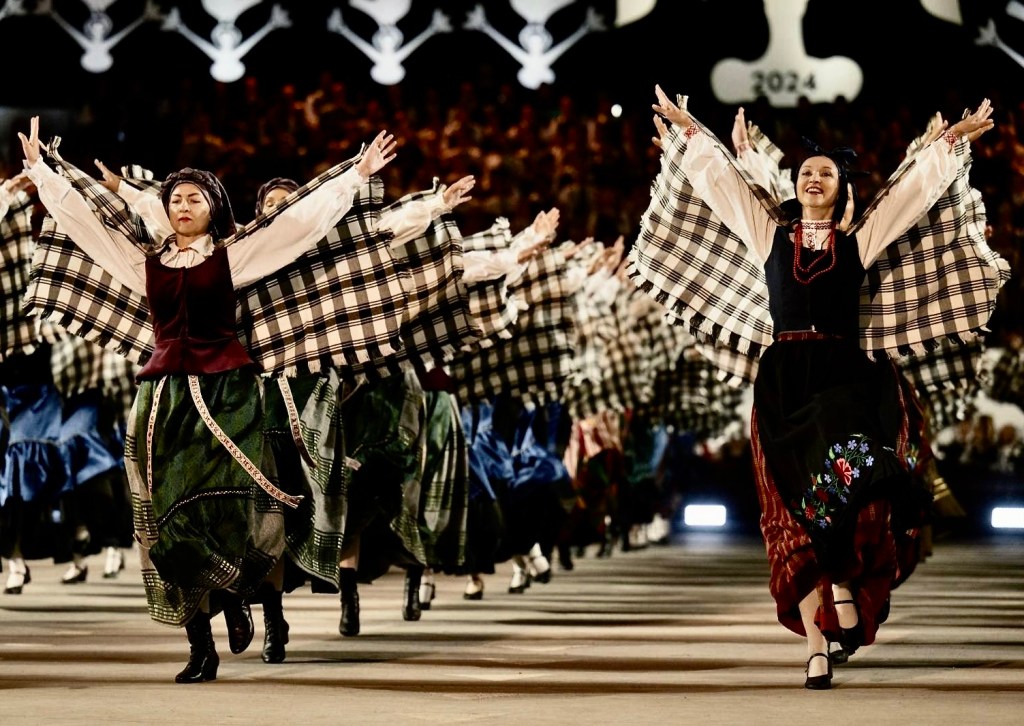
   Folk dancing costumes are by and large traditional, except when they aren’t. When Gabriele Baltrunaite traveled from Cleveland, Ohio to the 2024 Centenary Song and Dance Celebration in Vilnius, the capital of Lithuania, she had to borrow one, even though she had one. “I had to borrow a dancing costume because, although I had one, but it was too Lithuanian,” she said. “They wanted us to wear our own versions for the festival.”

   “It is important for us that every participating ensemble bring their own tradition, their own songs, those they inherited from their own place, their own dances and customs,” said Vida Šatkauskienė of the Folklore Day creative group. “And all that diversity, every region, every ensemble, every individual performer, are what makes up our day.”

   The day lasted a week through the first week of July. It featured Folklore Day, Dance Day, Ensembles Evening, and Song Day. More than 9,000 dancers performed on Dance Day. Gabriele went with the Cleveland folk dance group Svyturys.   

  The dance group was established in 2003, when 16 young dancers got together to prepare for the XII Lithuanian Folk Dance Festival in Chicago. They perform at shows, festivals, and special events. They have appeared throughout the United States and Europe, as well as South America. They have organized  “Concerts of Friendship”  to which dancers from the Lithuanian diaspora are invited to participate.

   “I started dancing at St. Casimir’s when I was in 2nd grade,” Gabriele said. “In the 8th grade I started dancing with Svyturys.” She has danced with the group since she was 13 years old, participating in many of its overseas excursions. “Sweden was my favorite trip,” she said. It’s hard to beat a breath of fresh Scandinavian air. In between breathing there is fika, the coffee break ritual of the Swedes.

   “Dancing is fun and I like the exercise, although sometimes it can suck practicing every Sunday.” The group practices Sundays from 10:30 to 1:30 at the Kirtland Community Center on the east side of Cleveland. “It’s partner dancing in a group. It’s highly choreographed, with lots of circles, polkas, and spinning. I like the social aspect of being in the group, making friends and making deeper connections. When it’s getting close to a concert, we have boot camp and practice even more. I love dancing at concerts, the forms and shapes we make on the dance floor, and the attention, the fact that people are looking at me.”

   Gabriele was born in Lithuania but grew up in the United States. In 1999 when she was three years old her parents Ausra and Gintaras tried their luck at the Green Card Lottery, a result of the Immigration Act of 1990. The new law allowed hundreds of thousands of immigrants to enter the United States. Lithuania was one of thirty one qualifying countries. Their luck was good. They were awarded visas. More immigrants were admitted into the United States from 1991 to 2000 than in any prior decade in American history, with11 million documented entries.

   “My parents were doing all right, but the economy was bad,” Gabriele said. “They wanted more success in life. They wanted a change of pace, something new, even though all they knew about the United States was what they had seen on TV.”

   Gabriele attended Eastlake North High School, Lakeland Community College, and graduated with a degree in Business Economics from Cleveland State University. She is a real estate agent with EXP Realty and operates her own commercial cleaning service with several employees. “I live by my phone,” she said.

   The 2024 Centenary Song and Dance Celebration was one hundred years in the making. The first Song Day was staged in Kaunas in 1924 and continued to be staged all through the Soviet Occupation after World War Two. It became a World Celebration after the fall of the Iron Curtain, and in 1994 more than 1,200 singers, dancers, and musicians from ten countries participated in the event

   This year’s event described itself as, “We, the singing and dancing people, make the living tradition that has survived through this century. We are the unique kin that meets every few years and speaks its own language. The language of this kin resembles the language of the earth – the language of the bird and the river, the culture and the memory, for our language is the one of life, spoken by all the members of the Cantor Lituanus kinship.”

   Flying from Cleveland to Helsinki to Vilnius takes about a full day and night with layovers. It takes a couple of days to get over the jet lag. The Svyturys group numbered more than forty on the plane, from dancers to teachers to volunteer support. They got to Lithuania a week before the big show. They stayed in the Old Town of Vilnius, brought back to life after the country recovered its independence in 1991. Nearly $30 million euros have been spent on restoration projects. Everybody got a complimentary bus pass with which to explore the city, of which there is much to explore. There are the Gates of Dawn, the Palace of the Grand Dukes, and the notorious Soviet-era Lukiskes Prison, which has morphed into a go-to for hundreds of artists and musicians who have set up their studios in renovated spaces there. Kankles are mightier than the sword.

   On Friday, the day after they arrived,  the group boarded a chartered bus and went to Palanga for the weekend to lay their jet lag out in the sun. Palanga is a resort town in western Lithuania on the shore of the Baltic Sea. In the height of summer, the sun comes up at 5 AM and doesn’t set until after 10 PM. “It doesn’t get totally dark until 11,” Gabriele said. It is the country’s largest seasonal resort, sporting beaches 11 miles long and 1,000 feet wide, with sand dunes to boot.

   Lithuania was the last European country to give up paganism and adopt Catholic Christianity. There used to be a pagan shrine at the base of a hill in Palanga watched over by a beautiful priestess by the name of Birute. She tended the ceremonial fire. One day Kestutis, the Grand Duke of Lithuania, laid eyes on her and decided he had to have her, even though she had promised the sky god Perkunas to remain a virgin as long as she lived. Kestutis wasn’t going to be denied, however, and took her back to Trakai, his fortress home. There was a lavish wedding, but the joy didn’t last long. Kestutis was murdered soon after and buried with his weapons and horses. Once free, Birute went back to Palanga, resumed her duties at the shrine, and when she died was buried at the top of the hill, as close to the stars as she could get.

   When the group got back to Vilnius from Palanga on Sunday they had a free night and the next day visited Seimas Palace, which is where the Parliament of the Republic of Lithuania meets. After that they had the rest of the day to themselves. Everybody tried to hit the hay early, although with little success, there being too much to do and see. 

   Each and every one of them knew that the next day the hard work was going to begin. The hard work coming up was going to be three straight days of practice. “Our practices were at a nearby park deep in the woods,” Gabriele said. “It was an athletic complex with fields, food trucks, and port-a-potties. Our practices were on one of two fields depending on the choreography. One part of one of the fields was super dusty. We had to run the field while dust kicked up, for two hours, running back and forth. When I got done my nose was full of dark boogers. It was tough.”

   What was tougher was the eagle-eyed man on the platform calling out instructions. “He was on a platform maybe 30 feet up, with a microphone and loudspeakers,” Gabriele said. “He had written the part of the concert we were going to perform. He had a  PhD in folk dancing.” There wasn’t going to be any easy way of explaining away missteps. “He knew every group’s assigned number.”

   As the first and second 12-hour days of practice unfolded Gabriele heard less of “Number 37, you’re doing it wrong.” Her group was Number 37. Nobody wanted to be the group whose number was being repeatedly called out. Svyturys kept their eyes open and their feet moving.

   “During one dance, which is actually technically easy, but it’s hard to remember, it’s always changing from a circle to a square to a diamond, he had to keep calling out and reminding us of the order,” Gabriele said. “But one group couldn’t get it right, no matter what.”  

   “Number 13, stop it, you keep doing it wrong!” the man on the platform finally barked. “Get out of here.”

   “They had to leave and practice on their own until they got it right,” Gabriele said.

   The last day of practice was Thursday. The practice and subsequent dress rehearsal ended close to midnight, a 16-hour day instead of a 12-hour day. “It went so long they ran out of food,” Gabriele said. “I was sick tired. My calves were cramping so bad. I was praying to God, let me get through this. At one point I had to stop. And then the man on the platform pointed at me and said, ‘You need to run!’”

   In the end it ended well. The man on the platform announced they wouldn’t have to brush anything up on Friday morning. “Thank you so much for everything you’ve done,” he said. “I really appreciate it. I know I’ve been yelling at you guys, but you have all been fantastic. I love you.”

   “It was so heartfelt and moving,” Gabriele said. “ He told us to go out and just dance.”

   The theme of the 2024 Centenary Song and Dance Celebration was “May the Green Forest Grow.” It brought together 37,000 artisans, singers, and dancers. The audience for the 14 large scale events during the week was in the hundreds of thousands. Song Day on July 6th featured 400 choirs on the outdoor stage. The performance was in the spirit of the Singing Revolution of 1987-91, when Latvia, Estonia, and Lithuania defied their Soviet occupiers by breaking out into native songs. When the Soviet Union collapsed in 1991 everybody sang “Hit the Road Jack.” They put some oomph into it by finishing with “and don’t you come back no more, no more.”

   “The event shows our resilience and that music unites people and inspires them to break free from repressive regimes and fight for their country’s sovereignty,” said Saulius Liausa, director of the Lithuanian Song Celebration. “We had to fight for freedom to preserve our cultural identity, traditions, and language.”

   Friday was Dance Day. Svytutys performed at 1 PM and again at 9 PM. “The dance concert was close to where we were staying,” Gabriele said. “We walked there in our costumes.” The were many other groups walking to the venue as well. The streets were soon overflowing with them. “There were thousands of us.” The groups gathered and waited on adjoining fields for their turn to dance in the stadium. At the event groups rotated in and out during the two-hour shows. Video cameras on the ground and in the sky recorded the carousal.

   “My mom went to the show,” Gabriele said. “She said it was OK, but when she saw the replay on LRT TV, she said it was amazing.”

   On Saturday morning a parade of the singing and dancing participants walked the several miles to the Song Day venue. “All of us had our full costumes on,” Gabriele said. “It was very cool.” The participants included children, teenagers, adults, and older folks. “My uncle lives in Lithuania, on a farm. He’s in his late 60s but came to Vilnius to dance.”

   When the last song faded away late Saturday night, the 2024 Centenary Song and Dance Celebration was officially over. The participants from 21 countries said their goodbyes and went their own way. The Australians had the longest flight home. They smeared their crackers with Vegemite, the down under by-product paste.

   “History is pretty clear today,” Saulius Liausa said  “Our festival was the only way to keep the tradition alive, to not forget.” It kept the cultural fires burning through the war years and the occupation years. The flames reached free Lithuanian communities everywhere. A fair highlighting those communities around the world was sponsored by the Vilnius Town Hall Square.

   The song and dance showcase on native soil happens every four years. The next one is in 2028. Lithuanian folk dancers worldwide are tapping their toes and waiting for their cue. Gabriele is sprucing up her old school costume and going back to practice.

Ed Staskus posts monthly on 147 Stanley Street http://www.147stanleystreet.com, Made in Cleveland http://www.clevelandohiodaybook.com, Atlantic Canada http://www.redroadpei.com, and Lithuanian Journal http://www.lithuanianjournal.com

“Cross Walk” by Ed Staskus

“Captures the vibe of mid-century NYC, from stickball in the streets to the Mob on the make.” Sam Winchell, Beyond Fiction

Available on Amazon: https://www.amazon.com/dp/B0CRPSFPKP

Late summer and early autumn. New York City, 1956. President Eisenhower on his way to the opening game of the World Series. A hit man waits in the wings. A Hell’s Kitchen private eye scares up the shadows.

A Crying of Lot 49 Publication

Street Fighting Man

By Ed Staskus

   Ziggy was ready to go home. He was more than ready. He had been in South Vietnam for one year and twenty nine days. His tour of duty was going to be officially over on January 30, 1968, which was tomorrow. He had the date circled. Tomorrow was also the beginning of the Lunar New Year. It was a week when families reunited and honored their ancestors, praying for luck, prosperity, and health in the coming year. 

   The morning the reunions got going was the morning he was going to be the first man in line for a seat on a Japan-bound C-141 Starlifter.  He was going to get the hell out of Southeast Asia. He was going to go home to Chicago. He would have dinner with his father at Healthy Food, a Lithuanian restaurant on Halsted St., where the food was “as mom used to make at home.” He was never going back to the killing fields of Vietnam. 

   Nobody in the Marine Corps called Sigitas Marcinkevicius by his given name. Other than his by-the-book commanding officer everybody called him Ziggy. Some of the men he fought with in the 3rd Marine Division called him Zig Zag for his uncanny ability to walk away unscathed from one firefight after another. Everybody wanted to be his best friend when on roving patrols.

   Ziggy volunteered for the Marine Corps in the summer of 1966. “I wanted to fight for our country,” he said. His father had fought Russians in the forests of Lithuania in 1945. “I wanted to fight commies like my dad and I wanted to be a hero. I thought I could get everything I wanted by joining the Marines.” He was sent to Parris Island for eight weeks.

   “I had no idea how grueling those two months of basic training were going to be. The DI’s worked us hard every day, and every night right before we hit the hay we had to do a hundred up-and-on-shoulders and a hundred squat thrusts. Everybody slept like the dead.”  

   He learned how to disassemble, clean, and fire the new M16 assault rifles. He was taught the target was the only goal. “You can’t hurt them if you can’t hit them,” his small arms instructor said. “You don’t want to die for your country, son. You want the other guy to die for his.” He was issued a Gomer Pyle uniform. He was issued sateen t-shirts, 2-pocket shorts, and 4-pocket utilities. He was issued a combat uniform, combat boots, and a combat helmet. He became a Leatherneck. He shipped out to South Vietnam and reported for duty at the Marine base at Con Thien. It was less than two miles from the North Vietnamese border. He got there just in time for a year’s worth of the most bitter fighting the base had seen since its establishment as a Special Forces camp.

   Con Thien meant Hill of Angels. It was anything but that. The nine thousand Marines there called it the ‘Meat Grinder’. It was a slice of hell, a treeless 525-foot high hill. The DMZ, where they repeatedly engaged the NVA, was called the ‘Dead Marine Zone.’ The base was shelled daily. Halfway through Ziggy’s tour of duty the NVA began hitting it with hundreds of rounds a day. During the last week of September more than three thousand shells slammed into the base. In December Ziggy was assigned to a work detail adding a dozen deep bunkers, digging a new trench along the forward slope of the base, and laying down endless miles of razor wire. The NVA never stopped shelling the base with 135-millimeter artillery which were sheltered inside caves. Keeping your head down was the order of the day. 

   Ziggy was rotated out several times, but was always rotated back in. He fought in Operations Hickory, Buffalo, and Kingfisher. One hundred and forty two Marines were killed in action during Operation Hickory. The NVA lost three hundred and sixty men. When it was over all of the civilian population within sight was removed and everything within sight became a free fire zone. One hundred and fifty nine Marines were killed in action during Operation Buffalo. The NVA lost more than a thousand men. Three hundred and forty Marines were killed in action during Operation Kingfisher. The NVA lost more than three thousand men, too many to count. American firepower was second to none.

   “We are fighting a war of attrition” was the way General William Westmoreland saw it. He was the commander in Vietnam. He believed in body counts front and center. He explained that the enemy was losing about two thousand men killed in action a week, while the allied forces were losing about four hundred men killed in action a week. He believed the North Vietnamese would sooner than later run out of manpower and give up. He was wrong about them giving up. They weren’t dominoes like American foreign policy said they were. They were fighting for the right to be themselves. They were never going to give up if it took a hundred years.

   The base at Con Thien was meant to block North Vietnamese incursions. The McNamara Line, named after the Secretary of Defense, brimming with acoustic sensors and minefields, was the means of blocking them. “Being ready is not what matters, though,” USMC Lieutenant General Krulack said. “What matters is winning.” The Marines at Con Thien were always prepared to win and never lost a major engagement, but they were losing the war. The McNamara Line was a sieve.

   “As soon as I got my discharge orders in late January I said goodbye to all my buddies, at least those who were still making it,” Ziggy said. A CH-47 Chinook transport helicopter came in fast during a lull in the constant shelling. “I had to wait my turn for the wounded and the body bags to be loaded. The minute we landed in Da Nang mortars started shelling the airfield. For a second I thought God didn’t want me to get out of there, after all.”

   The next day the Tet Offensive began with a bang. The goal of the North Vietnamese was to “crack the sky and shake the earth.” Eighty four thousand VC and NVA attacked most of the district capitals in the country, dozens of military bases, and Saigon itself, where they seized the national radio station. The  ancient walled city of Hue, which stood on the banks of the Perfume River not far from the DMZ, was overrun by a force of more than five thousand VC and NVA. Most of them hunkered down, setting up defensive perimeters. The rest encircled the ARVN holding out in the historic Citadel. VC assassination squads spread out and shot those they suspected of collaborating with the South Vietnamese regime. They weren’t overly concerned if they were right or wrong about who they shot.

   The 5th Marine Regiment was ordered to drive them back. “One of my buddies was in the 5th,” Ziggy said. “I couldn’t leave. We were Marines. I jumped into an M35 truck with him.” Da Nang was sixty miles from Hue City. The road was bad but most of the traffic was going south, the other way from them, fleeing to whatever place was safer. Those who fled north, however, found themselves on the Highway of Horror, where the NVA shelled them hour after hour. The Marines got to Hue City soon enough. All hell had broken loose. It would be the longest and bloodiest battle of the Tet Offensive.

   “It was a different kind of war than at Con Thien. It was street fighting. Every crossroad and every house on every street was a battlefield. It was ugly fighting, room by room. We tossed grenades over walls and through windows and emptied magazines without even looking. We never stopped shooting, no matter what.” Howitzers fired nearly twenty thousand rounds into close quarters. Naval forces fired nearly six thousand rounds. Planes and helicopters unleashed fire and brimstone.

   Not knowing where the enemy might be was nerve wracking. “That was the worst of it,” Ziggy’s buddy Sam Jackson, Jr. said. “They would pop out of shadows and sewers and start spraying us with their AK’s. All we could do was take cover and shoot back, trying to stay alive, day by goddamned day.”

   Ziggy secured an ace of spades playing card to the side of his helmet. It was either him or them. There wasn’t going to be any winning hearts and minds. He lived in his combat uniform, combat boots, and combat helmet for nearly two weeks. His boots sprouted fungi and his feet itched. He found a bottle of hydrogen peroxide and slathered it on his feet and groin. He smelled like a garbage dump, especially his arm pits, but the air was so filled with the smell of cordite, diesel fumes, and the decaying bodies of humans and animals that body odor was the least of anybody’s concerns.

   “I was into the tail end of my second week when I got knocked down by a blast,” Ziggy said. “Medics sewed up the gash on my forehead, but a piece of shrapnel got into my eye. I had to wear a patch. I could still shoot but I couldn’t shoot straight. I helped out on stretcher duty until I couldn’t anymore and was sent to the rear.” By that time the battle of Hue City was the only battle of the Tet Offensive still ongoing. It had taken American and ARVN forces a hard week to beat back the North Vietnamese attacks in the rest of the country. It was harder going in Hue City.

   The battle there lasted five weeks. More than six thousand civilians died during the battle. The day it started there were a hundred thirty five thousand residents of Hue City. The day it ended there were about twenty thousand still there, scuttling like crabs in the rubble for food. Everybody else had fled to the countryside. More than six hundred  Marines, ARVN, and 1st Calvary Division forces were killed in action. Thousands of them were wounded. More than three thousand VC and NVA were killed in action. Nobody knows how many of them were wounded. In the process of saving the city from each other, the Marines, the Viet Cong, the Army of South Vietnam, and the Army of North Vietnam destroyed it.

   After his eye was made good as new, Ziggy flew to San Francisco, and from there home to the Windy City. He and his father had dinner at Healthy Food. He found a job in the stockyards, the meat locker of the country. He joined the National Guard. “I did it so I could keep most of the benefits I got while in active service. I didn’t have to do much, except show up one weekend every month, pretend I was still a soldier, and catch some shuteye in the barracks.”

   He didn’t have to do much until the Democratic National Convention happened in August. Lyndon Johnson earlier in the year had unexpectedly announced he would not seek re-election. The No. 1 issue was the Vietnam War. Activists announced they were going to gather in force at the convention to protest United States policies. “If they push us out of Grant Park, we’re going to break windows,” said Abbie Hoffman, co-founder of the Yippies. Chicago’s mayor Richard Daley declared that would happen only over his dead body. 

   “All right, then, maybe we will levitate the International Amphitheatre into outer space,” Abbie Hoffman’s righthand man said. 

   Mayor Daley didn’t know what to say to that. One of his aides said, “The protestors are revolutionaries bent on the destruction of America.” The mayor refused permission for “anti-patriotic” groups to demonstrate at the International Amphitheatre. He ordered the site ringed with barbed wire. He put eleven thousand officers of the police force on twelve-hour shifts. Six thousand National Guardsmen were called up to secure the International Amphitheatre. 

   “If you’re going to Chicago, be sure to wear some armor in your hair,” said Todd Gitlin, who was one of the leaders of Students for a Democratic Society.

   “A Democratic Party convention is about to take place in a police state,” reported Walter Cronkite of CBS News. “There doesn’t seem to be any other way to say it.”

   Ziggy got a call from the Illinois Army National Guard base in North Riverside. “I thought they were going to pass out Billy clubs,” he said. “I thought we were being sent downtown to protect public places and keep the delegates safe.” Instead of Billy clubs, quartermasters started passing out flak jackets, bayonets, and live ammunition.

   “What are these for?” Ziggy asked.

   “They are for taking care of the commies and shitheads out there.”

   “They’re just a bunch of college students. My brother might even be there.” Ziggy’s brother was majoring in political science at the University of Chicago. He had already been arrested once for disorderly conduct during an anti-Vietnam War march.

   “I don’t care if he’s there, or not. It’s time to suit up.”

   “I’m not going,” Ziggy said.

   “Get on the truck, soldier.”

   “I told him, hell, no, I’m not going, and then I left,” Ziggy said. “I lost my benefits because I wouldn’t do it but I knew full well what locked and loaded was all about. I wasn’t going to kill some kid for getting excited and mouthing off.” He went home and watched what happened on TV.

   What happened was a riot, except it wasn’t the demonstrators who did the rioting. The Chicago Police Department did the rioting. The Battle of Michigan Avenue was fought in front of the Conrad Hilton, where many of the delegates were staying. The police attacked protesters, bystanders, and reporters. They fired tear gas indiscriminately. Some of it wafted into presidential nominee Hubert Humphrey’s hotel suite. Police pushed demonstrators through plate-glass windows, following them inside and beating them as they lay on broken glass. One hundred demonstrators were injured and more than six hundred were arrested. Emergent portable video cameras recorded the melee and TV stations nationwide featured the footage on their news shows. 

   “The whole world is watching” the demonstrators chanted. 

   On the convention floor Connecticut senator Abraham Ribicoff denounced the brutality as “Gestapo tactics.” Mayor Daley was asked at a press conference why the police had started cracking the heads of anti-war protestors. Did he have proof of “acts of provocation by the demonstrators” against the police? 

   “I don’t know if we have proof,” he said, “but we know it happened. Now, let’s get this thing straight, once and for all. The policeman isn’t there to create disorder. The policeman is there to preserve disorder.” Nobody knew what the mayor’s deeper meaning was. 

   “When I left Hue City I left dog fighting behind,” Ziggy said. “I didn’t go downtown not because I didn’t believe in law and order, but because I believed in my country. What I saw on TV was surreal, like the sci-fi show ‘The Outer Limits.’ The cops went nuts. It was un-American, beating up people to shut them up. They were grabbing kids who were speaking their mind, holding them down, and hitting them with nightclubs. I saw a cop who looked like he lived in my neighborhood beating up somebody who looked like me.I was the one who went face to face with Charlie every day for a year, not that bluebottle with a club.”

   In the end, a presidential commission concluded that what happened during the convention was a “police riot.” Not many cared what the commission thought. A Gallup Poll revealed that nearly 60% of Americans approved of what the police had done in Chicago. 

   The Tet Offensive in 1968 didn’t end the Vietnam War, like the North Vietnamese believed it would. It ended seven years later when their tanks rolled into Saigon and the last American helicopter lifted off from the roof of the American Embassy. Three million Vietnamese and fifty eight thousand Americans died during the conflict. Twenty years later, in 1995, former Secretary of Defense Robert McNamara admitted he had known waging the Vietnam War was a mistake all along.

Photograph by Horst Faas.

Ed Staskus posts monthly on 147 Stanley Street http://www.147stanleystreet.com, Made in Cleveland http://www.clevelandohiodaybook.com, Atlantic Canada http://www.redroadpei.com, and Lithuanian Journal http://www.lithuanianjournal.com

“Cross Walk” by Ed Staskus

“Captures the vibe of mid-century NYC, from stickball in the streets to the Mob on the make.” Sam Winchell, Beyond Fiction

Available on Amazon: https://www.amazon.com/dp/B0CRPSFPKP

Late summer and early autumn. New York City, 1956. Jackson Pollack opens a can of worms. President Eisenhower on his way to the opening game of the World Series where a hit man waits in the wings. A Hell’s Kitchen private eye scares up the shadows.

A Crying of Lot 49 Publication

Life Boat

By Ed Staskus

   When Angele Jurgelaityte first saw Vytautas Staskevicius at the Nuremberg Army Hospital in 1947 he was 23 years old and flat on his back on an operating table beneath a white sheet. He was out cold. She was 19 and wearing a cotton dress with a button-on apron and a nursing cap. It was harsh and snowy outside the hospital, a hard wind rattling the windows and piling up drifts. The winter that year came to be known as ‘Hungerwinter’ in Germany and most of Europe.

   It was nearly two years after the end of World War Two and four months after the end of the Nuremberg Trials. They were both refugees from Lithuania. Vytas had injured a hand during the Nazi occupation of the Baltics. The surgeon told him it would never be the same, but he would have partial use of it within a year.

   The military hospital was built in 1937 and personally dedicated by Adolf Hitler. Just like 90 percent of Nuremberg, the city that was Hitler’s favorite and the spiritual capital of the Third Reich. it had been devastated by air assaults. More than 500 British Lancaster bombers carpet bombed the city during one raid and the six-story central section of the hospital was badly damaged. By the time Angele and Vytas met it had been re-built and taken over by the United States Army. “The Americans fixed everything,” Angele said. “They re-built Nuremberg. If it had been the Russians, it would have taken twenty years.”

   Vytas was living in a refugee camp near Hanau, 120 miles north of Nuremberg, and Angele was a nurse trainee at the Army Hospital. She shared a single room in an adjoining building with three other young Lithuanian nurse trainees. There was a bathroom at the end of the hallway. They were officially known as displaced persons, displaced from Lithuania, which had first been annexed by the Russians in 1940, then invaded by the Germans in 1941, and finally re-occupied by the Russians during the Baltic Offensive of 1944.

   They both fled Lithuania like jumping out of a window. Vytas was whisked up by a truck-full of Wehrmacht, stationed at a Russian prisoner-of-war camp nearby, who stopped at his farm and told him he had five minutes to decide whether or not to come with them as they retreated from the rapidly advancing Red Army.

   “I was born in Siaulia,” Vytas said. “My father was the Director of the Department of Citizen Protection there. He was in charge of the police department, and the police chief, too. We had a house in town and farm in Dainai. It was a model farm. We had all the newest tools, cutting and sowing implements, and the planning and methods. Excursions would come to our farm from all over the country.”

   Angele woke up the same morning the Red Army barreled into Lithuania while babysitting her aunt’s four children. She found her aunt hurriedly hitching a horse to a cart, tossing in rucksacks, blankets, and a small trunk of valuables, while tying the family cow to the back of it. The youngest child needed milk every day.

   “I was from Suvalkija, in the southwest, from a farm near Gizai, five kilometers from Marijampole,” Angele said. “My family was all still there, but I couldn’t go back, there was no time, so I went with my aunt. There wasn’t anything else I could do. On the way to Germany, we had to sell the cow and jump into ditches whenever planes strafed and bombed us.” She never saw her parents again and only re-united with any of her family more than forty years later. Vytas lost his parents to political persecution as the Nazis and Communists traded racial and ideological blows, and Angele lost her parents to the vagaries of an uncaring global war, and both were then cut off from what remained of their homeland by what was fast becoming the Iron Curtain.

   “The Communists took my father in 1940 because he was a government official,” Vytas said. “They took him in the summer just as he was, with only the shirt on his back and wearing sandals. He was working in the garden. Later the mass deportations started, and my mother was arrested. She spent fifteen years in Siberia and when she was released after Stalin’s death she wasn’t allowed to go back to Siauliai. They sent her to a small western town to live. My father had been sent to Krasnojarsk where he starved to death in the labor camp there in 1942.”

   Anton Chekhov, one of the most acclaimed writers of short stories in literary history, once wrote that Krasnojarsk was the most beautiful city in Siberia. He might have mentioned beauty is in the eye of the beholder. There is no beauty in slave labor except for the overseers.

   Three years after fleeing Lithuania Vytas and Angele were both in central Bavaria, biding time, like more than 7 million other Eastern Europeans who had decamped to Germany in 1944 and 1945. Vytas had seriously injured a hand in a hay mower accident in 1942 when he was 18 years old and been compelled to take over the operation of the family farm. He was at the Nuremberg hospital in 1947 for a series of surgeries to restore the use of the hand to him.

   “In 1940 in Siauliai the mood was very bad,” he said. “We all felt that something terrible was going to happen. After both my parents were sent to Siberia, I had to maintain the family farm. I was on a horse-drawn mower cutting hay one day when I saw that rain was coming. I jumped down to walk with the horses so they would be able to pull the mower faster. As we started, I fell down right on the blades.”

   The horses stopped. It started raining. His hand gushed blood. “My hand was almost cut off,” he said. “The farmhand who was helping me ran over, and seeing my injured hand, fainted.”

   One of Angele’s roommates told her there was a new arrival in Nuremberg, teasing her that he was a young and good-looking man from Lithuania, but it wasn’t until she was transferred to the bone section of the hospital that she met him. When she finally saw him, he was unconscious in an operating theater, having a small part of a bone taken from his leg and put into his hand.

   She saw him the next day and every day for the next three months on her rounds as he recovered, now fully conscious, and more than ever conscious of her. “She took care of me,” he said, while she remembers that, “It felt so right to be with that guy.” As winter gave way to spring, they began to take walks on the hospital grounds, and in the nearby wooded parks, and later into Nuremberg to the zoo and downtown to watch American movies.

   After several more operations, his hand patched up, he was eventually discharged. He went back to Hanau, where he gradually gave up black-marketing cigarettes and chocolate he bought from troops in the American Zone and found work as a bookkeeper for the International Refugee Organization. Angele and Vytas stayed in touch by writing letters to each other once a week. In the middle of the year he returned to Nuremberg for more surgery, staying two months as he recovered, as well as romancing her again with long walks and talks. When he went back to Hanau, they continued to write one another, dating by mail.

   By 1948 Europe’s refugee camps were rapidly emptying as people left for Canada, Australia, the United States, or anywhere they could get a visa to for a fresh start. “No one knew where they would end up,” Angele said.  “You couldn’t go home and there was no future in Germany. We had nothing and there were no opportunities.”

   She finally chose to go to Canada, sponsored by a French-Canadian family in Sudbury, Ontario, to be an au pair for their 13 children. She sailed in December 1948, and after landing in Nova Scotia wrote Vytas about where she was going and what she was going to be doing there.

   He had papers allowing him to enter the United States, papers that had been hard to get. He had an uncle and friends there and was tempted by the prospect. His best friend wanted to emigrate to Australia and suggested they go together. He debated with himself about what to do. The girl in the nurse’s hat won the debate. In January 1949 he wrote her a letter, proposing to come to Canada, and popped the question of marriage, starting a family, and trying their hands at a farm, since they had both grown up on farms. Vytas had a chicken farm in mind. He knew how to raise them, and she knew how to break their necks for dinner, since that had been one of her chores on the family farm

   Two months later he got her return letter and started searching for a way to get to Canada, rather than the United State or Australia. Almost 4,000 miles away in Sudbury, but on almost the same latitude as Hanau, Angele was sure she had made the right decision. “He wasn’t a lady’s man and I liked that,” she said. “He was a steady man. And he was interesting. I didn’t want a boring man. He was the right guy for me, except I was going to have to break it to him that a farm was out. When I left Lithuania, I promised myself I would never be a servant or a farmer if I could help it.”

   Once Vytas secured sponsorship to go to Canada, he took a train to Bremen in northwestern Germany, but couldn’t get a boat, and passed the time in a boarding house in the Altstadt. After several more dead ends he found himself traveling back through Bavaria, across the Alps, and south of Rome to Naples. He waited for three weeks, living on espressos and cheap Neapolitan pizzas, and finally managed to secure a berth on a boat going to North America. It was time to make another getaway. “There were millions of us trying to get out of Europe,” he said.

   He arrived in Sudbury after a two-day train ride from Halifax early on the morning of September 7, 1949, with the clothes on his back, five dollars in American money in his wallet, and a small suitcase more empty than full. When no one met him at the train station he asked a policeman for directions to Angele’s address on Pine Street. He walked the three miles from the Canada Pacific terminal to her doorstep. He found the house, stepped up to the door, and knocked.

   “What are you doing here,” she said when she opened the door, wiping her wet hands on a kitchen towel, surprised to see him. She hadn’t been expecting him until the next day, September 8th.

   Standing on the steps, looking up at her, nonplussed, he said, “I came to marry you.”

   The next day he moved into a nearby one-room apartment, sharing it with another man for the next two weeks. There was only one bed, but he worked during the day and slept at night, while the other man worked at night and slept during the day.

   His first job in Sudbury was making cinder blocks for the Lapalme Cement Works, owned and operated by the large family for whom Angele was the nanny. “Is This Sudbury’s Largest Family?” asked the Sudbury Star in a feature about the family. The day after his initiation into concrete he knocked on her door and told her he ached from tip-to-toe and was going back to Germany. She gave him a back rub and sent him packing back to the cinder block factory.

   They were married two weeks later, on a Saturday, on a sunny day in what was usually an overcast month, in a ceremony presided over by two Catholic priests, one French-speaking and the other Lithuanian-speaking. The next day they went on a picnic for their honeymoon. Monday morning both of them went back to work. Within a year they moved out of their rented rooms and bought a house at 147 Stanley Street. The two-story house was brand new and cost them $13,000. J. A. Lepalme lent them $500.00 in cash for the down payment. They started a family, but set aside their plans for a chicken farm, Angele explaining to Vytas that Sudbury’s rocky landscape was more suited to mining than farming.

   Vytas went to work in Sudbury’s vast nickel mines, the world’s largest, judging the work easier than cinder block making. It wasn’t, at first, but he eventually rose in the blue-collar ranks. “I worked in the mines for seven years, 3300 hundred feet underground,” he said. “There were many Lithuanians working in Canada. Some cut down forests, which was very hard, and some worked in the mines, which was dangerous., but not as hard. I started work setting dynamite, then laying track for the trains that carried the rocks, but later I got an easier job driving the tractors.”

   Angele became her own nanny within a couple of years, at the end of the day raising three children. She wanted a step ahead life for them. “Most of the Lithuanians we knew in Sudbury eventually started looking for better work. Many left for Montreal and Toronto,” Vytas said. “We all started to go our separate ways. As soon as our turn came, our opportunity to go to America, Angele and I started getting ready.” In 1957 they left Sudbury behind and went to the United States, settling in Ohio, where they lived together for the next fifty-three years. 

   They started at the bottom. Vytas operated an elevator during the day and went to school at night. He earned a degree in accounting from Case Western Reserve University and went to work for Weatherhead. They bought their first house, a duplex they shared with his sister’s family, and then a single-family house in the Lithuanian American neighborhood in Cleveland’s North Collinwood neighborhood. He got a better job with TRW and later helped found Cleveland’s Taupa Credit Union in the early 1980s.

   In 1979, after nearly forty years, he saw his mother Antanina again. “It was the first time I returned to Lithuania. She was living in Silute, but when I tried to go there in secret I was stopped at a roadblock in Ukmerge and told to return to Vilnius.” The authorities gave him a hard time, but finally relented. “The next day I got permission to go for one day and I was able to get a car. I visited my mother and we spent three hours together.”

   Angele and Vytas traveled to Lithuania many times after the country’s declaration of independence in 1990, and the collapse of the Soviet Union, but never again to the Army Hospital in Nuremberg, which had survived the war but was closed down and demolished in 1994, there being no further need for it. The grounds were used to build apartments and homes for the burgeoning city.  A new generation had come of age. The past was rubble and best left in the past.

   “We never forgot where we met in Nuremberg,” Vytas said. “All we had to do was close our eyes to go there. We had our memories and heritage, but where we were going, our family, home, and community, was always more important to us. Everything else was in the past. When we settled in Cleveland we finally had our own place.”

Ed Staskus posts monthly on 147 Stanley Street http://www.147stanleystreet.com, Made in Cleveland http://www.clevelandohiodaybook.com, Atlantic Canada http://www.redroadpei.com, and Lithuanian Journal http://www.lithuanianjournal.com

“Cross Walk” by Ed Staskus

“A once upon a crime whodunit.” Barron Cannon, Adventure Books

“Captures the vibe of 1950s NYC.” Sam Winchell, Beyond Fiction

Available from Amazon

Late summer and early autumn. New York City. A Hell’s Kitchen private eye. The 1956 World Series. President Eisenhower at the opening game. An assassin in the dugout.

A Crying of Lot 49 Publication

Beware the Lithuanians

By Ed Staskus

   Before the Battle of Blue Waters was fought in the fall of 1363 the Russians had been under the thumb of Mongolia’s Golden Horde for more than a century. The Mongols invaded and conquered most of what is now Russia in the mid-1200s. They devastated Kievan Rus. They overran everything in their path and sacked both Kiev and Chernigov, two of the largest cities. From then on the Russians paid tribute in gold and silver to the Golden Horde to keep them at bay. 

   After the Mongol Empire was divided into four Khanates, Genghis Khan’s grandson Batu Khan established his capital at Sarai on the Volga River.  It was near enough to the principalities of the Russians to keep them under control and close enough, whenever the need arose, to speedily get back to Mongolia, which was  across the treeless steppe of what is now Kazakhstan.

   The Mongols were known in Europe as Hell’s Horsemen. They could ride up to eighty miles a day if they had to. Their horses were short, stocky, and shaggy. They were never stabled, even during Mongolia’s cruel winters when temperatures dropped to thirty below zero. “They are not very great in stature, but exceedingly strong, and maintained with little provender,” a 13th century Italian missionary priest said about the horses. Deadly accurate composite bows and innovative tactics won them battle after battle. By the time Genghis Khan and his sons were done the Mongol Empire was the largest contiguous land empire in the world, then or now. It covered more than nine million square miles from Hungary in the west to China in the east.

   In the middle of the 14th century the Golden Horde was preparing to move against the Grand Duchy of Lithuania. It was the largest country in Europe, being the lands of present-day Lithuania, Belarus, Ukraine, as well as parts of Poland and Russia. The Mongols weren’t trying to bite off more than they could chew. They had already overrun Asia and the Middle East. Only the Turkish Mamluks had ever defeated them. During their invasion of Europe, Batu Khan inflicted a crushing defeat on King Béla IV’s Hungarian army, which had the best cavalry in Europe. The Mongols burned the city of Pest and seized control of the Hungarian plain. The Golden Horde wasn’t overly concerned about Lithuania’s chances.

   Kochubey, the strongman of the Golden Horde in southern Russia, was sitting on his horse at the top of a knoll looking westward in the spring of 1363. He had a small group of his commanders with him, as well as two mercenary Russian warlords. They had ravaged Poland six years earlier, destroying Lublin. They were feeling their oats. The Golden Horde had meant to engage the Lithuanians the year before, but the weather had been bad, wet and soggy. It didn’t suit the Mongol horses. The recent spring had been dry and the summer promised to be a good one for campaigning. Kochubey was eager to be on the move. He had dynastic issues with his brothers, who were trying to assassinate him, if he didn’t get to them first. He wanted to be at war somewhere. It was what he did best.

   Before the small group broke up, their commitment and decisions made, the two Russians rode up to Kochubey. They had fought the Lithuanians before. One of the warlords leaned over his horse and said quietly, “Beware the Lithuanians.” Kochubey snorted at the warning and puffed himself up. “The Lithuanians need to beware of us.” He wheeled his horse around and rode away. The Russians watched him go. They were hard men, but knew better than say anything else to their overlord. He was a harder man than them.

   Grand Duke Algirdas of Lithuania didn’t give a damn how tough the Mongols thought they were. He knew that ever since their empire had been split after the death of Genghis Khan they had been plagued by internal discord. The Golden Horde was in the middle of multiple succession disputes. They were fracturing into separate domains. The  resulting disorder was having a poisonous effect on their fighting men. It was a golden opportunity for Grand Duke Algirdas to expand  his southern territories. He wasn’t like the Russians who were content to pay tribute in return for an uneasy peace. If the Mongols wanted to come to him, all the better. He would make it easy for them by marching to the Don River near where they were. He would wait and design his plan of action.

   The Lithuanian forces were made up of lightly armored knights on fast horses, foot soldiers armed with swords and spears, and crossbow men. They were disciplined and determined. They were not under any illusions. They knew the Golden Horde, despite its problems, was a formidable force. Mongols were merciless on the field of battle. They took few prisoners. They had proven that at Samarkand and Bukhara. There would be blood. The Lithuanians were confident it would be Mongol blood.

   Ianiunas was a crossbowman man. He was from western Lithuania, from near the Curonian Spit. For hundreds of years the Curonian Spit had been the location of a pagan trading center. The Teutonic Knights took over in the 13th century, building a castle at Memel. It was where Ianiunas trained on the crossbow.  He joined Grand Duke Algirdas’s forces after getting sick and tired of the Germans trying to convert him to Christianity. He weas a pagan. He wasn’t going to convert to the White Christ, now or ever. He was going to live and die by the light of his own gods.

   Grand Duke Algirdas hadn’t converted, either. He worshiped the thunder god Perkunas. He was pagan to the core, like Ianiunas, even though he allowed Orthodox Christians living in Vilnius to build a church where the city’s gallows had once stood. It was the Grand Duke’s own private Idaho joke. He was a pagan, but he was a politician, too. He appointed Orthodox officials in the Slavic territories of Lithuania. He married one Orthodox princess after another. He didn’t need a weatherman to know which way the wind was blowing. 

   He was willing to bend but he wasn’t going to break. He and his brother Kestutis wanted the Teutonic Knights out of Lithuania. They were a threat to the throne. He had led Lithuanian-Slavic armies against them. During  the Uprising of the Night of Yury in 1345 one of the leaders of a provincial rebellion told the Grand Duke he had been elected king of the rebels. He was a peasant farmer. He informed the Grand Duke that if he followed him into battle the Germans would be driven away. Grand Duke Algirdas wasn’t going to wet nurse the man. He cut his head off right away. A peasant farmer pretending to be a king was as much a threat as the Teutonic Knights.

   It was a sunny day in October when the Lithuanians engaged the Golden Horde. Grand Duke Algirdas had moved his forces west and crossed the Dnieper River towards Podolia. The Mongols met the Lithuanians on the banks of a river near present-day Torhovytsia in southern Ukraine. The town was then known as Sinie Vody, or Blue Water. 

   The Lithuanians organized themselves into six interconnected groups arranged in a half circle. The Mongols began the battle with a barrage of arrows from their horsemen into both sides of the Lithuanian formation. The Lithuanians darkened the sky with bolts from their crossbows. Arrows from composite bows like what the Golden Horde fought with fly at 250 feet a second. Bolts from a crossbow fly at 350 feet a second. The leather armor many Mongols wore offered little protection from the bolts. 

   A row of pikemen with shields protected the crossbowmen, as did a row of pavises. The crossbowmen fired from behind their wall. Every man had two men behind him loading crossbows and rotating them from the back to the front. They held firm, ignoring Mongolian feints. Ianiunas killed one Mongol after another until he ran out of bolts. When he did he unsheathed his sword and joined the foot soldiers.

   The Lithuanians moved forward with pikes, lances, and spears, breaking the front line of the Mongol army. The men of the Naugardukas attacked the disorganized flanks of the Golden Horde with fresh crossbows. The liegemen of Karijotas Gediminas, the son of the former Grand Duke Gediminas, moved in for the kill. The Mongols weren’t able to maintain their formation and broke into a retreat which became a rout. The field of battle became a killing field. 

   The blue waters of Sinie Vody ran red with Mongol blood. At the end of the day Grand Duke Algirdas had achieved an open and shut victory. Without meaning to, the threat to European Christendom had been forestalled by a pagan.

   The victory secured Kiev and most of Ukraine for the Lithuanians. The Grand Duchy gained access to the Black Sea. Grand Duke Algirdas left his son Vladimir in charge. Vladimir became a bitter rival to the Grand Duchy of Moscow on the day he assumed power. From that day on there was no love lost between the Lithuanians and the Russians.

   Ianiunas went home to his wife and children. He had a farmstead on the banks of the Nemunas River in the south of Lithuania. It was on the edge of an impenetrable forest. A fort had been built in nearby Alytus to protect against Crusader raids seeking cattle, slaves, and conversion. When he left the battlefield he walked while an ox pulled a two-wheeled tumbrel filled to the gills with spoils. It took him a month to get home. He got there in the middle of November in the middle of a snowstorm. He got hot kisses from his wife and warm hugs from his children before they dug into the loot he had brought back. His favorite hound sniffed him up down and sideways before becoming his favorite hound again. The neighbors came over for tales of war told over a barrel of amber-colored honey wine. Everybody got drunk as skunks.

   Five years later Ianiunas celebrated the marriage of his eldest daughter to an immigrant  Mongol by the name of Chagatai. There was a big party and barrels of honey wine. The train wreck that was the Golden Horde was hemorrhaging its own. Many of them were seeking refuge in faraway places, including Lithuania. Nearly fifty thousand Mongols migrated to the Grand Duchy in the 14th century. Their first settlements were near Grodno and Trakai. 

   The first thing they did was learn the Lithuanian language and where to pay their taxes. The Grand Duke didn’t care what language they spoke, but he cared a great deal about taxes. They were allowed to build mosques, most of them being Muslims. They were allowed to marry Lithuanian women and raise Muslim children. In return, they were required to serve in the Grand Duchy’s soldiery. They had to provide their own weapons and horses. They patrolled borders and defended  towns and castles from attacks. 

   When it came to warfare they formed their own horse regiments. Although they grudgingly admitted the power of bolts, they had grown up learning to stand on the back of a galloping horse and hit a moving target with their arrows. Their weapon was a composite bow made of wood, sinew, and laminated horn. It was what steppe warriors had been using for a thousand years. They carried two or three bows and multiple quivers holding hundreds of arrows. The arrowheads were hardened by plunging them into brine after heating them until they were red hot. The Mongols were adept at firing their arrows at the split second all four of their horse’s hooves were off the ground, giving them a split second of stillness.

   Chagatai put his bows and arrows away the day of his wedding. By the time the ceremony, the dinner, and the revelry were over, almost everybody’s feet were off the ground, except for Ianiunas and Chagatai. They stood on a grassy spot on the edge of a pond next to the family house. Ianiunas’s favorite hound had flopped down and was sleeping at his feet. Chagatai looked at the hound.

   “I will have many dogs,” he said.

   “Dogs are useful animals and good companions,” Ianiunas said.

   “They are loyal, too,” Chagatai said.

   “Yes, dogs are the only creatures on this earth who will never betray you,” Ianiunas said.

   Chagatai was of the same mind. The two men stood next to each other gazing at star clusters in the inky sky. When Ianiunas’s hound started growling in his sleep and suddenly farted, their faces both creased up. Chagatai leaned down and patted the hound’s flank, who rolled over onto his feet. The three of them watched for shooting stars but there weren’t any, until there was one. They went back to the family house to whatever honey wine was still to be had.                 

Ed Staskus posts monthly on 147 Stanley Street http://www.147stanleystreet.com, Made in Cleveland http://www.clevelandohiodaybook.com, Atlantic Canada http://www.redroadpei.com, and Lithuanian Journal http://www.lithuanianjournal.com

“Cross Walk” by Ed Staskus

A Cold War Thriller

“Captures the vibe of mid-century NYC.” Sam Winchell, Beyond Fiction

Available on Amazon: https://www.amazon.com/dp/B0CRPSFPKP

Late summer and early autumn, New York City, 1956. Stickball in the streets and the Mob on the make. President Eisenhower on his way to Ebbets Field for the opening game of the World Series. A killer waits in the wings. A Hell’s Kitchen private eye scares up the shadows.

A Crying of Lot 49 Publication

Flying the Coop

By Ed Staskus

   “Hey, what the hell do you think you’re doing?” Juozas Bankaitis barked coming back to his delivery truck. He had just dropped off three orders of fried chicken to a law office on the corner of 3rd St. and Yesler Way on Pioneer Square. Yesler Way was named after Henry Yesler, the founder of Seattle. A Negro man was tearing the spare tire cover off the back of his truck.

   “Who the hell do you think you are calling us coons?” the man yelled back.

   What is he griping about? Juozas wondered. Everybody loves coon chicken.

   Juozas was new to Seattle, Washington. He had come from Cleveland, Ohio. He had emigrated to the United States from Lithuania a year after the Great Depression parked itself for the long haul. None of the work he found in Cleveland ever lasted and he decided to take his chances out west. When he got to Seattle he liked what he saw. It reminded him of his home on the Baltic Sea. He changed his name to Joe Baker. He worked for the Coon Chicken Inn making deliveries and filling in whenever the kitchen needed him. He didn’t belong to the Church of Fried Chicken, but he was good at seasoning them and making sure the cooking oil temperature never dropped below 325F.

   “Give that back to me,” Joe said. 

   “Come and get it,” the man said. His name was Joseph Stanton. He worked for the Northwest Enterprise, a local Negro newspaper. The newspaper had been founded in 1920 by William Henry Wilson. By the time Joe Baker arrived in town William Henry Wilson was thought to be the most successful Negro in Seattle.

   Joe Baker and Joe Stanton each got their hands on the spare tire cover and started tugging. Before long the canvas cover tore in half. A policeman on foot patrol heard the commotion and broke up the tug of war. He arrested Joe Stanton. The Negro was booked for vandalizing an automobile. The next day in court the judge asked to see both parts of the spare tire cover. When a court attendant brought them out, the judge put the parts together and chuckled. It had Coon Chicken Inn printed on it in bold letters. Darkies could be sensitive.

   There was a color picture in the middle of the spare tire cover. It was the head of a grinning bald black man with enormous lips, a winking eye, and wearing a cockeyed porter’s cap. The same bald black man’s head formed the restaurant’s 12-foot high front entryway. The door was through his grinning mouth. The logo was on every menu, dish, and piece of silverware.

   “Well, I’ll just fine you three dollars and you go on home,” the judge said settling the matter by banging his gavel. Joe Stanton’s newspaper paid the fine. They padded his paycheck with a bonus the following week. 

   The first Coon Chicken Inn came to life in 1925 in Salt Lake City. The eatery took off the day its doors opened. Two years later the deep-fat grease-soaked place caught fire and was reduced to ashes. Fifty carpenters worked day and night for ten days building a newer bigger restaurant. An overflow crowd showed up on the eleventh day. Everybody got free dessert when they ordered the Coon Chicken Special. 

   The Seattle restaurant opened in 1929 on Bothell Highway, not far from Henry the Watermelon King, who sold king-sized watermelons. Just like in Salt Lake City, it was an instant success. “Anyone who has lived below the Mason-Dixon line knows that ‘coon chicken’ is the way the fowl is cooked by the old-fashioned southern mammy,” the Seattle Times reported, heedless that there were no old-fashioned southern mammy’s in the kitchen. The following year another one of the restaurants opened in Portland, Oregon. A cabaret, dance floor, and orchestra were soon added to the Salt Lake City and Seattle locations. The dance floor was where Joe Baker met Helen, who became his wife.

   “I’ve always said, never put a sword in the hands of a man who can’t dance,” Helen said. “But, oh boy, you can dance.”

   “I always say, if you can dance, you’ve got a chance,” Joe said. “Never mind that chicken, let’s shake a leg.”

   The fried chicken restaurants were owned and operated by Maxon Graham and his wife Adelaide. Maxon had been barely 16 years old in 1913 when he answered an ad for the Metz Automobile Company. They were looking for car dealers. Maxon wrangled financing from a local bank and got  distributorship rights for Utah, Idaho, and Nevada.  When he did, he became the youngest car dealer in the United States. Twenty years later Maxon and Adelaine were looking for a new opportunity. They settled on fried chicken.

   Most of the waiters, waitresses, and busboys at the Coon Chicken Inn were Negroes. “Their service to whites is preordained by God,” was the feeling of the day. Everybody knew, though, that they were thieving chicken-lovers. Everybody had seen their rascality in the movie “Rastus and the Chicken.” The birds were kept under strict supervision. The cooks were a mixed bag. The rest of the staff was white, especially the cashiers, bartenders, and everybody front-of-house. There were no Chinamen. 

   A Nevada periodical published an interview in 1972 with the grandfather of a waitress who worked at the last of the restaurants in Salt Lake City, which closed in 1957. “I was ridin’ out one day and comes across the Coon Chicken Inn. Seems like that ol’ coon head just sort of winked at me like it always done, and I’ll be dad blamed if I didn’t just wink right on back. I reckon de past ain’t all full of meanness. You got to laugh at some parts.”

   Seattle’s Coon Chicken Inn often hosted meetings of clubs and civic organizations. The Democratic Club met there. Weddings, anniversaries, and birthday parties were celebrated there. There were always an array of drinks at the catered meetings and celebrations, but the food was without fail fried chicken. In 1942, long after Joe Baker had left Seattle, Coon Chicken Inn was listed in ‘Best Places to Eat,’ the nationwide guidebook of auto clubs.

   Joe was filling in one busy Saturday night frying chicken one after the other when one of his friends in the kitchen pulled him aside. His name was Ernie. “You hear what the Chinamen are up to?” he asked.

   “No, I haven’t heard anything.”

   “They are planning on applying for work here at half our pay. It won’t be long before none of us has got no job anymore. Why don’t you join us tomorrow? We’re having a rally about what to do.”

   “OK, I will,” Joe said.

   The rally the next day was in a cleared field on the outskirts of Seattle. It was Sunday night. There were a thousand more men and women there than worked at the Coon Chicken Inn. Most of them were dressed in white robes. They were the rank-and-file. A few of them were dressed in green robes. They were the Grand Dragons. A dozen of them wore black robes. They were the Knighthawks, a kind of bouncer. Some of those in white had emblazoned their robes with stripes and emblems.

   Almost all of them were wearing a conical shaped hat. They were dunce hats with a mask flap. Round eye holes had been cut out of the front of the mask. The eye holes were stitched to prevent fraying. There was a red  tassel attached to the pointy top of the hat.

   “Is this the Ku Klux Klan?” Joe asked Ernie.

   “Yeah, that’s who we are,” Ernie said handing him a robe. “I couldn’t find a hood for you, but that’s all right. You’ll make do.”

   Joe knew hardly anything about the Ku Klux Klan except that they hated Negroes so much they burned down their houses in the night and lynched the survivors. What he didn’t know was they hated Chinamen almost as much as Negroes. He found out later they hated Jews and Catholics as well. When he found out they hated immigrants he was offended, but by then he was no longer living in Seattle.

   “I thought the Ku Klux Klan was against Negroes.”

   “Chinamen are the same as niggers, lazy and shiftless.”

   Joe was puzzled. It didn’t make sense. If they were lazy and shiftless, why were they trying to take everybody’s jobs? He was also puzzled that the Ku Klux Klan was in the Pacific Northwest in the first place. He thought they lived and died in Dixie.

   “No, it ain’t just there. We’ve been here since right after the Civil War, the same as back home. Hell, we were here before there even was a Klan.” Before the Civil War a group calling itself the Knights of the Golden Circle promoted the cause of the Confederacy. During the war they were a Fifth Column. They meant to spread slavery and take California, Oregon, and Washington out of the Union. They planned to form a Pacific Republic allied to Dixie.

   In 1868 in the Livermore Valley outside of San Francisco a circular was in wide circulation. “Action! Action! Action!” it said. “Fellow members of the KKK the days of oppression and tyranny is past, retribution and vengeance is at hand.” The circular threatened to impale those “who seek enslavement of a free people.” Their target was the Chinese. Anti-Chinese sentiment up and down the coast eventually led to the first race-based anti-immigrant laws in the United States. “ I believe this country of ours was destined for our own white race,” Senator John Hager said.

   “How are you going to keep the Chinese from taking our jobs?” Joe asked.

   “Stick around, you’ll see,” Ernie said. “We got the manpower to get it done.”

   In the summer of 1923 200,000 Klansmen gathered in Indiana for a mass rally. There were more Klansmen in Ohio, Illinois, and Indiana than there were south of the Mason Dixon line. That same year 50,000 of them rallied at Wilson’s Station in Oregon. “Over a green sloping hill on which stand four huge crosses an endless line of white-robed Klansmen move in single file and closed ranks,” is how the magazine Watcher on the Tower described it. “They form a square covering the space of five acres standing shoulder to shoulder. Suddenly a figure appears on the brow of the hill riding a horse. A voice heralding the stars passes the word ‘Every Klansmen will salute the Imperial Cyclops.’” Two years later almost 40,000 Klansmen paraded down Pennsylvania Avenue in Washington, D. C. in broad daylight in full regalia.

   The rally started when the sun was down and the moon was up. Ernie elbowed his way to the front, Joe following in his wake. There was a 21-gun salute. A cohort of Klansmen paraded in military formation with red, white, and blue torches. A fireworks display exploded into three gigantic K’s and parachuted hundreds of small American flags. The first speaker declared that “our progress is the phenomena of the age. It is the best, biggest, and strongest movement in American life.” A troupe of actors reenacted scenes from D. W. Griffith’s “Birth of a Nation.” A local minister gave a sermon, calling for “an army of Christ to demand the continued supremacy of the white race as the only safeguard of the institutions and civilization of our country.”

   The imperial Cyclops was the last to speak. “We believe that the mission of America under Almighty God is to perpetuate the kind of civilization which our forefathers created. It should remain the same kind that was brought forth upon this continent. We believe races of men are as distinct as breeds of animals and that any mixture between races is evil. Our stock has proven its value and should not be mongrelized. We hold firmly that America belongs to Americans. Within a few years the land of our fathers will either be saved or lost. All who wish to see it saved must work with us.” 

   At the end of the rally a three story wooden cross was set on fire. Everybody watched as it slowly started to lean and toppled to the ground. The traffic jam leaving the Konklovation was long, clogging the rural roads. Sheriffs from Seattle helped direct traffic.

   Ernie drove to the heart of the city and stopped in front of the Merchants Cafe on Pioneer Square. It was the oldest bar in town. They had never stopped serving booze, Prohibition or no Prohibition. It was built long ago by W.E. Boone, who was a direct descendant of Daniel Boone. The upstairs had once been a brothel. The whores were known as seamstresses. It was their codeword. 

   Joe and Ernie sat down on the last two stools at the bar and ordered mugs of beer. ‘Here’s to You!’ was emblazoned on the stoneware mugs. The beer was a top-fermented local ale. It was cold and refreshing.

   “I watched the parades, listened to all the speeches, and I saw the cross burn, but I still don’t understand how the Ku Klux Klan is going to save our jobs,” Joe said. “Nobody said a word about it.”

   “All the words were about saving our jobs,” Ernie said. “You got to listen between the lines. First, we’re going to jump some of the Chinamen and teach them a lesson. If they don’t learn their lesson then we’ll burn some of their shacks down. If they still won’t listen to reason, we’ll string one or two of them up. That should take care of it. They’ll be out of Seattle soon enough.”

   Later that night, snug in bed, Joe and Helen talked about what was going on and what was in the works. Neither of them liked it. Helen’s grandparents had come from Poland, which like Joe’s Lithuania, had been an unwilling unhappy colony of Russia for a long time. Both countries had gotten their freedom back only after World War One, after a hundred and fifty-some years of tyranny.

   “My father told me all about the Russians,” Joe said. “They treated us like the Ku Klux Klan treats Negroes and Chinamen.”

   The Lithuanian legal code, originating in the 16th century, was quashed. Russian apparatchiks  occupied all the posts of power. Arrests and detention were at their discretion, no matter if a crime had been committed, or not. Russian was the only language allowed to be spoken in public. Teaching the Lithuanian language in schools was forbidden. No arguments were brooked. Books and magazines could be printed only in the Cyrillic alphabet. Latin script was forbidden. Books in Lithuanian in Latin script, printed in East Prussia, had to be smuggled into the country. When they were caught, some of the book carriers were shot on the spot. The rest were exiled to Siberia. The term of exile was 99 years to life. 

   “What should we do?” Helen asked.

   “I think we should leave this place,” Joe said.

   Joe and Helen packed two suitcases and a sea bag early the following Saturday morning. Joe had cashed his weekly paycheck the day before and consolidated their savings, which he entrusted to a money belt. He had warned the head man of the Chinamen in Seattle about what the Ku Klux Klan was planning. He didn’t bother warning the police. Enough of them were Klansmen to make telling them unwise. Joe and Helen took a ferry to Vancouver Island, landing in the town of Victoria after a three hour ride. They took a bus to Port Hardy on the northeast tip of the island, just inside the Arctic Circle.

   At first they both worked at the Bones Bay Cannery, but within two years had saved enough to open their own business. The business was a bakery. They called it Baker’s Bakery. The first employee they hired the next year, after getting their legs under them, was a Chinese immigrant willing to work for low pay.

   “Why you use same name twice?” he asked looking at the sign above the front door.

   “Because our bread is twice as good,” Joe said.

   “You pay me more when I make it three times as good?”

   “You be square with me and I’ll be square with you.”

   No man is an island, but Vancouver Island suited Joe and Helen. He wrote a letter to his parents in Lithuania telling them where he was, but the letter was lost and never delivered. She got pregnant and pregnant again. Their children were born Canadians. Growing up they would have laughed their heads off if anyone had told them about the KKK, about their variety show antics and Halloween-style hoods and robes. They would have hung their heads if anybody had told them about the KKK’s deadly serious night rides. As it was, nobody ever told them, at least not until they came of age and had a better understanding of gods and monsters.

Ed Staskus posts monthly on 147 Stanley Street http://www.147stanleystreet.com, Made in Cleveland http://www.clevelandohiodaybook.com, Atlantic Canada http://www.redroadpei.com, and Lithuanian Journal http://www.lithuanianjournal.com

“Cross Walk” by Ed Staskus

“Captures the vibe of mid-century NYC, from stickball in the streets to the Mob on the make.” Sam Winchell, Beyond Fiction

Available on Amazon: https://www.amazon.com/dp/B0CRPSFPKP

Late summer and early autumn. New York City, 1956. Jackson Pollack opens a can of worms. President Eisenhower on his way to the opening game of the World Series where a hit man waits in the wings. A Hell’s Kitchen private eye scares up the shadows.

A Crying of Lot 49 Publication