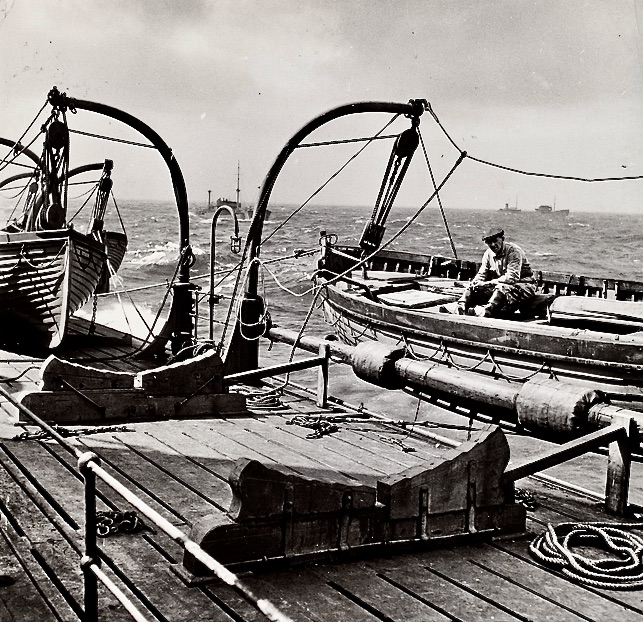
Life Boat

By Ed Staskus

   When Angele Jurgelaityte first saw Vytautas Staskevicius at the Nuremberg Army Hospital in 1947 he was 23 years old and flat on his back on an operating table beneath a white sheet. He was out cold. She was 19 and wearing a cotton dress with a button-on apron and a nursing cap. It was harsh and snowy outside the hospital, a hard wind rattling the windows and piling up drifts. The winter that year came to be known as ‘Hungerwinter’ in Germany and most of Europe.

   It was nearly two years after the end of World War Two and four months after the end of the Nuremberg Trials. They were both refugees from Lithuania. Vytas had injured a hand during the Nazi occupation of the Baltics. The surgeon told him it would never be the same, but he would have partial use of it within a year.

   The military hospital was built in 1937 and personally dedicated by Adolf Hitler. Just like 90 percent of Nuremberg, the city that was Hitler’s favorite and the spiritual capital of the Third Reich. it had been devastated by air assaults. More than 500 British Lancaster bombers carpet bombed the city during one raid and the six-story central section of the hospital was badly damaged. By the time Angele and Vytas met it had been re-built and taken over by the United States Army. “The Americans fixed everything,” Angele said. “They re-built Nuremberg. If it had been the Russians, it would have taken twenty years.”

   Vytas was living in a refugee camp near Hanau, 120 miles north of Nuremberg, and Angele was a nurse trainee at the Army Hospital. She shared a single room in an adjoining building with three other young Lithuanian nurse trainees. There was a bathroom at the end of the hallway. They were officially known as displaced persons, displaced from Lithuania, which had first been annexed by the Russians in 1940, then invaded by the Germans in 1941, and finally re-occupied by the Russians during the Baltic Offensive of 1944.

   They both fled Lithuania like jumping out of a window. Vytas was whisked up by a truck-full of Wehrmacht, stationed at a Russian prisoner-of-war camp nearby, who stopped at his farm and told him he had five minutes to decide whether or not to come with them as they retreated from the rapidly advancing Red Army.

   “I was born in Siaulia,” Vytas said. “My father was the Director of the Department of Citizen Protection there. He was in charge of the police department, and the police chief, too. We had a house in town and farm in Dainai. It was a model farm. We had all the newest tools, cutting and sowing implements, and the planning and methods. Excursions would come to our farm from all over the country.”

   Angele woke up the same morning the Red Army barreled into Lithuania while babysitting her aunt’s four children. She found her aunt hurriedly hitching a horse to a cart, tossing in rucksacks, blankets, and a small trunk of valuables, while tying the family cow to the back of it. The youngest child needed milk every day.

   “I was from Suvalkija, in the southwest, from a farm near Gizai, five kilometers from Marijampole,” Angele said. “My family was all still there, but I couldn’t go back, there was no time, so I went with my aunt. There wasn’t anything else I could do. On the way to Germany, we had to sell the cow and jump into ditches whenever planes strafed and bombed us.” She never saw her parents again and only re-united with any of her family more than forty years later. Vytas lost his parents to political persecution as the Nazis and Communists traded racial and ideological blows, and Angele lost her parents to the vagaries of an uncaring global war, and both were then cut off from what remained of their homeland by what was fast becoming the Iron Curtain.

   “The Communists took my father in 1940 because he was a government official,” Vytas said. “They took him in the summer just as he was, with only the shirt on his back and wearing sandals. He was working in the garden. Later the mass deportations started, and my mother was arrested. She spent fifteen years in Siberia and when she was released after Stalin’s death she wasn’t allowed to go back to Siauliai. They sent her to a small western town to live. My father had been sent to Krasnojarsk where he starved to death in the labor camp there in 1942.”

   Anton Chekhov, one of the most acclaimed writers of short stories in literary history, once wrote that Krasnojarsk was the most beautiful city in Siberia. He might have mentioned beauty is in the eye of the beholder. There is no beauty in slave labor except for the overseers.

   Three years after fleeing Lithuania Vytas and Angele were both in central Bavaria, biding time, like more than 7 million other Eastern Europeans who had decamped to Germany in 1944 and 1945. Vytas had seriously injured a hand in a hay mower accident in 1942 when he was 18 years old and been compelled to take over the operation of the family farm. He was at the Nuremberg hospital in 1947 for a series of surgeries to restore the use of the hand to him.

   “In 1940 in Siauliai the mood was very bad,” he said. “We all felt that something terrible was going to happen. After both my parents were sent to Siberia, I had to maintain the family farm. I was on a horse-drawn mower cutting hay one day when I saw that rain was coming. I jumped down to walk with the horses so they would be able to pull the mower faster. As we started, I fell down right on the blades.”

   The horses stopped. It started raining. His hand gushed blood. “My hand was almost cut off,” he said. “The farmhand who was helping me ran over, and seeing my injured hand, fainted.”

   One of Angele’s roommates told her there was a new arrival in Nuremberg, teasing her that he was a young and good-looking man from Lithuania, but it wasn’t until she was transferred to the bone section of the hospital that she met him. When she finally saw him, he was unconscious in an operating theater, having a small part of a bone taken from his leg and put into his hand.

   She saw him the next day and every day for the next three months on her rounds as he recovered, now fully conscious, and more than ever conscious of her. “She took care of me,” he said, while she remembers that, “It felt so right to be with that guy.” As winter gave way to spring, they began to take walks on the hospital grounds, and in the nearby wooded parks, and later into Nuremberg to the zoo and downtown to watch American movies.

   After several more operations, his hand patched up, he was eventually discharged. He went back to Hanau, where he gradually gave up black-marketing cigarettes and chocolate he bought from troops in the American Zone and found work as a bookkeeper for the International Refugee Organization. Angele and Vytas stayed in touch by writing letters to each other once a week. In the middle of the year he returned to Nuremberg for more surgery, staying two months as he recovered, as well as romancing her again with long walks and talks. When he went back to Hanau, they continued to write one another, dating by mail.

   By 1948 Europe’s refugee camps were rapidly emptying as people left for Canada, Australia, the United States, or anywhere they could get a visa to for a fresh start. “No one knew where they would end up,” Angele said.  “You couldn’t go home and there was no future in Germany. We had nothing and there were no opportunities.”

   She finally chose to go to Canada, sponsored by a French-Canadian family in Sudbury, Ontario, to be an au pair for their 13 children. She sailed in December 1948, and after landing in Nova Scotia wrote Vytas about where she was going and what she was going to be doing there.

   He had papers allowing him to enter the United States, papers that had been hard to get. He had an uncle and friends there and was tempted by the prospect. His best friend wanted to emigrate to Australia and suggested they go together. He debated with himself about what to do. The girl in the nurse’s hat won the debate. In January 1949 he wrote her a letter, proposing to come to Canada, and popped the question of marriage, starting a family, and trying their hands at a farm, since they had both grown up on farms. Vytas had a chicken farm in mind. He knew how to raise them, and she knew how to break their necks for dinner, since that had been one of her chores on the family farm

   Two months later he got her return letter and started searching for a way to get to Canada, rather than the United State or Australia. Almost 4,000 miles away in Sudbury, but on almost the same latitude as Hanau, Angele was sure she had made the right decision. “He wasn’t a lady’s man and I liked that,” she said. “He was a steady man. And he was interesting. I didn’t want a boring man. He was the right guy for me, except I was going to have to break it to him that a farm was out. When I left Lithuania, I promised myself I would never be a servant or a farmer if I could help it.”

   Once Vytas secured sponsorship to go to Canada, he took a train to Bremen in northwestern Germany, but couldn’t get a boat, and passed the time in a boarding house in the Altstadt. After several more dead ends he found himself traveling back through Bavaria, across the Alps, and south of Rome to Naples. He waited for three weeks, living on espressos and cheap Neapolitan pizzas, and finally managed to secure a berth on a boat going to North America. It was time to make another getaway. “There were millions of us trying to get out of Europe,” he said.

   He arrived in Sudbury after a two-day train ride from Halifax early on the morning of September 7, 1949, with the clothes on his back, five dollars in American money in his wallet, and a small suitcase more empty than full. When no one met him at the train station he asked a policeman for directions to Angele’s address on Pine Street. He walked the three miles from the Canada Pacific terminal to her doorstep. He found the house, stepped up to the door, and knocked.

   “What are you doing here,” she said when she opened the door, wiping her wet hands on a kitchen towel, surprised to see him. She hadn’t been expecting him until the next day, September 8th.

   Standing on the steps, looking up at her, nonplussed, he said, “I came to marry you.”

   The next day he moved into a nearby one-room apartment, sharing it with another man for the next two weeks. There was only one bed, but he worked during the day and slept at night, while the other man worked at night and slept during the day.

   His first job in Sudbury was making cinder blocks for the Lapalme Cement Works, owned and operated by the large family for whom Angele was the nanny. “Is This Sudbury’s Largest Family?” asked the Sudbury Star in a feature about the family. The day after his initiation into concrete he knocked on her door and told her he ached from tip-to-toe and was going back to Germany. She gave him a back rub and sent him packing back to the cinder block factory.

   They were married two weeks later, on a Saturday, on a sunny day in what was usually an overcast month, in a ceremony presided over by two Catholic priests, one French-speaking and the other Lithuanian-speaking. The next day they went on a picnic for their honeymoon. Monday morning both of them went back to work. Within a year they moved out of their rented rooms and bought a house at 147 Stanley Street. The two-story house was brand new and cost them $13,000. J. A. Lepalme lent them $500.00 in cash for the down payment. They started a family, but set aside their plans for a chicken farm, Angele explaining to Vytas that Sudbury’s rocky landscape was more suited to mining than farming.

   Vytas went to work in Sudbury’s vast nickel mines, the world’s largest, judging the work easier than cinder block making. It wasn’t, at first, but he eventually rose in the blue-collar ranks. “I worked in the mines for seven years, 3300 hundred feet underground,” he said. “There were many Lithuanians working in Canada. Some cut down forests, which was very hard, and some worked in the mines, which was dangerous., but not as hard. I started work setting dynamite, then laying track for the trains that carried the rocks, but later I got an easier job driving the tractors.”

   Angele became her own nanny within a couple of years, at the end of the day raising three children. She wanted a step ahead life for them. “Most of the Lithuanians we knew in Sudbury eventually started looking for better work. Many left for Montreal and Toronto,” Vytas said. “We all started to go our separate ways. As soon as our turn came, our opportunity to go to America, Angele and I started getting ready.” In 1957 they left Sudbury behind and went to the United States, settling in Ohio, where they lived together for the next fifty-three years. 

   They started at the bottom. Vytas operated an elevator during the day and went to school at night. He earned a degree in accounting from Case Western Reserve University and went to work for Weatherhead. They bought their first house, a duplex they shared with his sister’s family, and then a single-family house in the Lithuanian American neighborhood in Cleveland’s North Collinwood neighborhood. He got a better job with TRW and later helped found Cleveland’s Taupa Credit Union in the early 1980s.

   In 1979, after nearly forty years, he saw his mother Antanina again. “It was the first time I returned to Lithuania. She was living in Silute, but when I tried to go there in secret I was stopped at a roadblock in Ukmerge and told to return to Vilnius.” The authorities gave him a hard time, but finally relented. “The next day I got permission to go for one day and I was able to get a car. I visited my mother and we spent three hours together.”

   Angele and Vytas traveled to Lithuania many times after the country’s declaration of independence in 1990, and the collapse of the Soviet Union, but never again to the Army Hospital in Nuremberg, which had survived the war but was closed down and demolished in 1994, there being no further need for it. The grounds were used to build apartments and homes for the burgeoning city.  A new generation had come of age. The past was rubble and best left in the past.

   “We never forgot where we met in Nuremberg,” Vytas said. “All we had to do was close our eyes to go there. We had our memories and heritage, but where we were going, our family, home, and community, was always more important to us. Everything else was in the past. When we settled in Cleveland we finally had our own place.”

Ed Staskus posts monthly on 147 Stanley Street http://www.147stanleystreet.com, Made in Cleveland http://www.clevelandohiodaybook.com, Atlantic Canada http://www.redroadpei.com, and Lithuanian Journal http://www.lithuanianjournal.com

“Cross Walk” by Ed Staskus

“A once upon a crime whodunit.” Barron Cannon, Adventure Books

“Captures the vibe of 1950s NYC.” Sam Winchell, Beyond Fiction

Available from Amazon

Late summer and early autumn. New York City. A Hell’s Kitchen private eye. The 1956 World Series. President Eisenhower at the opening game. An assassin in the dugout.

A Crying of Lot 49 Publication
Beware the Lithuanians

By Ed Staskus

   Before the Battle of Blue Water was fought in the fall of 1363 the Russians had been under the thumb of Mongolia’s Golden Horde for more than a century. The Mongols invaded and conquered most of what is now Russia in the mid-1200s. They devastated Kievan Rus. They overran everything in their way and sacked both Kiev and Chernigov, two of the largest cities. From then on the Russians paid tribute in gold and silver to the Golden Horde to keep them at bay. 

   After the Mongol Empire was divided into four Khanates, Genghis Khan’s grandson Batu Khan established his capital at Sarai on the Volga River.  It was near enough to the principalities of the Russians to keep them under control and close enough, whenever the need arose, to speedily get back to Mongolia, which was  across the treeless steppe of what is now Kazakhstan.

   The Mongols were known in Europe as Hell’s Horsemen. They could ride up to eighty miles a day if they had to. Their horses were short, stocky, and shaggy. They were never stabled, even during Mongolia’s cruel winters when temperatures dropped to thirty below zero. 

   “They are not very great in stature, but exceedingly strong, and maintained with little provender,” a 13th century Italian missionary priest said about the horses. Deadly accurate composite bows and innovative tactics won them battle after battle. By the time Genghis Khan and his sons were done the Mongol Empire was the largest contiguous land empire ever in the world, then or now. It covered more than nine million square miles from Hungary in the west to China in the east.

   In the middle of the 14th century the Golden Horde was preparing to move against the Grand Duchy of Lithuania. It was the largest sovereign state in Europe, being the lands of present-day Lithuania, Belarus, Ukraine, as well as parts of Poland and Russia. The Mongols weren’t trying to bite off more than they could chew. They had already overrun Asia and the Middle East. Only the Turkish Mamluks had ever defeated them. At the beginning of their invasion of Europe Batu Khan inflicted a crushing defeat on King Béla IV’s Hungarian army, which had the best cavalry in Europe. The Mongols burned the city of Pest and seized control of the Hungarian plain. The Golden Horde wasn’t overly concerned about Lithuanian kicks at the can.

   Kochubey, the strongman of the Golden Horde in southern Russia, was sitting on his horse at the top of a knoll looking westward in the spring of 1363. He had a small group of his commanders with him, as well as two mercenary Russian warlords. They had ravaged Poland six years earlier, destroying Lublin. They were feeling their oats. The Golden Horde had meant to engage the Lithuanians the year before, but the weather had been bad, wet and soggy. It didn’t suit the Mongol horses. The recent spring had been dry and the summer promised to be a good one for campaigning. Kochubey was eager to be on the move. He had dynastic issues with his brothers, who were trying to assassinate him, if he didn’t assassinate them first. He needed to be at war somewhere. It was what he did best.

   Before the group broke up, their commitment and decisions made, the two Russians rode up to Kochubey. They had fought the Lithuanians before. One of the warlords leaned over his horse and said, “Beware the Lithuanians.” Kochubey snorted at the warning and puffed himself up. “The Lithuanians need to beware of us.” He wheeled his horse around and rode away. The Russians watched him go. They were hard men, but knew better than say anything else to their overlord. He was a harder man than them.

   Grand Duke Algirdas of Lithuania didn’t give a damn how tough the Mongols thought they were. He knew that ever since their empire had been split after the death of Genghis Khan they had been plagued by internal discord. The Golden Horde was in the middle of multiple succession disputes. They were fracturing into separate domains. The  resulting disorder was having a baleful effect on their fighting men. It was a golden opportunity for Grand Duke Algirdas to expand  his southern territories. He wasn’t like the Russians who were content to pay tribute in return for an uneasy peace. If the Mongols wanted to come to him, all the better. He would make it easy for them by marching to the Don River near where they were. He would wait there and organize his plan of action.

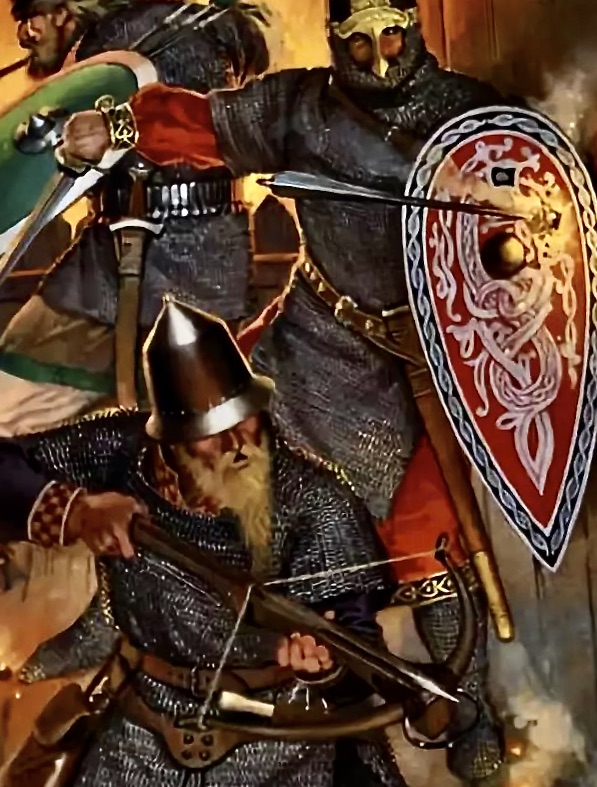
   The Lithuanian forces were made up of lightly armored knights on fast horses, foot soldiers armed with swords and spears, and crossbow men. They were disciplined and determined. They were not under any illusions. They knew the Golden Horde, despite its problems, was a formidable force. Mongols were merciless on the field of battle. They took few prisoners. They had proven that at Samarkand and Bukhara. There would be blood. The Lithuanians were confident it would be Mongol blood.

   Ianiunas was a crossbowman man. He was from western Lithuania, from near the Curonian Spit. For hundreds of years the Curonian Spit had been the location of a pagan trading center. The Teutonic Knights took it over in the 13th century, building a castle at Memel. It was where Ianiunas trained on the crossbow.  He joined Grand Duke Algirdas’s forces after getting sick and tired of the Germans trying to convert him to Christianity. He was a pagan. He wasn’t going to convert to the White Christ, now or ever. He was going to live and die by the light of his own gods.

   Grand Duke Algirdas hadn’t converted, either. He worshiped the thunder god Perkunas. He was pagan to the core, like Ianiunas, even though he allowed Orthodox Christians living in Vilnius to build a church where the city’s gallows had once stood. It was the Grand Duke’s own private joke. He was a pagan, but he was a politician, too. He appointed Orthodox officials in the Slavic territories of Lithuania. He married one Orthodox princess after another. He didn’t need a weatherman to know which way the wind was blowing. 

   He was willing to bend but he wasn’t going to break. He and his brother Kestutis wanted the Teutonic Knights out of Lithuania. They were a threat to the throne. He had led Lithuanian-Slavic armies against them. During  the Uprising of the Night of Yury in 1345 one of the leaders of a provincial rebellion told the Grand Duke he had been elected king of the rebels. He was a peasant farmer. He informed the Grand Duke that if he followed him into battle the Germans would be driven away. Grand Duke Algirdas didn’t wet nurse the man. He cut his head off right away. A peasant farmer pretending to be a king was as much a threat as the Teutonic Knights.

   It was a sunny day in October when the Lithuanians engaged the Golden Horde. Grand Duke Algirdas had moved his forces west and crossed the Dnieper River towards Podolia. The Mongols met the Lithuanians on the banks of a river near present-day Torhovytsia in southern Ukraine. The town was then known as Sinie Vody, or Blue Water. 

   The Lithuanians organized themselves into six interconnected groups arranged in a half circle. The Mongols began the battle with a barrage of arrows from their horsemen into both sides of the Lithuanian formation. The Lithuanians darkened the sky with bolts from their crossbows. Arrows from composite bows like what the Golden Horde fought with fly at 250 feet a second. Bolts from a crossbow fly at 350 feet a second. The leather armor many Mongols wore offered little protection from the bolts. 

   A row of pikemen with shields protected the crossbowmen, as did a row of pavises. The crossbowmen fired from behind their wall. Every man had two men behind him loading crossbows and rotating them from the back to the front. They held firm, ignoring Mongolian feints. Ianiunas killed one Mongol after another until he ran out of bolts. When he did he unsheathed his sword and joined the foot soldiers.

   The Lithuanians moved forward with pikes, lances, and spears, breaking the front line of the Mongol army. The men of the Naugardukas attacked the disorganized flanks of the Golden Horde with fresh crossbows. The liegemen of Karijotas Gediminas, the son of the former Grand Duke Gediminas, moved in for the kill. The Mongols weren’t able to maintain their formation and broke into a retreat which became a rout. The field of battle became a killing field. 

   The blue water of Sinie Vody ran red with Mongol blood. At the end of the day Grand Duke Algirdas had achieved an open and shut victory. Without meaning to, the nascent threat to European Christendom had been forestalled by a pagan.

   The victory secured Kiev and most of Ukraine for the Lithuanians. The Grand Duchy gained access to the Black Sea. Grand Duke Algirdas left his son Vladimir in charge. Vladimir became a bitter rival to the Grand Duchy of Moscow on the day he assumed power. From that day on there was no love lost between the Lithuanians and the Russians.

   Ianiunas went home to his wife and children. He had a farmstead on the banks of the Nemunas River in the south of Lithuania. It was on the edge of an impenetrable forest. A fort had been built in nearby Alytus to protect against Crusader raids seeking cattle, slaves, and conversions. When he left the battlefield he walked while an ox pulled a two-wheeled tumbrel filled to the gills with spoils. It took him a month to get home. He got there in the middle of November in the middle of a snowstorm. He got hot kisses from his wife and warm hugs from his children before they dug into the loot he had brought back. His favorite hound sniffed him up down and sideways before becoming his favorite hound again. The neighbors came over for tales of war told over a barrel of amber-colored honey wine. Everybody got drunk as skunks.

   Five years later Ianiunas celebrated the marriage of his eldest daughter to an immigrant  Mongol by the name of Chagatai. He had fought on the losing side at the Battle of Blue Water. The train wreck that was the Golden Horde was hemorrhaging its own. Many of them were seeking refuge in faraway places, including Lithuania. Nearly fifty thousand Mongols migrated to the Grand Duchy in the 14th century. Their first settlements were near Grodno and Trakai. 

   The first thing they did was learn the Lithuanian language and where to pay their taxes. The Grand Duke didn’t care what language they spoke, but he cared a great deal about taxes. They were allowed to build mosques, most of them being Muslims. They were allowed to marry Lithuanian women and raise Muslim children. In return, they were required to serve in the Grand Duchy’s soldiery. They had to provide their own weapons and horses. They patrolled borders and defended  towns and castles from attacks. 

   When it came to war they formed their own horse regiments. Although they grudgingly admitted the power of bolts, they had grown up learning to stand on the back of a galloping horse and hit a moving target with their arrows. Their weapon was a composite bow made of wood, sinew, and laminated horn. It was what steppe warriors had been using for a thousand years. They carried two or three bows and multiple quivers holding hundreds of arrows. The arrowheads were hardened by plunging them into brine after heating them until they were red hot. The Mongols were adept at firing their arrows at the split second all four of their horse’s hooves were off the ground, giving them a split second of stillness.

   Chagatai put his bows and arrows away the day of his wedding. By the time the ceremony, the dinner, and the revelry were over, almost everybody’s feet were off the ground, except for Ianiunas and Chagatai. They stood on a grassy spot on the edge of a pond next to the family house. Ianiunas’s favorite hound had flopped down and was napping at his feet. Chagatai looked at the hound.

   “I will have many dogs,” he said.

   “Dogs are useful animals and good companions,” Ianiunas said.

   “They are loyal, too,” Chagatai said.

   “Yes, dogs are the only creatures on this earth who will never betray you,” Ianiunas said.

   Chagatai was of the same mind. The two men stood next to each other gazing at star clusters in the inky sky. When Ianiunas’s hound started growling in his sleep and suddenly farted, their faces both creased up. Chagatai leaned down and patted the hound’s flank, who rolled over onto his feet. The three of them watched for shooting stars but there weren’t any, until suddenly there was one. They went back to the family house for whatever honey wine was still to be had.                      

Ed Staskus posts monthly on 147 Stanley Street http://www.147stanleystreet.com, Made in Cleveland http://www.clevelandohiodaybook.com, Atlantic Canada http://www.redroadpei.com, and Lithuanian Journal http://www.lithuanianjournal.com

“Cross Walk” by Ed Staskus

“Captures the vibe of mid-century NYC.” Sam Winchell, Beyond Fiction

Available on Amazon: https://www.amazon.com/dp/B0CRPSFPKP

Late summer and early autumn, New York City, 1956. Stickball in the streets and the Mob on the make. President Eisenhower on his way to Ebbets Field for the opening game of the World Series. A killer waits in the wings. A Hell’s Kitchen private eye scares up the shadows.

A Crying of Lot 49 Publication
Flying the Coop

By Ed Staskus

   “Hey, what the hell do you think you’re doing?” Juozas Bankaitis barked coming back to his delivery truck. He had just dropped off three orders of fried chicken to a law office on the corner of 3rd St. and Yesler Way on Pioneer Square. Yesler Way was named after Henry Yesler, the founder of Seattle. A Negro man was tearing the spare tire cover off the back of his truck.

   “Who the hell do you think you are calling us coons?” the man yelled back.

   What is he griping about? Juozas wondered. Everybody loves coon chicken.

   Juozas was new to Seattle, Washington. He had come from Cleveland, Ohio. He had emigrated to the United States from Lithuania a year after the Great Depression parked itself for the long haul. None of the work he found in Cleveland ever lasted and he decided to take his chances out west. When he got to Seattle he liked what he saw. It reminded him of his home on the Baltic Sea. He changed his name to Joe Baker. He worked for the Coon Chicken Inn making deliveries and filling in whenever the kitchen needed him. He didn’t belong to the Church of Fried Chicken, but he was good at seasoning them and making sure the cooking oil temperature never dropped below 325F.

   “Give that back to me,” Joe said. 

   “Come and get it,” the man said. His name was Joseph Stanton. He worked for the Northwest Enterprise, a local Negro newspaper. The newspaper had been founded in 1920 by William Henry Wilson. By the time Joe Baker arrived in town William Henry Wilson was thought to be the most successful Negro in Seattle.

   Joe Baker and Joe Stanton each got their hands on the spare tire cover and started tugging. Before long the canvas cover tore in half. A policeman on foot patrol heard the commotion and broke up the tug of war. He arrested Joe Stanton. The Negro was booked for vandalizing an automobile. The next day in court the judge asked to see both parts of the spare tire cover. When a court attendant brought them out, the judge put the parts together and chuckled. It had Coon Chicken Inn printed on it in bold letters. Darkies could be sensitive.

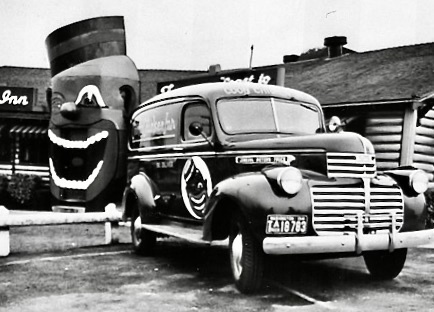
   There was a color picture in the middle of the spare tire cover. It was the head of a grinning bald black man with enormous lips, a winking eye, and wearing a cockeyed porter’s cap. The same bald black man’s head formed the restaurant’s 12-foot high front entryway. The door was through his grinning mouth. The logo was on every menu, dish, and piece of silverware.

   “Well, I’ll just fine you three dollars and you go on home,” the judge said settling the matter by banging his gavel. Joe Stanton’s newspaper paid the fine. They padded his paycheck with a bonus the following week. 

   The first Coon Chicken Inn came to life in 1925 in Salt Lake City. The eatery took off the day its doors opened. Two years later the deep-fat grease-soaked place caught fire and was reduced to ashes. Fifty carpenters worked day and night for ten days building a newer bigger restaurant. An overflow crowd showed up on the eleventh day. Everybody got free dessert when they ordered the Coon Chicken Special. 

   The Seattle restaurant opened in 1929 on Bothell Highway, not far from Henry the Watermelon King, who sold king-sized watermelons. Just like in Salt Lake City, it was an instant success. “Anyone who has lived below the Mason-Dixon line knows that ‘coon chicken’ is the way the fowl is cooked by the old-fashioned southern mammy,” the Seattle Times reported, heedless that there were no old-fashioned southern mammy’s in the kitchen. The following year another one of the restaurants opened in Portland, Oregon. A cabaret, dance floor, and orchestra were soon added to the Salt Lake City and Seattle locations. The dance floor was where Joe Baker met Helen, who became his wife.

   “I’ve always said, never put a sword in the hands of a man who can’t dance,” Helen said. “But, oh boy, you can dance.”

   “I always say, if you can dance, you’ve got a chance,” Joe said. “Never mind that chicken, let’s shake a leg.”

   The fried chicken restaurants were owned and operated by Maxon Graham and his wife Adelaide. Maxon had been barely 16 years old in 1913 when he answered an ad for the Metz Automobile Company. They were looking for car dealers. Maxon wrangled financing from a local bank and got  distributorship rights for Utah, Idaho, and Nevada.  When he did, he became the youngest car dealer in the United States. Twenty years later Maxon and Adelaine were looking for a new opportunity. They settled on fried chicken.

   Most of the waiters, waitresses, and busboys at the Coon Chicken Inn were Negroes. “Their service to whites is preordained by God,” was the feeling of the day. Everybody knew, though, that they were thieving chicken-lovers. Everybody had seen their rascality in the movie “Rastus and the Chicken.” The birds were kept under strict supervision. The cooks were a mixed bag. The rest of the staff was white, especially the cashiers, bartenders, and everybody front-of-house. There were no Chinamen. 

   A Nevada periodical published an interview in 1972 with the grandfather of a waitress who worked at the last of the restaurants in Salt Lake City, which closed in 1957. “I was ridin’ out one day and comes across the Coon Chicken Inn. Seems like that ol’ coon head just sort of winked at me like it always done, and I’ll be dad blamed if I didn’t just wink right on back. I reckon de past ain’t all full of meanness. You got to laugh at some parts.”

   Seattle’s Coon Chicken Inn often hosted meetings of clubs and civic organizations. The Democratic Club met there. Weddings, anniversaries, and birthday parties were celebrated there. There were always an array of drinks at the catered meetings and celebrations, but the food was without fail fried chicken. In 1942, long after Joe Baker had left Seattle, Coon Chicken Inn was listed in ‘Best Places to Eat,’ the nationwide guidebook of auto clubs.

   Joe was filling in one busy Saturday night frying chicken one after the other when one of his friends in the kitchen pulled him aside. His name was Ernie. “You hear what the Chinamen are up to?” he asked.

   “No, I haven’t heard anything.”

   “They are planning on applying for work here at half our pay. It won’t be long before none of us has got no job anymore. Why don’t you join us tomorrow? We’re having a rally about what to do.”

   “OK, I will,” Joe said.

   The rally the next day was in a cleared field on the outskirts of Seattle. It was Sunday night. There were a thousand more men and women there than worked at the Coon Chicken Inn. Most of them were dressed in white robes. They were the rank-and-file. A few of them were dressed in green robes. They were the Grand Dragons. A dozen of them wore black robes. They were the Knighthawks, a kind of bouncer. Some of those in white had emblazoned their robes with stripes and emblems.

   Almost all of them were wearing a conical shaped hat. They were dunce hats with a mask flap. Round eye holes had been cut out of the front of the mask. The eye holes were stitched to prevent fraying. There was a red  tassel attached to the pointy top of the hat.

   “Is this the Ku Klux Klan?” Joe asked Ernie.

   “Yeah, that’s who we are,” Ernie said handing him a robe. “I couldn’t find a hood for you, but that’s all right. You’ll make do.”

   Joe knew hardly anything about the Ku Klux Klan except that they hated Negroes so much they burned down their houses in the night and lynched the survivors. What he didn’t know was they hated Chinamen almost as much as Negroes. He found out later they hated Jews and Catholics as well. When he found out they hated immigrants he was offended, but by then he was no longer living in Seattle.

   “I thought the Ku Klux Klan was against Negroes.”

   “Chinamen are the same as niggers, lazy and shiftless.”

   Joe was puzzled. It didn’t make sense. If they were lazy and shiftless, why were they trying to take everybody’s jobs? He was also puzzled that the Ku Klux Klan was in the Pacific Northwest in the first place. He thought they lived and died in Dixie.

   “No, it ain’t just there. We’ve been here since right after the Civil War, the same as back home. Hell, we were here before there even was a Klan.” Before the Civil War a group calling itself the Knights of the Golden Circle promoted the cause of the Confederacy. During the war they were a Fifth Column. They meant to spread slavery and take California, Oregon, and Washington out of the Union. They planned to form a Pacific Republic allied to Dixie.

   In 1868 in the Livermore Valley outside of San Francisco a circular was in wide circulation. “Action! Action! Action!” it said. “Fellow members of the KKK the days of oppression and tyranny is past, retribution and vengeance is at hand.” The circular threatened to impale those “who seek enslavement of a free people.” Their target was the Chinese. Anti-Chinese sentiment up and down the coast eventually led to the first race-based anti-immigrant laws in the United States. “ I believe this country of ours was destined for our own white race,” Senator John Hager said.

   “How are you going to keep the Chinese from taking our jobs?” Joe asked.

   “Stick around, you’ll see,” Ernie said. “We got the manpower to get it done.”

   In the summer of 1923 200,000 Klansmen gathered in Indiana for a mass rally. There were more Klansmen in Ohio, Illinois, and Indiana than there were south of the Mason Dixon line. That same year 50,000 of them rallied at Wilson’s Station in Oregon. “Over a green sloping hill on which stand four huge crosses an endless line of white-robed Klansmen move in single file and closed ranks,” is how the magazine Watcher on the Tower described it. “They form a square covering the space of five acres standing shoulder to shoulder. Suddenly a figure appears on the brow of the hill riding a horse. A voice heralding the stars passes the word ‘Every Klansmen will salute the Imperial Cyclops.’” Two years later almost 40,000 Klansmen paraded down Pennsylvania Avenue in Washington, D. C. in broad daylight in full regalia.

   The rally started when the sun was down and the moon was up. Ernie elbowed his way to the front, Joe following in his wake. There was a 21-gun salute. A cohort of Klansmen paraded in military formation with red, white, and blue torches. A fireworks display exploded into three gigantic K’s and parachuted hundreds of small American flags. The first speaker declared that “our progress is the phenomena of the age. It is the best, biggest, and strongest movement in American life.” A troupe of actors reenacted scenes from D. W. Griffith’s “Birth of a Nation.” A local minister gave a sermon, calling for “an army of Christ to demand the continued supremacy of the white race as the only safeguard of the institutions and civilization of our country.”

   The imperial Cyclops was the last to speak. “We believe that the mission of America under Almighty God is to perpetuate the kind of civilization which our forefathers created. It should remain the same kind that was brought forth upon this continent. We believe races of men are as distinct as breeds of animals and that any mixture between races is evil. Our stock has proven its value and should not be mongrelized. We hold firmly that America belongs to Americans. Within a few years the land of our fathers will either be saved or lost. All who wish to see it saved must work with us.” 

   At the end of the rally a three story wooden cross was set on fire. Everybody watched as it slowly started to lean and toppled to the ground. The traffic jam leaving the Konklovation was long, clogging the rural roads. Sheriffs from Seattle helped direct traffic.

   Ernie drove to the heart of the city and stopped in front of the Merchants Cafe on Pioneer Square. It was the oldest bar in town. They had never stopped serving booze, Prohibition or no Prohibition. It was built long ago by W.E. Boone, who was a direct descendant of Daniel Boone. The upstairs had once been a brothel. The whores were known as seamstresses. It was their codeword. 

   Joe and Ernie sat down on the last two stools at the bar and ordered mugs of beer. ‘Here’s to You!’ was emblazoned on the stoneware mugs. The beer was a top-fermented local ale. It was cold and refreshing.

   “I watched the parades, listened to all the speeches, and I saw the cross burn, but I still don’t understand how the Ku Klux Klan is going to save our jobs,” Joe said. “Nobody said a word about it.”

   “All the words were about saving our jobs,” Ernie said. “You got to listen between the lines. First, we’re going to jump some of the Chinamen and teach them a lesson. If they don’t learn their lesson then we’ll burn some of their shacks down. If they still won’t listen to reason, we’ll string one or two of them up. That should take care of it. They’ll be out of Seattle soon enough.”

   Later that night, snug in bed, Joe and Helen talked about what was going on and what was in the works. Neither of them liked it. Helen’s grandparents had come from Poland, which like Joe’s Lithuania, had been an unwilling unhappy colony of Russia for a long time. Both countries had gotten their freedom back only after World War One, after a hundred and fifty-some years of tyranny.

   “My father told me all about the Russians,” Joe said. “They treated us like the Ku Klux Klan treats Negroes and Chinamen.”

   The Lithuanian legal code, originating in the 16th century, was quashed. Russian apparatchiks  occupied all the posts of power. Arrests and detention were at their discretion, no matter if a crime had been committed, or not. Russian was the only language allowed to be spoken in public. Teaching the Lithuanian language in schools was forbidden. No arguments were brooked. Books and magazines could be printed only in the Cyrillic alphabet. Latin script was forbidden. Books in Lithuanian in Latin script, printed in East Prussia, had to be smuggled into the country. When they were caught, some of the book carriers were shot on the spot. The rest were exiled to Siberia. The term of exile was 99 years to life. 

   “What should we do?” Helen asked.

   “I think we should leave this place,” Joe said.

   Joe and Helen packed two suitcases and a sea bag early the following Saturday morning. Joe had cashed his weekly paycheck the day before and consolidated their savings, which he entrusted to a money belt. He had warned the head man of the Chinamen in Seattle about what the Ku Klux Klan was planning. He didn’t bother warning the police. Enough of them were Klansmen to make telling them unwise. Joe and Helen took a ferry to Vancouver Island, landing in the town of Victoria after a three hour ride. They took a bus to Port Hardy on the northeast tip of the island, just inside the Arctic Circle.

   At first they both worked at the Bones Bay Cannery, but within two years had saved enough to open their own business. The business was a bakery. They called it Baker’s Bakery. The first employee they hired the next year, after getting their legs under them, was a Chinese immigrant willing to work for low pay.

   “Why you use same name twice?” he asked looking at the sign above the front door.

   “Because our bread is twice as good,” Joe said.

   “You pay me more when I make it three times as good?”

   “You be square with me and I’ll be square with you.”

   No man is an island, but Vancouver Island suited Joe and Helen. He wrote a letter to his parents in Lithuania telling them where he was, but the letter was lost and never delivered. She got pregnant and pregnant again. Their children were born Canadians. Growing up they would have laughed their heads off if anyone had told them about the KKK, about their variety show antics and Halloween-style hoods and robes. They would have hung their heads if anybody had told them about the KKK’s deadly serious night rides. As it was, nobody ever told them, at least not until they came of age and had a better understanding of gods and monsters.

Ed Staskus posts monthly on 147 Stanley Street http://www.147stanleystreet.com, Made in Cleveland http://www.clevelandohiodaybook.com, Atlantic Canada http://www.redroadpei.com, and Lithuanian Journal http://www.lithuanianjournal.com

“Cross Walk” by Ed Staskus

“Captures the vibe of mid-century NYC, from stickball in the streets to the Mob on the make.” Sam Winchell, Beyond Fiction

Available on Amazon: https://www.amazon.com/dp/B0CRPSFPKP

Late summer and early autumn. New York City, 1956. Jackson Pollack opens a can of worms. President Eisenhower on his way to the opening game of the World Series where a hit man waits in the wings. A Hell’s Kitchen private eye scares up the shadows.

A Crying of Lot 49 Publication
Age of Discovery

By Ed Staskus

   I was three years and several months old before I got my first good look at Sudbury. I blinked rapidly and looked around. I didn’t know it had been a solitary railroad outpost in the late nineteenth century before rapidly growing after vast mineral resources were discovered. It was the end of summer on our street. When I took a last look before my nap I thought it was the best place in the world, a place where everything was new. 

   My brother had been born about two years after me, and had been crying at night lately, keeping us all awake. My father was a miner, working day shifts for two weeks and then night shifts for two weeks. He was one of the explosives men, setting black powder charges a mile down. He needed his nerves to be rock solid. He needed to sleep like a rock. He didn’t need any rattles in his brain.

   At first, my mother thought it was a passing thing. When it didn’t pass, she took to sleeping in the living room, on the sofa, with my brother on the floor beside her in a wooden rocking cradle. Whenever he started crying, she reached down and rocked him, settling him down. She didn’t get much sleep, although my father and I got all the shuteye we needed.

   One day, when my father was at work, and my mother had an appointment with the doctor to check my brother’s tonsils, my godfather Joe Dzenkaitis showed up to babysit me for the afternoon. He was on the night shift in the nickel mines and had time to kill. He showed up on a motorcycle. It was a 1948 Vincent Black Shadow. “I borrowed it from my neighbor,” he explained.

   Most of the Lithuanian immigrants who landed in Sudbury, Canada in the late 1940s and early 1950s worked in the mines. They got out of the black hole that Europe was for them after the war and ended up in another black hole. Most of them were saving every penny they could so they wouldn’t have to work in the mines a minute more than they had to. Many of them owned their own homes, it being all-important, but didn’t own a car, a motorcycle, or even a bicycle.

   The Vincent had a black tank and black frame. The chrome pipes were nickel chrome steel. The nickel came from Sudbury. The small city south of North Bay in Ontario sat on top of a big hole in the ground overflowing with ore. Some people called it the ‘Valley.’ Others called it the ‘Basin’. An asteroid smashed into the spot hundreds of millions of years earlier with a payload of vital metals. Nickel took the blue ribbon.

   During the Korean War, which ended the year before, nickel was regulated. Whenever there was combat anywhere in the world Sudbury boomed. Nickel was vital for making armor plate. When the fighting stopped Sudbury went back to scuffling. It wasn’t boom or bust, but it was a one-basket economy, so it was boom or bust.

   After World War Two the open pits were almost exhausted and new underground mines were being dug. Nickel was increasingly being used for civilian purposes. Technologically advanced smelters started seeing the light of day. While Sudbury slowly progressed from being the most polluted city in North America, cleaning itself up, I was just getting my legs under me. My friends and I played on the rock outcroppings behind our house all the time and never noticed the ever-present haze of ash and smoke. We played Man on the Moon. Real astronauts played the same game not far away on the dark side of the moon. Smelting on cordwood in open pits for decades had made the hinterland more lunar than not.

   When I was born in 1951, I didn’t see much of my hometown at first. I was homesick for my old home, which had been warm and fluid. I saw a lot of my crib, the kitchen, and the living room. It was lively when my parents and their friends had kitchen parties at our house. I only spoke Lithuanian until the spring of 1954, when I started meeting kids my own age on the street. They all spoke English and French although none of them spoke French among themselves. English was the language on the street. French was for talking to parents and policemen.

   The Vincent my godfather was riding was plenty fast enough, but it wasn’t the Black Lightning, which was the racing version of the Black Shadow. Every steel part on the Black Lightning that could be remade in aluminum had been remade in aluminum. Everything not essential was removed, reducing the weight by almost a hundred pounds. It had a single racing seat and rear footrests. In 1948 Rollie Free broke the motorcycle land speed record riding a Black Lightning on the Bonneville Salt Flats. He did it wearing a bathing suit, laying prone like a swimmer flat on his stomach, his legs dangling off the back end, hanging on to the handlebars for dear life. He took a slow look around when it was all over and exhaled.

   I sat on the motorcycle behind my godfather, who I called Uncle Joe. I couldn’t get my arms around him and had to hang on to his shirt. He burped the bike down Stanley Street to Elm Street and took a left towards downtown. We lived on a new stretch of Stanley Street. Houses were being built as fast as could be because Sudbury was the most congested city in Canada. The Dominion Bureau of Statistics reported there were “42,410 people jammed into 9,450 units.” More than a third of the housing was officially designated as “overcrowded.”

   We glided past the Regent Theatre where my parents went to see movies on weekends. My father learned to speak English in Lithuania, but my mother lived on an out-of-the-way family farm of pigs and sugar beets near the East Prussian border. English was an alien language to her. The movies were a way for her to learn the lingo. She had just seen “Creature from the Black Lagoon.” She learned how to call for help in one showing.

   The picture palace was run by Herbert Sutherland. By the time I was old enough to go see movies it was home to a colony of rats. It got so it was hard to tell if somebody was screaming because of the monsters on the screen or because of a rat biting their ankle. Herb Sutherland found several homeless cats and invited them to make the theater their home. The city sent him a letter saying, “We do not feel the use of cats is sufficient to eliminate the menace.” He threw the hired guns out and set out poison, making the problem disappear. 

   We went past the new Sudbury Arena which had replaced the old Palace Rink the year I was born. Uncle Joe rode carefully, watching for mud, threading the needle. The Junction Creek overflowed its banks every year, flooding the northern and central parts of Sudbury. We rode around the General Hospital where I was born. Outside the Grotto of Our Lady of Lourdes we stopped for ice cream cones. I looked over my shoulder for spirits and saints.

  Frederic Romanet du Caillaud, known as the Count of Sudbury, had a six-foot tall 1500-pound bronze statue of the Virgin Mary erected at the mouth of the grotto in 1907. “Queen of the Gauls” was inscribed on the statue. At first, an Italian family by the name of Drago took care of it, cleaning up grime and bird shit. In the 1950s the Rosary Club was formed and assigned Omer Naqult. a local barber and devout Catholic, to watch over the pilgrimage site.

   One year earlier almost 10,000 people gathered at the site, coming from all the various parishes of the Sault-Ste-Marie diocese. New lighting was installed to light up the shrine at night. At the end of the next spring more than 10,000 residents of Sudbury took part in another Corpus Christi  procession that ended at the grotto. My parents weren’t able to go to the parade, no matter how devoted to Catholicism they were, so I didn’t know anything about it at the time.

   The statue was an inch or two shorter than Uncle Joe, who wore his hair wavy and was strong as an ox. He could bend nails with his hands. He and his wife Brone didn’t have any kids, but I saw plenty of them, anyway. My parents had one of the biggest living rooms among their Lithuanian immigrant friends and our house was where card playing, dancing, eating, and drinking happened on many weekends.

   We set off for Ramsey Lake. Before there ever was a Sudbury the natives called the lake Bitimagamasing, which means “water that lies on the side of the hill.” Everybody agreed Ramsey was easier to pronounce and that is what everybody called it. Everybody also agreed the lake was dead. Sewage from Minnow Lake drained into Ramsey Lake. Open roast emissions had been going on for so long and led to so much pollution that the lake, which had few water flow outlets, had given up the ghost. Even though it was still the largest lake in the world located entirely within the boundaries of a single city, it was a shell of its former self.

   There weren’t many fish in the lake. By the 1950s, despite three decades of persistent stocking, angling was still bad. Besides the pollution, fishermen had long since been dynamiting for fish, wiping out some species like bass. When Lands and Forest biologist R. E. Whitefield went census netting, it took him four full days to catch five northern pike and one yellow perch. Lake trout were unsuccessfully stocked in 1952 and that was the end of stocking for the next twenty-five years.

   Before my father showed up to sweep her off her feet, my mother’s Canadian boyfriend often took her out on the lake in his speedboat, until the day he started showing off, racing and zig zagging, and she fell off the back of it without him noticing. An evil-looking pike watched her bob up to the surface. By the time her boyfriend looked for her she was floating on her back waiting for him, hoping the weight of her wet clothes wouldn’t drag her under.    

   The lake is named after William Ramsey, the chief of a survey party in the late 1800s who got into the weeds in heavy fog. After finding himself he named it Lost Lake. Others less lost decided it would be better to name it after him but misspelled his name, calling it Lake Ramsay. Forty years later somebody noticed the mistake and corrected the spelling.

   When we got to the lake, I begged Uncle Joe to let me go swimming, but the water was greasy and purple as far out as we could see. “It’s probably some poisonous waste, or something Inco is up to,” he said. I had no idea what Inco was, but I had heard “What are you up to?” from my mother often enough that I knew it couldn’t be anything good. We went for a walk instead. When I got tired my godfather carried me on his shoulders, my fingers a stranglehold in his thick head of hair.

   It was a late September day and trees were starting to change color. There weren’t many of them, but the yellows and reds got me going and I begged Uncle Joe to take me to a forest. He said there weren’t any, but finally relented when I wouldn’t leave it alone. We roared out of Sudbury on the Vincent and into the countryside.

   It turned out my godfather was right. There were hardly any trees anywhere, at all. The first thing to happen to them was the Great Chicago Fire in the 1870s. Lumber camps popped up all over Ontario providing wood for the American city’s reconstruction. Then the ore discoveries and smelting got rolling, the fires releasing sulfur, which combined with water forms sulfuric acid leading to acid rain. Saplings struggling to reforest the landscape didn’t have a chance and died by the millions. The land around Sudbury looked like a wasteland. 

   Our street in the city had trees and grass and gardens but the only vegetation I saw outside of the city was wild blueberry patches and paper birch. What other trees there were, lonely and threadbare, were giving it their best shot against long odds. They were like the crippled kid on Pine Street we sometimes played with, although never for long. He couldn’t hop, skip, or jump. He couldn’t keep up with us as we ran here and there playing.

   When my godfather checked his watch, he suddenly said we had to go. We raced back to Sudbury, to Stanley Street, to our house. My father wasn’t home from work, yet. Neither was my mother.

   “When she asks you what we did today, just tell her we went sightseeing, OK?” Uncle Joe said.

   “OK,” I said.

   After my mother came home, I told her we had a great time, and while she and my godfather had coffee on the front porch, I watched my baby brother crawl around in the back yard. He was making progress, gurgling rather than crying. Our street dead-ended in a sheer face of dark pitted rock. I was forbidden to climb it because it was steep, even though I had already gone up and down it many times with some of my friends. Sometimes rules are a moot point.

   When my friends ran into our front yard after dinner and asked me where I had been all day, I told them all about it, all the places I had been to, and how Sudbury was bigger, better, and more exciting than I had ever imagined. After that, Stanley Street was still our world, but we couldn’t wait to see more of the world. We ran up and down the street pretending to be riding motorcycles. The sunset was gleaming red and  orange that evening. When my mother put me to bed that night, saying I looked tired, I slept like the rock of ages.

Ed Staskus posts monthly on 147 Stanley Street http://www.147stanleystreet.com, Made in Cleveland http://www.clevelandohiodaybook.com, Atlantic Canada http://www.redroadpei.com, and Lithuanian Journal http://www.lithuanianjournal.com

“Cross Walk” by Ed Staskus

A Mid-Century Crime Thriller

“A once upon a crime whodunit.” Barron Cannon, Adventure Books

“Captures the vibe of 1950s NYC.” Sam Winchell, Beyond Fiction

Available on Amazon: https://www.amazon.com/dp/B0CRPSFPKP

Late summer and early autumn. New York City. A Hell’s Kitchen private eye. The 1956 World Series. President Eisenhower at the opening game. A killer in the Brooklyn Dodger dugout.

End of the Line

By Ed Staskus

   When my father died the funeral service was at Our Lady of Perpetual Help, the Lithuanian church on Cleveland’s east side, the memorial service was at the Lithuanian Club up the street, and he was buried on the grounds of All Souls in Chardon, forty miles farther east. It is where many local Lithuanian-American Catholics ending their days on the south shore of Lake Erie end up.

   All Souls Cemetery covers some 250 acres, features over 109 developed acres and 7 mausoleums, and could be a golf course if it wasn’t a boneyard. If someone’s got the blues, it’s where to go. It’s the place to bury your troubles once and for all.

   Two years later, paying my respects on a sunny summer day, visiting my father in the mausoleum where he is interned, and later wandering about the cemetery, I stumbled on the burial place of Antanas Smetona. The name rang a bell. When it came to me, I remembered he was the first and last president of Lithuania during the inter-war years.

   Walking back to my car I passed a headstone 50-some years old. Red and white artificial flowers lay on the ground. Engraved on the stone was a man’s name, the dates of his birth and death, and the inscription “He Done His Damnest.” It wasn’t the kind of epitaph I expected, which would have been more along the lines of “Always in Our Hearts” or “Gone but Not Forgotten.” Had the man gone to Heaven or Hell?

   Antanas Smetona did his damnest, too, during a damnably hard time. 

   He was born into a family of farmers, former serfs, the eighth of nine children. Their homestead was near a small lake, almost dead center in the middle of Lithuania. His father died when he was eleven, making a last wish that his youngest son be sent to school. He was the only one of his brothers and sisters to ever get an education. The instruction was in Russian, because the Russians were in charge and Lithuanian talk was closed down. Lithuanian literature was closed down. Lithuanian history was closed down.

   He was a top student and won a tuition waiver. He supported himself by superintending his dormitory and giving private lessons. After graduation he made his way to Latvia, got involved with the Lithuanian National Revival, got into trouble, made his way to St. Petersburg, got involved in the February 1899 student protests, got into more trouble, and got deported back to Lithuania.

   After he was allowed to return to St. Petersburg, he got involved with Lithuanian book smugglers, got arrested, got thrown into a castle that doubled as a prison, somehow got acquitted, cracked his books wide open, burned the midnight oil, graduated university, and finally made his way voluntarily out of Moscow’s orbit. He never went back. He went back to the homeland. Russia was like a cemetery with a big fence around it. Those inside couldn’t leave unless they were thrown out. Those outside didn’t want to scale the fence to get inside unless it was a matter of life and death.

   Antanas Smetona got married and went to work for the Vilnius Land Bank. When he wasn’t working, he was working with several Lithuanian nationalist groups and writing, editing, publishing, circulating news and editorials, all the while for advocating national unity and independence.

   When the First World War started, he chaired the Central Committee Relief Society and pressed demands on the Germans, who had pushed the Russians out of the country in 1915. His No. 1 demand was that that Lithuania be granted its independence. A year later he began editing and publishing the newspaper Lithuania’s Echo. His message, stated in the first issue, was the speedy establishment of an autonomous and sovereign Lithuanian state.

   Russia didn’t like that, since they had controlled the country for more than a hundred years, but they had their own problems, namely the Eastern Front, where they were busy suffering six million casualties and three-and-a-half million captured. On top of that more than a million civilians were dying of war-related causes. Adding to the anvil chorus, the Bolsheviks were breathing down their necks.

   When the Council of Lithuania was formed, Antanas Smetona was elected Chairman and in February 1918 he signed the Act of Independence of Lithuania. The next year he was elected the first President of the Republic of Lithuania. His tenure didn’t last long. The next year a new man was elected, and he was out. He taught classes at the University of Vilnius and got involved with the paramilitary group the Lithuanian Riflemen’s Union.

   Five years later he led a coup d’etat, deposing the president and seizing the office for himself. A year later he suppressed the parliament. Two years later he assumed dictatorial powers. For all his editorializing about autocratic czars, he became an autocratic czar. For the next nine years he ruled by decree, his own new constitution vesting in him both executive and legislative powers. Whenever there were new elections he ran as the only candidate.

   He added his name to the rise of totalitarianism and dictatorship in the 1930s, joining Benito Mussolini, Francesco Franco, Joseph Stalin, and Adolf Hitler. He went from idealism and high-mindedness to cynicism and the inside track. Realpolitik is not about democracy and human rights. It is the struggle for power. It’s like Adolf Hitler said, “It is not truth that matters but victory. If you win, you need not have to explain. If you lose, you should not be there to explain.”

   Although there aren’t many children nowadays who would accept guidance counseling from Adolf Hitler, there were plenty of men and women eighty and ninety years ago who were all ears. That’s why cemeteries in 1945 were overflowing with human beings, not including the dictators. They make their own bed of nails.

   Antanas Smetona may have been a patriot and a loyalist, doing his best to restore Lithuania to nation statehood, but he was nonetheless a dictator. He may have repressed the Iron Wolves, a radical rightist movement led by his former Prime Minister who he had earlier removed from office, but his own Lithuanian Nationalist Union took part in the 1934 Montreux Fascist Conference. He may have believed in political parties, but his was one-party rule and he was the ringleader of the party. He styled himself as the Tautos Vadas, or Leader of the People.

   Under his rule Lithuania “moved decisively towards a dictatorship of what might be termed the ‘fascism from above’ variety,” according to Martin Blinkhorn, British historian and author of “Fascism and the Right in Europe 1919 – 1945.” The Russians, the Muddy Mississippi of Fascism themselves, said he was trying to “adapt Italian Fascist concepts to Lithuanian conditions.” He was more centrist and moderate in his authoritarianism than many others, but he also believed he was the most qualified and experienced person to run the country. He rigged the elections to make sure it stayed that way.

   Not that it did him any good. By 1938 he was being squeezed by Nazi Germany and the Soviet Russians. He had never been able to get Vilnius back from the Poles. Now he had to surrender Memel to the Germans. When the Russians presented an ultimatum to his government in 1940, he urged armed resistance, but nobody agreed that Lithuania’s armed forces, numbering some twenty thousand, was up to the task of going toe to toe with the five-million-man Red Army.

   “I do not want to make Lithuania a Bolshevik country with my own hands,” he said from the steps of the Presidential Palace in Kaunas and left the country. A month later Lithuania was incorporated into the Soviet Union. He wasn’t on hand to try to stop it.

   When he got to the border Antanas Smetona and his bodyguard waded across a rivulet into Nazi Germany. When he did, he went from lightning rod to lightning bug. The next day his family convinced the Lithuanian crossing guards to let them go, too, since the big fish was already gone. The provisional government wanted him back, but what could they do?

   The Germans put him up in a hunting lodge in the Masurian Lake District. From there he was moved to Berlin, then traveled to Bern, Switzerland, and lastly to Rio de Janeiro. He finally landed on his feet in the United States where four hundred guests greeted him at New York City’s Pierre Hotel for a lavish dinner and evening function. He briefly lived in Pittsburgh and Chicago before finally settling down on the east side of Cleveland.

   When I grew up on the east side in the late 1950s and 60s, Eastern Europe was right across the street. There were Serbs, Slovenians, Croatians, plenty of Poles, and lots of Lithuanians. Everybody had their own church and their own watering holes. Everybody had their own talk in their own language about their old homes and their new place new lives new future in the United States.

   Antanas Smetona and his wife Sofija moved in with their son Julius on Ablewhite Avenue on the northeast side of the city, off Eddy Road, near Lake Erie. Julius worked as a grinder for Standard Tool and was married to Birute Nasvytyte, a former concert pianist, raising their two children. The self-styled President-in-Exile worked on his memoirs and visited Lithuanian communities across America speaking about the plight of the mother country and his hopes for its post-war independence.

   “What the Magna Carta was to the English, what the rights of man of the French Revolution were to personal liberty, the Atlantic Charter is to nations, especially small nations like ours,” he said.

   When my parents bought a two-and-a-half story duplex with a backyard big enough for a pack of kids, their first house in the United States, doubling up with my father’s sister and her family in 1958, both families recent immigrants, it was about a mile from the exile’s residence. When I attended the Iowa-Maple Elementary School my first school year in Cleveland, I sat in a classroom a stone’s throw from the house. I wasn’t aware of at the time that the ex-president of Lithuania died in that house less than twenty years earlier.

  The day he died, Sunday January 9, 1944, he and his wife were in their upstairs bedroom relaxing. It had snowed lightly on Saturday and the windows were frosty in the below freezing weather. They smelled something foul and saw smoke oozing into their room from under the door. 

   The furnace had been acting up lately. “The night before yesterday coal fumes made me dizzy. I could not think clearly. Now I have completely recovered,” he wrote in his journal two months earlier. This was worse. His clear thinking days were soon going to be over.

   The overheated furnace caught fire, leapt up the chimney, and swept through the house. The man and wife bolted out of the room and down the stairs, but he turned around, stepping back into the bedroom, grabbing a fur-lined overcoat to throw over his head. By the time he turned again to flee his wife was in the front yard. He never made it out of the house alive.

   Fire Battalion Chief Tom O’Brien said afterwards the fire had a “head start,” making it difficult to fight. The coal room was red-hot. By the time they extinguished the blaze and accounted for everyone, they went looking for Antanas Smetona. They had saved the house but found him face down in the second-floor kitchen dead of suffocation. Police outlined where his body was found in chalk, and other policemen carried him out on a stiff board.

   The pull out all the stops funeral was at the Cathedral of St. John the Evangelist in the heart of downtown and was presided over by Bishop Edward Hoban. The Cleveland Police Mounted Unit saluted as his coffin was carried out the front door. He was buried in Cleveland’s Knollwood Cemetery but in 1975 was moved to Chardon, next to his wife, who died in 1968.

   Although the inter-war years in Lithuania are often referred to as the Smetonian years, there is no monument to the man in Vilnius. “I really wouldn’t want to say whether I’d approve a monument to Smetona, or not,” Remigius Simasius the mayor of the city said. In the end he didn’t say. There is still some bad blood about the putsch and his authoritarianism. “Perhaps not so much for the coup itself than for disbanding political parties and essentially destroying the opposition,” said Vilnius University historian Alfredas Bumblauskas.

   When I went back the next summer to visit my father, I walked to where I knew Antanas Smetona was six feet up. The polished granite slabs are on a wall above Grace and Philip McGarry and below Michael and Anna Pula. Someone had fixed fresh flowers to both Antanas and his wife Sofija’s facings. The sepulchral stone was spic-and-span.

   I thought of Blind Lemon Jefferson’s song, “There’s just one kind favor I’ll ask of you, see that my grave is kept clean.” No matter what, whether Antanas Smetona had done the best he could, or not, whether he was a statesman or a tyrant, whether he was in Heaven or Hell, the earthly remains of the man were beyond reproach in his neat as a pin final resting place at All Souls. 

Ed Staskus posts monthly on 147 Stanley Street http://www.147stanleystreet.com, Made in Cleveland http://www.clevelandohiodaybook.com, Atlantic Canada http://www.redroadpei.com, and Lithuanian Journal http://www.lithuanianjournal.com

“Cross Walk” by Ed Staskus

A Mid-Century Crime Thriller

“A once upon a crime whodunit.” Barron Cannon, Adventure Books

“Captures the vibe of 1950s NYC.” Sam Winchell, Beyond Fiction

Available on Amazon: https://www.amazon.com/dp/B0CRPSFPKP

Late summer and early autumn. New York City. A Hell’s Kitchen private eye. The 1956 World Series. President Eisenhower at the opening game. A killer in the Brooklyn Dodger dugout.

No Place Like Home

By Ed Staskus

   Sigitas Kazlauskas didn’t know J. Edgar Hoover from the man in the moon. He didn’t necessarily want to make his acquaintance, either. He wanted to go home, even though he knew he didn’t have nearly the funds for the passage. The passage was across the Atlantic Ocean and over the North Sea. His home was far away in Lithuania. He didn’t know the Justice Department man was going to be his ticket back.

   Sigitas was living in Cleveland, Ohio in 1919, where it was Thanksgiving week. He had left home in late 1914, dodging forced conscription into the Russian Army. He knew being drafted meant the meat grinder. He also knew his socialist views were hazardous to his health. The Czar didn’t brook his kind of man. He made his way to the United States on a tramp steamer. He was living in Dope Town, a neighborhood west of East 9thSt. and north of Superior Ave. Suicide Pier on the Cuyahoga River was down one end of the street and the town dump was down the other end of the street. Lake Erie was on the north side and Little Poland was on the south side. 

   None of his friends called him Sigitas. Everybody called him Dave. When he asked why, they laughed and said, “David and Goliath, like in the Bible.” They didn’t bother with his surname since they weren’t his kith and kin. They were Eastern Europeans like him who had ended up in Cleveland for the same reason as him, which was opportunity. His opportunity had come and gone, which was why he was living in Dope Town. It was the only place he could afford a furnished room. The wrist a Cleveland policeman had broken with a truncheon during the May Day Riot six months earlier hadn’t helped, making him unemployable for three months and draining his savings.

   Since then, he had been living on bread and homemade beer. When the beer was ready he called his Polish friends, “Hey Polska, come get your right piwo.” He was well-known for his beer, attracting friends who were as friendly with his brew as they were with him, maybe more. They sang, “In Heaven there is no beer, which is why we drink it here.” He was hoping somebody would invite him to their turkey feast on the big day. He needed a square meal with his suds.

   Cleveland was going strong in 1919. It was the fifth largest city in the country. Iron and steel dominated the economy. Foundries and machine shops were everywhere. Skyscrapers were being built. The population was nearing one million. A third of the population was foreign born, working in the steel plants and garment factories. They worked long hours for low pay, but it was better than where they had come from, where they worked longer hours for even less pay.

   More than a quarter million Lithuanians left the Russian controlled Baltics between 1900 and 1914. When World War One broke out all immigration from Europe to the United States was brought to a stop. The new labor force that came into being was from the American South. There had been fewer than 10,000 Negroes in Cleveland in 1910. Ten years later there were nearly 40,000. There was enough work for everybody, though. Commercial construction was booming. The problem Sigitas had wasn’t finding work. The problem he had was keeping the work he found.

   He was a socialist, which was his problem. He believed in social ownership of the means of production. He didn’t believe in private ownership of it. The word socialism comes from the Latin word “sociare” which means to share. The modern use of the word was coined by the London Cooperative Magazine in 1827. The First International was founded in 1864 in Great Britain. After that it was off to the races. The Second International was founded in 1889. Anarchists were banned as a practical matter. Socialists didn’t want bomb throwers in their ranks, if only because bombs can be unpredictable about who they blow up.

   The May Day Riot in Cleveland on May 1, 1919 pitted trade unionists and socialists against police and military troops. The city was bursting at the seams with blue-collar foreign-born laborers. The activist Charles Ruthenberg got it into his head to organize a mass demonstration on Public Square on International Workers’ Day. He had run for mayor on the Socialist Party ticket two years earlier, polling nearly a third of the vote. He was well-known among the disaffected. He marched at the head of the assembly.

   Sigitas and his friends heeded the call. They joined the more than 30,000 men and women who showed up for the demonstration. They marched from Acme Hall on Upper Prospect to Lower Prospect to Public Square. The marchers wore red shirts and waved red flags. A parallel procession of army veterans in full uniform clashed with the socialists. Fights broke out and the police were called, who then quickly called for reinforcements and mounted forces. Harry Davis, the city’s mayor, called for the National Guard, who mustered in front of a beer hall before going into action with fixed bayonets. Tanks led the way, even though the socialists were unarmed. When Sigitas’s wrist was broken, a lady standing beside him used the 8 inch ivory hatpin holding her hat to her hair bun to stab the policeman in the chest. It was how Sigitas managed to break loose and not get arrested. 

   Several marchers were killed, nearly a hundred were injured, and many hundreds more were arrested. The Socialist Party headquarters at Acme Hall was ransacked by a “loyalist” mob. The next day all of Cleveland’s newspapers blamed the marchers for the riot, labelling them as “foreign agitators” even though most of them were native-born or naturalized citizens. The fourth estate demanded their deportation. The Immigration Acts of 1921 and 1924 later restricted immigration of “undesirable” Southern and Eastern Europeans, whether they were socialists, or not.

   It was at Thanksgiving dinner with his friend Teodor Wojcik and his family that his friend hatched a plan about how to get Sigitas out of the United States and back to Europe. Agnieszka was Teodor’s wife. They had two children and were moving up in the world. Teodor went by Teddy and Agnieszka went by Agnes. They weren’t socialists, but didn’t argue with Sigitas about it. They believed the United States was a free country where everyone was free to believe what they wanted. They weren’t silly enough, however, to say so in public.

   “There’s a man at the Justice Bureau who is heading up the new Radical Division,” Teddy said. “He’s already gone after the Negroes.” J. Edgar Hoover was the new man. He was after what he called “terroristic and similar classes.” He was a District man born and bred. He was a law and order man schooled in bigotry. “Something must be done to the editors of Negro publications as they are beyond doubt exciting the darkie elements of this country to riot,” he said in the summer when white soldiers and sailors rioted in the District, killing more than a dozen men and women, after a rumor spread that a Negro man had raped a white woman. The rumor was false. The Negro deaths were real.

   J. Edgar Hoover turned his attention to anarchists and communists at the end of summer. He got busy sending the notorious Emma Goldman back to Russia. He helped engineer the arrest of more than a thousand radicals in early November, with the intent of deporting them. “The Communist Party is a menace,” he said. He meant to send them all back to where they had come from.

   “What does this new man have to do with me?” Sigitas asked.

   Agnes brought a plate of paczek to the table. They were deep-fried pastries filled with jam, caramel, and chocolate. The outer layer was sprinkled with powdered sugar and dried orange bits. They drank coffee the Polish way, which was strong with full-fat cream.

   “What you have to do is forget about socialism and become a communist,” Teddy said. “Join the Communist Party. Volunteer for the dirty work. Become a firebrand. Make yourself known to the Radical Division. Make enough trouble and you should be on a boat on your way back to Lithuania in no time. It won’t cost you a penny for the fare and they will feed you during the voyage, too, so by the time you get home you’ll be back to your old self.”

   “They won’t shoot me?”

   “Probably not.”

   “They won’t throw me in jail?”

   “They probably will for a month-or-so, but they don’t want to keep anarchists and communists in jail. They don’t want them here. They want to send them somewhere else, anywhere else, which will be easy enough in your case since you were never naturalized.” Sigitas had never forgotten Lithuania and had never become a full-fledged American.

   Becoming an official communist was easy as pie. Charles Ruthenberg had split from the socialists after the May Day Riot and joined several splinter groups to form Cleveland’s Communist Party. They allied with the Communist Party of America. The woman who had saved him during the May Day Riot was a close associate of Charles Ruthenberg’s. She put in a good word for him. He was brought into the circle of fellow travelers. He was given a revolver but no bullets. He gave the gun back. J. Edgar Hoover’s Radical Division had numerous informers and inside men. They put Sigitas on their list soon enough. He didn’t have to wait long for the Palmer Raids.

   Seven months earlier the anarchist Carlo Valdinoci had put a bomb on the doorstep of newly appointed Attorney General A. Mitchell Palmer’s house in Washington, D. C. When the bomb went off no one inside the house was hurt, although the anarchist mishandled the explosive and blew himself up, as well as the front of the house. Across the street where Franklin and Eleanor Roosevelt were sleeping the blast shook them out of bed. The attack was coordinated with  attacks in eight other cities on judges, politicians, and policemen. The Attorney General had his eye on the White House. He got to work hyping the Red Scare. He put J. Edgar Hoover in charge of identifying and arresting as many socialists, anarchists, and communists as he could and deporting them as fast as he could.

   The first raids in December filled a freighter dubbed the “Red Ark.” It sailed out of New York City bound for Russia. Its passengers were foreigners and suspected radicals. A month later the Justice Department went big. A series of further raids netted 3,000 men and women in 30 towns and cities in 23 states. Search warrants and habeas corpus were an afterthought. Sigitas was one of the communists swept up in the net.

   Once everybody was locked up in holding facilities, J. Edgar Hoover admitted there had been “clear cases of brutality” during the round-up. His admission was beside the point. His point-of-view was guilty until proven innocent. Not everybody agreed. “We appear to be attempting to repress a political party,” said the U. S. Attorney for the Eastern District. “By such methods, we drive underground and make dangerous what was not dangerous before.” A. Mitchell Palmer answered that he couldn’t arrest radicals one by one to treat an “epidemic” and claimed fidelity to constitutional principles. The Constitution didn’t necessarily see it that way, but it was just a piece of paper.

   Sigitas knew it was all hot air. He knew letting the cat out of the bag was easier than getting it back in. After he was arrested he couldn’t wait to be frog-marched onto a boat bound for the Old World. The New World wasn’t for him anymore. There was too much capitalism and double-dealing.

   He had been rousted out of bed in his furnished room in the middle of the night by two uniformed Flying Squad men and a Justice Bureau man. “Are you the Hoover men?” he asked. “The only Hoover here is the vacuum cleaner kind,” one of the policemen said. “We’re here to get you into the bag. You got one minute to throw some clothes on.” A minute later he was in the back seat of their Buick Touring squad car.

   More than a week passed before Teddy was allowed to visit Sigitas at the Champlain Avenue Police Headquarters, The complex of offices, jail cells, and courtrooms was overdue for replacement. A new Central Station was already on the drawing boards. “The moment the new station at E. 21st St. and Payne Ave. opens for business, the ancient Champlain Avenue mausoleum of crime, rats, and malodors which has been functioning as a police headquarters for perhaps twenty-five years too long will start to crumble before the wrecking engines,” is what the Cleveland Plain Dealer said.

   “How are you doing?” Teddy asked. “They do anything bad to you?”

   “No, except the food is terrible, which is bad enough. There’s no beer, either.”

   “They tell you what is going to happen?”

   “They are taking me to New York City on the train tomorrow. They made it sound like I will be on a boat soon after that.”

   “That’s what you want, right?”

   “That’s what I want, yes. I want to go home.”

   “Home isn’t just a place, Dave” Teddy said. “It’s a feeling. It’s where the heart is.”

   “There’s no place like home,” Sigitas said. “That’s where I feel the best. It’s my second chance.”

   “You’re taking a chance,” Teddy said. “The Russians are gone now, sure, but the new Lithuania doesn’t like socialists any more than they do here. Socialism is no good. Sooner or later, you run out of other people’s money.”

   “Capitalism is no good, either,” Sigitas said. “Sooner or later all the money has been sucked up by the tycoons.”

   “Good luck,” Teddy said.

   The next day Sigitas was taken to the New York Central depot. He was handcuffed to a police detective who rode with him the full day it took to get to Grand Central Station. A day later, in a courtroom deciding his fate, was the only time he ever saw J. Edgar Hoover, who was sitting with the prosecutors, but never said a word. 

   He was younger than Sigitas had imagined him, maybe in his mid-20s. His short hair was shaved even closer at the temples. Sigitas was five foot eight and trim. J. Edgar Hoover was slightly shorter and just as trim. He was a lifetime District man and a Freemason, although Sigitas didn’t know that, or anything else about the man. He looked him in the face repeatedly, but the Radical Division man never made eye contact with him. He left before the proceeding was over. He knew what the verdict was going to be before it was announced. 

   A week later Sigitas was on board a refitted troop carrier. It was a leaky old tub. It took twenty eight days to get to Finland. The deportees were assigned cabins in pairs. Sentries stood at the cabin doors day and night. Sentries patrolled the deck for the one hour every day they were allowed to walk in the outside air. Once they got to Finland everybody was taken to a special train, guarded by U. S. Marines and Finnish White Guards. They were put thirty men to an unheated boxcar fitted with benches, tables, and beds. Each boxcar had seven boxes of army rations, which included bully-beef and hard bread. They were taken to Terijoki, about two miles from the Russian border. Most of the men were being dumped into Russia like so much garbage. Sigitas was the only deportee going to Lithuania. The Russians dumped him out like garbage, too.

   He took a train from St. Petersburg to Riga, Latvia, and from there he hitched a ride on a sugar beet truck across the border to Lithuania. Sigitas walked the fourteen miles to the farmlands outside of Kursenai. It felt good to stretch his legs. He found his family home without a problem, as though he had never left. “Labas, mamyte,” he said when he stepped through the front door and saw his mother peeling potatoes at the kitchen table. After the kissing and crying, after he had sat his mother back down, and his brothers and sisters were peppering him with questions, he knew he had made the right decision in returning to the Old World.

   The worst feeling in the world is homesickness. Sigitas felt like a new man. He had shed all his theories on board the troop carrier. He could no longer determine which political way was the more bad way. Ideologies were full of lies. “Eik i velnius” was all he had to say about the matter. If he had still been in the New World it would have come out of his mouth as “Go to hell.” Lithuania was a free country again after more than one hundred years. The Russians were good and gone, except when they weren’t. They were grabby and unpredictable

   Sigitas worked on the family farm for twenty years. He harvested hay starting on St. John’s Day. He raised his own pigs and brewed his own beer. He always had enough to eat and drink, at least until before the Russians came back in force in 1944. The politics of the 20th century caught up to him. The Russians weren’t school style idealogues. They were barrel of a gun idealogues. Either you believed in them, or else. He fought them first with the Territorial Defense Forces and later with the Forest Brothers. They engaged the Russians in guerilla warfare in the woodlands surrounding their homes. Sigitas Kazlauskas was shot and killed in the Dainava Forest in late January of 1945. His body was abandoned on the battlefield and decomposed in the spring. He slowly sank into the bloom until there was nothing left of him.

Ed Staskus posts monthly on 147 Stanley Street http://www.147stanleystreet.com, Made in Cleveland http://www.clevelandohiodaybook.com, Atlantic Canada http://www.redroadpei.com, and Lithuanian Journal http://www.lithuanianjournal.com

“Cross Walk” by Ed Staskus

“Captures the vibe of mid-century NYC, from stickball in the streets to the Mob on the make.” Sam Winchell, Beyond Fiction

Available on Amazon: https://www.amazon.com/dp/B0CRPSFPKP

Late summer and early autumn. New York City, 1956. Jackson Pollack opens a can of worms. President Eisenhower on his way to the leadoff game of the World Series. A brainwashed assassin waits in the wings. A Hell’s Kitchen private eye scaring up the shadows.

A Crying of Lot 49 Publication
Sign of the Times

By Ed Staskus

   Ever since the Russians were forced out of Lithuania in the early 1990s, the many signs that they were there for half a century have been cancelled, one after the other. It has been slow but sure. Whenever a Russian statue or display or signage disappears, it is not coming back, unless it is by force of arms. One-time colonized countries rarely if ever welcome their former colonizers back with open arms.

   Eight years ago, four Russian statues were removed from the Green Bridge in Vilnius, the capital of the Baltic country. The statues depicted workers, farmers, students, and soldiers in Soviet-era heroic fashion. The soldiers marched with guns and the workers marched with the tools to make the guns. The students marched with their propaganda primers and the farmers looked far afield at grain they believed was theirs to take. Dalia Grybauskaite, the President of Lithuania, said she was “glad they are gone.”

   The statues weren’t holiday gifts from Moscow. They were Trojan Horse gifts. They were status symbols and markers of significance. They said in no uncertain terms that Russia was in charge and Lithuanians had to bring up the rear, even if it was their own homeland. The Russians were the boss men. They had the soldiery. They went about their business with the proposition that power grows out of the barrel of a gun.

   The mayor of Sovetsk in Kaliningrad, next door to Lithuania, said he was willing to take the statues. “If these sculptures aren’t needed in Vilnius, that means we’ll have them here.” However, his city didn’t have any money to pay for the goods. They were broke. Now that their fiefdoms were free lands, Moscow had gotten stingy. Vilnius’s mayor, Remigijus Simasius, suggested the statues could be exchanged for stolen historical artifacts in Russia’s possession. Lithuania’s Culture Minister Sarunas Birutis was skeptical about Russian cooperation. “We can dream,” he said. “Sometimes dreams come true.”

   One-time archaeologist turned entrepreneur Pavelas Puzyna is one Lithuanian who doesn’t think Soviet-era imagery being made to disappear is necessarily a good thing. It’s not that he thinks Russians are good guys and deserve a break. Far from it. “My opinion on the Soviet Union and the Soviet occupation of Lithuania is very bad,” he said. “Russia has been an imperialist invader for centuries. Like Ayn Rand said, ‘Russia is the most ugly country on earth.’ Everybody says that the USA is bad but they never talk about Russia occupying and influencing half of Europe in the 19th and 20th centuries. The Baltic countries should have been left alone by Russia.”

   The issue he has is he doesn’t believe the baby should be thrown out with the bath water. “Most of the art pieces, murals, and signs being taken down have nothing to do with ideology,” he said. “They are logos. They are shop signs and restaurant signs. They have nothing to with Communism. We should preserve them. They are a memory thing.”

   Lithuania is an old country. Its history goes back to settlements founded 10,000-some years ago. The first written record of its name goes back to 1009. It has plenty to remember. “If an older person sees an old sign that’s been restored, he’ll be really glad to see it,” Pavelas said. “He’ll think, that’s where I used to shop when I was young. A teenager might look at a strange logo and wonder, what the hell is that? He gets curious. That kind of thing makes our place more interesting.”

   Storefront signs have been around a long time. The Romans got “OPEN” going first thing in the morning thousands of years ago. Their signs were by and large visual, leading the way to eateries and shops on the street and government offices like the Questor’s, who collected taxes. The taxman’s signs were bigger than everybody else’s. The signs were visual because hardly anybody knew how to read. They were hand-carved and featured bright colors. The Industrial Revolution sped up sign making. They could be mass produced instead of being made entirely by hand. When light bulbs were invented in the late 19th century one of their first uses was illuminating displays. When plastic was invented signs could be made even faster and cheaper and before long everybody had their own town crier above the door. Today, signage manufacturers generate more than $50 billion in revenue.

   “Say there is a nowhere village somewhere outside of Vilnius, only five or ten residents, and only one or two people ever visit the nowhere village,” Pavelas said. “Nobody wants to go there. How do we make it popular? We could do what a faraway Russian village did. They made up a fairy tale character. It was supposed to be a beautiful woman, although it turned out to be ugly. But it made the silly village popular. Everybody started making up memes about the statue.”

   In spite of what Communism say, business rules the roost. China is the biggest communist state, by far. It is also the biggest capitalist state, by far. Russia pretends the socialist ideal is the ideal of their state. Behind the bright shining lie is the fact that in Russia it is every man for himself and God against all, no matter what the Kremlin and Orthodox Church poohbahs say. Karl Marx has been rolling over in his grave for nearly a hundred years. The revolution didn’t work out the way he thought it would.

   Anything that is a sign of some kind is a signifier. It means they are indicators. They are symbols, images, and sounds that represent an underlying concept or meaning. For example, all linguistic signs are composed of two elements, the sensible sound image, which is the signifier, and the intelligible concept, which is the signified. 

   “All Soviet ideological monuments and Russian writers who don’t have anything in common with Lithuania should be removed,” Pavelas said. They have no meaning anymore. There is nothing signified anymore. “Those monuments are like a millstone. They are like a rock around our necks that says ‘Russia Was Here.’ Signs and art pieces that don’t have anything to do with Soviet ideology, like old shop signs, brutalist architecture, and folklore art pieces should be left in place.”

  After World War Two almost everything for sale in Lithuania had its own shop. If you needed shoes, you went to a shoe store. If you needed milk you went to the milk store. If you needed meat, you went to a butcher shop. If you needed blue jeans you waited for your relatives in North America to send you a pair. “There were some so-called universal shops, but there were no supermarkets,” Pavelas said. 

   “They all had their own signs. The old signs were fashioned to fit the building and the space around it. They defined their space. The signs were like an art gallery. All the old signs were hand-made. They were made of metal. They had authors. Today they are just stamped out. There are no authors anymore. Everything is made of plastic. Are they going to be worth preserving one day? Not really, is what I think.”

   Pavelas is a many-faceted young man. One of his many facets is tour guide. He tends to work in historical areas. He seeks them out. Signs are history, he says. “If we take down all the old signs, the old places become dull and forgotten. Most prewar Polish signs are gone. A lot of Soviet-era signs and art pieces are being destroyed. It’s tragic. I talk to old people all the time. They want to see the signs and murals remain.”

   Lithuania is no different than most other Eastern European countries that were taken over by the Soviet Union after World War Two. Forty five years of Russian despotism didn’t make them many friends from the Balkans to the Baltics. The symbols of Soviet occupation had to go after Moscow lost control of the lands they had occupied. It was necessary if not inevitable. Nobody wants to wear the down-presser man’s old clothes.

   Statues of Lenin, Stalin, and Dzerzhinsky were the first to go. They started to come down soon after 1991. Monuments of Russian tanks and soldiers were removed. The red star and the hammer and sickle were sent away to the garbage dump. Even some Russian-inflected statues in graveyards were removed. Violeta Davoliute, a professor at the Institute of International Relations and Political Science at Vilnius University, has a different take on how to deal with symbols from the past. “Is it just a wreath or are there other symbols? If they don’t symbolize Soviet military power, then they should be left standing,” she said.

   Gvidas Rutkauskas, who is the Chairman of the Lithuanian Union of Political Prisoners and Deportees, doesn’t agree that everything has to go, despite having been born in Siberia where both of his parents were deported. “After all, it’s part of our history,” he said. He drew a line in the sand, however. “If there is a Soviet tank or symbols with the Soviet star on an important square in a city, then they should be removed,” he said.

   Russia’s invasion of Ukraine in early 2022 has sped up the process of Desovietisation. “The Ukraine war has changed everything,” Pavelas said. In December 2022 the Lithuanian Parliament passed a law banning the promotion of “totalitarian and authoritarian regimes and their ideologies” in public places. The law provides a legal basis for removing “Soviet-era monuments, memorials, street names, and other objects from public spaces.” The law doesn’t apply to libraries and museums. Flea markets still sell Soviet-style memorabilia, from pioneer pins to military antiques.

   “It’s sad how everything is disappearing,” Pavelas said. “A nine-story building with three 1970s stylized seagulls on it was recently being renovated. The art piece was non-ideological. When the renovation was done the art piece was gone. When I asked around, nobody seemed to know what had happened to it.” He said it made him angry, although there wasn’t anything he could do about it.

   “One of my favorite streets in Vilnius is Volunteer St.,” Pavelas said. “There were lots of Soviet-era factories on the street and around the neighborhood. The Elfa factory had a beautiful thunderstorm logo. The Sparta factory was the biggest stocking manufacturer in the Baltics. They had a large mural there from 1965 of three women working at knitting wheels. There was zero Communism in the mural. It was done in a graphite technique by scratching the image into the concrete wall. When you are making it, If you mess it up, there’s no going back.”

   The building was slated for demolition. “The demolition men promised to save the mural but it’s difficult to do. I knew it was probably going to be taken down. Even though they promised, the whole wall is disappearing.” Once it disappears there will be no bringing the past back. When it’s gone the present becomes like a tree without roots. It is a sign of the times. “In some ways, Vilnius is getting more and more dull,” Pavelas said.

Ed Staskus posts monthly on 147 Stanley Street http://www.147stanleystreet.com, Made in Cleveland http://www.clevelandohiodaybook.com, Atlantic Canada http://www.redroadpei.com, and Lithuanian Journal http://www.lithuanianjournal.com

A New Thriller by Ed Staskus

Cross Walk”

“A once upon a crime whodunit.” Barron Cannon, Adventure Books

“Captures the vibe of mid-century NYC.” Sam Winchell, Beyond Fiction

Available on Amazon: https://www.amazon.com/dp/B0CRPSFPKP

Late summer and early autumn. New York City. A Hell’s Kitchen private eye. The 1956 World Series. President Eisenhower at the opening game. A killer in the dugout.

Not Fade Away

By Ed Staskus

   I hadn’t been to a funeral in several years, but when we got the news that my wife’s uncle Romas Bublys had died, we made a point of going. Even though I am not a faithful churchgoer, I go to church for weddings and funerals. When grieving, obsequies are a way to create connection and acceptance about something beyond our control, and a way to begin moving forward. The ritual inspires catharsis, helping everybody, especially the immediate family, feel better. 

   Even if you didn’t know the deceased very well, going to a funeral to support a friend or a family can be the best reason of all. Funerals are one of the few times when saying “I’m sorry” doesn’t mean “I apologize.” It means “I understand.” It means you understand it is a difficult time. We are all in our own boat but everybody is in the same ocean.

   The requiem mass was at the Church of Gesu in University Hts. next to the campus of John Carroll University. Romas was a life-long devout Catholic. The church is a Jesuit church, one of only 60-some in the United States, and the university is a Jesuit school. Jesuit parishes are guided by the Spiritual Exercises of St. Ignatius Loyola, encouraging adherents to ponder their experiences and search for God’s presence in their lives. 

   I didn’t know Romas Bublys well. Even though we both lived in northeastern Ohio, we travelled in different circles. I might have met him face-to-face and spoken to him for the first time the day I got married in the Lithuanian church on the east side of Cleveland. Some of his daughters, my wife’s cousins, and nieces were in our wedding party. I knew them slightly, although I knew their mother, Ingrid, well enough through her unceasing work in the ethnic community.

   Romas was born in Taurage, Lithuania in 1936. The small city is on the Jura River not far from the Baltic Sea. Most of it was destroyed by fire in 1836 and again during World War One. After the war it was rapidly rebuilt, industrializing with new up-to-date factories. A revolt against the national authorities broke out there in 1927 but was suppressed. His family fled the country when the Red Army invaded in 1944. Romas was six years old. After five years of treading water in displaced person camps, the family emigrated to the United States.

   The funeral wasn’t standing room only, but it was close. There were 400-some mourners in attendance, almost filling the large church. There was a line snaking out the door to get inside when we got there. While we inched forward more cars crept into the parking lot and more people got in line. Even though I assumed most of everybody at the service was Lithuanian American like me, most of them were strangers to me.

   Romas grew up in Detroit before relocating to Cleveland, Ohio. He served in the US Army with the 82ndAirborne Division. He earned a master’s degree from Cleveland State University and an MBA from Baldwin Wallace University. He went to work for TRW. It was a systems and  aerospace company. They built spacecraft, including the Pioneer series. His professional life revolved around engineering.

   The Church of Gesu is spacious and almost regal. It isn’t new, built in 1958,  but it looks new. The superstructure is steel so there are no interior pillars. By the time we got in we were lucky to find a pew in the back. We sat with my brother-in-law’s family. The service was conducted by Fr. Lukas Leniauskas, the son of somebody I grew up with. He was 20 years old when he left Cleveland and went to Lithuania where he entered the Jesuit Novitiate. He professed perpetual vows two years later and was ordained a priest in 2015.

   Romas’s eldest daughter gave the eulogy. I wasn’t sure if she ever got to the end of it, or not. She choked up and seemed to cut it short. She said her father loved to travel and read. He was proud of his children. He believed in faith, family, and the homeland. He loved life. He was wise and funny, a family man as well as a businessman. She said their father taught the five children in the family how to be successful. “One thing he always said was dress for success. He never wore blue jeans.” The burly man in the pew in front of us was wearing a blazer with gilt buttons and blue jeans. He didn’t seem to take her remark the wrong way.

   Romas was big on keeping Lithuania alive in the hearts of his compatriots who had emigrated to the New World. He was on the National Board of Directors of the Lithuanian American Community. He was the Director of the Lithuanian Club in Cleveland and its Chairman for six terms. He didn’t sit on the sidelines. He got involved and stayed involved.

   Two more of Romas’s daughters spoke. A cellist played “Ave Maria.” There is a hymn sung at many Protestant funerals called “The Day Thou Gave Us Lord is Ended.” It wasn’t sung at the Jesuit church, although the sense of it hung in the air. Romas had a good voice and had performed with the Cleveland Male Octet. He would have done the song justice.

   The service ended with a homily and prayer of commendation. Two men guided the coffin from one end of the nave to the other end and into the narthex. They were accompanied by the priest, a cross-bearer, and the altar girls. In my day it was a boy’s club. One of the girls swung a thurible burning incense. She swung it forward and back in time with her steps. What I could smell of the smoke was pungent.

   I had been an altar boy and served at many funerals at St. George Catholic Church. The funerals were usually on Thursday and Friday afternoons. After the final blessing we always finished with a recessional, no matter how few or how many were in attendance. If there were many people, and I had my hands on the thurible, whenever I saw a friend of mine in a pew, as I passed by, I swung my thurible sideways so my friend would get a good whiff of the smoke. My passing was always marked by coughing in the pews. 

   When Romas’s coffin came to rest in the narthex, two unformed US Army servicemen draped an American flag over it. One of them saluted, holding the salute for several minutes. The other one said a few words. When they were done they ceremoniously folded the flag. The funeral was over when they were done.

   Everybody was invited to the parish hall in the basement. I exchanged small talk with some grown-ups and bantered talk with my brother-in-law’s kids until I noticed a man I thought I recognized. I stepped over to his table where he was alone. He was Arunas Bielinis, somebody from the east side ethnic crowd back in the day. He had made a career as a lawyer, so after we established our bona fines, he asked me twenty questions about myself. He told me his friend Kestutis Susinskas and he used to borrow books from me when we were teenagers. “We liked that you were always reading books by James Michener and Leon Uris,” he said. “I’m not sure we returned all of them to you.” I told him it was water under the bridge.

   The Lithuanian Club catered the food and drink. Vic Stankus, a long-time local dentist, and long-time friend of Romas Bublys, was eating when something went down wrong. He started choking. A man stepped up and applied the Heimlich maneuver. Standing behind the dentist he placed a fist slightly above Vic’s navel. Grasping his fist with the other hand he shoved his fist inward and upward. The deadly morsel stuck in Vic’s throat went pop and flew out of his mouth. 

   Romas wasn’t going to be buried in the All Souls Cemetery in Chardon, where many of Cleveland’s Lithuanians are buried. My father is buried there. My mother is going to be buried there. Anatanas Smetona, the President of Lithuania during the inter-war years, is buried there. Romas was going to be buried in Luksai, not far from where he was born. A year removed from passing away, his relatives will visit him, spending the day, cleaning his grave, and leaving flowers.

   The 31st of October is Halloween. The 1st of November is All Saint’s Day. The 2nd of November is All Souls Day, or Velines, in Lithuania. It has nothing to do with trick or treating. It has everything to do with not fade away. It is the Day of the Dead. Shops and schools close on the first day of November for a couple of days. Everybody heads to their cemeteries to visit those who have given up the ghost. 

   All Souls Day, also called Commemoration of All the Faithful Departed, is a day of remembrance. Families visit gravesites, lighting candles on the tombs of loved ones, and soliciting for their well-being. Many cemeteries become a sea of candles at night. It is one of the most important holidays on the Lithuanian calendar. Some people pray for those they suspect are in purgatory and try to win indulgences for them.

   Velines is a Catholic observance, even though some Lithuanians who get into the spirit of it on that day are not Catholic or even identify as the same. “Vėlinės has overflowed the banks of the church,” is how one churchman has described it. All Souls Day got started in the year 933 at Cluny Abbey in France when Pope Gregory V proclaimed November 2nd as a day to pray for the departed. Lithuanians were pagans at the time and didn’t pay any attention to the news bulletin. They had their own Day of the Dead. They called it Liges. It wasn’t just one day, either. It lasted three days and nights as soon as all the crops were harvested. Life is for the living and the living need bread.

   Lithuanians were the last Europeans to abandon paganism. The cemeteries of Kernave, the one-time pagan capital of Lithuania, had always been bereft of crosses. The Grand Duchy finally gave up and accepted Christianity near the end of the fourteenth century. During the centuries they were holding out, families gathered food and gathered in their boneyards in mid-autumn. Wine and honey mead were sprinkled on graves. It was a flock together as well as an observance. Romas had always enjoyed his cocktail hour. Although a modern man, he might have approved of some ancient pagan practices, although he wasn’t the kind of man to waste a drop of distilled spirits.

   Fresh farm eggs painted red and black were left on graves as good luck charms for next year’s crops. Tables were set up. Black bread and black pudding were served. Whatever was left over was given to the poor in return for their prayers. When the three days of Liges were over, branches were culled and thrown into a bonfire while everyone sang songs for the souls of the departed. They drank whatever wine and honey mead was left over.

   Returning to one’s birthplace to spend eternity is a promised land kind of return. When Romas Bublys went back to where it all started, he was rounding a circle that is not often unbroken. Very few are afforded a resting place that is the same place where they came to life. Promised lands lie on the other side of wilderness lands.

   After the post-funeral gathering at the Church of Gesu, when I thought about memory and remembrance, about what is between the saints and the deep blue sea, I thought if there is a promised land for me on the other side of time, I will probably be the last to know. I won’t mind as long as there is a candle to light my way.

Ed Staskus posts monthly on 147 Stanley Street http://www.147stanleystreet.com, Made in Cleveland http://www.clevelandohiodaybook.com, Atlantic Canada http://www.redroadpei.com, and Lithuanian Journal http://www.lithuanianjournal.com

A New Thriller by Ed Staskus

Cross Walk”

“A once upon a crime whodunit.” Barron Cannon, Adventure Books

“Captures the vibe of mid-century NYC.” Sam Winchell, Beyond Fiction

Available on Amazon: https://www.amazon.com/dp/B0CRPSFPKP

Late summer and early autumn. New York City. A Hell’s Kitchen private eye. The 1956 World Series. President Eisenhower at the opening game. A killer in the dugout.

Duck and Cover

By Ed Staskus

   Lithuania has lots of historical show-and-tell. There is the Ninth Fort, Trakai Island Castle, and the Hill of Crosses. The capital city Vilnius has the Gates of Dawn, the Palace of the Grand Duke of Lithuania, and the Bernardine Cemetery. The cemetery can be hard going, though. The dead get restless when it rains. After heavy rainfall old bones from ancient  graves tend to float to the top. They stick out of the ground and trip up passers-by.

   Gothic, Renaissance, and Baroque buildings are extant all around the city. There are 16th and 17th century churches. Narrow winding streets characterize the oldest stretches of Vilnius. The historic center was designated a UNESCO World Heritage Site in the early 1990s, soon after the country threw out its Russian overlords. They went back to Moscow, scouring the map for other countries to oppress.

   There are dozens of tour groups in the country, from Baltic Holidays to Discover Lithuania to Vilnius with Locals. There are hundreds of tour guides who can guide you to places both in plain sight and off the beaten path, brimming with anecdotes and history. They also have the know-how of when and where to stop for a cup of coffee or cold beet soup.

   Pavelas Puzyna, a native of the city, got his start in the heritage business while studying archaeology at Vilnius University. When he was a student he dug up something new. It was a small rusty metal box. “I was at the market and saw a box with the Sigma logo on it,” he said. “Inside the box was the flash for a camera. They made cameras and the first Lithuanian computers. Finding the box was like a drug to me. I immediately started to research Soviet-era factories and got interested in the history of industrial Vilnius. I’m a big fan of the city. I thought it would be a good idea to make a tour.”

  He had already been having second thoughts about archaeology. “There are some job problems with it,” he said. Never underestimate the cold feet of an empty piggybank. Pavelas put his mind to discovering ways to fund his new plans.

   The Age of Discovery led to the Age of Colonialism, when European countries went far and wide to Asia, Africa, and the Americas, trading, conquering, and controlling natural resources, while benefitting themselves strategically and economically. They created sugar plantations in the West Indies and rubber plantations in the East Indies. They commanded herds of elephants to explore and exploit India. When they found oil anywhere they pumped it out of the ground as fast as they could.

   The world was their oyster. It was tasty, but it was hazardous work, no matter that they were playing the natives for suckers. Caravan routes thousands of miles long were plagued by bandits and ships routinely sank in storms or were pirated, their treasures gone for good. It wasn’t a swords, sandals, and babes movie.

   That wasn’t for the Russians. “Why bother?” the czars said, chain-smoking and downing their strong coffee. “We’ll just go next door.” They sent their conscripts, whose military service was for life, or the end of the conscript’s life, to the Ukraine, the Khanates, and the United Kingdom of Poland Lithuania. The faceless minions of the Russian Empire followed, sucking the life out of whatever the Imperial Army had won.

   The Iron Curtain got drawn over the window of Eastern Europe in 1945. When the curtain encircling Lithuania got to be full of holes, and after the Russians were pushed out once and for all in 1991, they left most of their relics behind. Some of the things they left behind, besides a bad taste, were zavody, which are Eastern Bloc factories. Even though Pavelas went looking for zavody, the first thing he found was a 1975-built civil defense bunker underneath a communist sweat shop in Naujamiestis, a former industrial district next to Naujaninkai, the district where he lives.

   “The bunker was underneath a factory that used to make sliding electric garage doors,” he said. “It was all trashed out. I thought maybe I could talk to the person in charge and offer to look after it. Small enterprises were renting space in the former factory and one of them, a car repair shop, gave me the phone number of the owner of the place.”

   He called and was able to get through. “He’s a real millionaire, a Lithuanian guy, and I was able to talk to him. I told him your bunker is a mess, can I maybe look after it, clean it up, be like the overseer?” Although he didn’t expect an answer that very minute, the man on the other end of the line said yes. 

   “It was bizarre but after that I was like a little kid on Christmas.”

   The Russians started building bomb shelters in Lithuania in the early 1950s, underneath schools, apartment complexes, government buildings, railway stations, and smokestack enterprises. “There was an all-important rule then, that big factories had to have a bunker,” Pavelas said. They were equipped with steel doors, filtered ventilation, food, water, and medical supplies. Participation in civil defense training was compulsory for all able-bodied men and women. 

   “If World War Three had started, like the Russians were afraid of, people would have had to live there.” 

   Nobody said anything about what they were going to do in their bomb shelters after a rocket from the tombs had wiped Lithuania off the map. When I was in grade school in Cleveland, Ohio we had a safety drill once a week. It was called Duck and Cover. We crawled under our desks and stayed there for a few minutes until our teacher nun sounded the all-clear. It was never clear to us what exactly was going on, although we knew well enough it was scary.  

   Nuclear weapons in the Iron Curtain days blasted holes in the ground 200 feet deep and 1,000 feet in diameter, blowing everything within a half mile to smithereens. Only skeletal remains would have been left within three miles of impact. After a month-or-two of radiation decay it might be safe enough to go outside, except it wouldn’t be safe.

   There wouldn’t be any power for light, heat, or refrigeration, no running water, no sanitary systems, millions of unburied dead, and an ecological balance thrown out of whack. Stress, malnutrition, and damaged immune systems would be fecund ground for the contraction and transmission of disease among survivors.

   Pavelas took rags, brooms, and candles to the bunker. “The place didn’t have electricity. It was dark, but I cleaned it” He came back with a tool box and light bulbs. He restored the electricity. He came back with curtains for the no-window windows. A year later he was conducting his first tours of the bomb shelter.

   Tour guides escort people on sightseeing excursions, cruises, or through public buildings, art galleries, and native places of significance. They describe points of interest and respond to questions. Many of them research topics related to their site, such as history and culture.  

   “What’s special about our shelter is it’s almost all authentic, just like from the Soviet times,” Pavelas said. Some bunkers had been transformed into Cold War museums, but he played it close to the vest. “Ours is original, what you would have seen in those days. It’s the only one in Vilnius like it.”

   A year after his first tour he teamed up with Albertas Kazlauskas to form Gatves Gyvos, which means Streets Alive, and Albertas bought the bunker. “He was working for a bank and when the Litas was being converted to the Euro, he thought it would be an opportunity to make a tour company. He’s the owner, a great guy, and a great friend. I’m the main tour guide and main handyman.” They upgraded the bunker tour and made it a success, at least until the viral pandemic brought it to a standstill.

   “We did non-stop tours,” said Pavelas. “I was working nine in the morning until ten at night. The bunker was a money maker although it also eats money.” Despite his success, or perhaps because of it, he expanded his tours to include Soviet-era factories located in the Naujamiestu and Zirmunu districts. “They used to make everything, from vodka to electronics. After learning a lot about Soviet Lithuanian factories, I thought people would be interested in them, too.” His favorite is the former ELFA factory.   

   When the Russians occupied Lithuania during World War Two, the country was largely agricultural. To communize it, they industrialized it. From 1940 to 1959 industrial production in Lithuania increased nine times, while in Russia itself it increased only half as much. Much of the industry was in tools, metal processing, and automobiles, and most of it was exported to the Union of Soviet Socialist Republics. The home folks drove old East German automobiles.

   It was full speed ahead in 1963, with plans on the books to build more than seven hundred new factories, including a synthetic materials factory in Kaunas, a refrigerator plant in Ukmergė, and a glass factory in Panevėžys. A furniture factory in Vilnius was going to be one of the largest in the USSR. Some of it got built. Some of it was a Potemkin Village.

   “At the time the Soviet Union collapsed all the factories were owned by the government, by Moscow,” Pavelas said. “It became like a race after independence, about who could take over the factories first. ELFA was bought and sold and bought again until the last CEO standing, who wasn’t that great of a person, shut it down. There’s still a small office on the fifth floor, but it doesn’t exist anymore.”

   After the USSR went belly up Lithuania suffered a significant recession, as well as a corrective inflation. It was a mess. There were major trade disruptions because the Russians had been the country’s main trade partner. Radical privatization didn’t helpsince much of it was out and out thievery, resulting in a 40% drop in GDP in the first half of the 1990s.

   “The ELFA factory produced electric motors for fridges, washing machines, and drills. They made reel to reel tape recorders and record players, by the millions a year. They were crappy compared to Japanese and American production but in Soviet terms the quality was as good as it got.”  

   The Lithuanians who worked there worked at what was in effect a company town. Entire families were employed in the factories, fathers and mothers and their progeny. “It was son, father, and grandpa,” Pavelas said. Some of the factories had their own campgrounds, on their own lakes, and sponsored soccer teams and singing chorales. When a conductor’s baton wasn’t enough the Russians led sing-a-longs with their special batons. Chin music was the consequence of being out of tune.

   “The complex takes up about 5 hectares of space and had more than five thousand workers, many of them women. The most memorable item they made is the ELFA-001 reel to reel machine. It cost thousands and only fifty of them were ever made. Another is a small and very powerful windshield washer motor made for Soviet submarines. Subs have a tower and towers have windows. The windows needed wipers like in a car.”

   Another of his favorites is the Sparta plant. “Their name means speed and fast work,” he said. “Their main product was socks, which they made millions of year after year. Now the factory is being demolished. I’m glad I had the opportunity to save some items, like stained glass from the canteen.”

   Albertas makes traditional tours of the Old Town, his wife Victoria leads tours for children, mixing entertainment with snippets of history, and Pavelas makes what he calls non-traditional tours, both on the job and privately. “My main goal is to research industry in Vilnius, its economics mostly during the Soviet times, why and what it was doing here,” he said. “I’m also interested in the industrial history of Lithuania, from the end of the Industrial Revolution, through the inter-war years and into today.”

   The onset of the viral pandemic in 2020 threw businesses of every kind everywhere for a loop, although if anyone needed to isolate, an underground bunker built with two-foot-thick reinforced concrete walls might have been the ideal place. In the meantime, waiting for vaccination efforts to ramp up and results to happen, Pavelas sat it out.

   “My guess is that if not for the pandemic our bunker would be one of the famous places in Lithuania,” he said. “What we have is the only one in Vilnius and the very first. We have had many different people come and see it, from deaf people to many foreigners. The bad days came when the lockdown started.” 

   During the second lockdown in Lithuania the sightseeing business was declared out of business for the duration. “We didn’t get any money, and we just tried to survive, but now that it’s over, people are going to be pouring back in. Our site is unique, in a class by itself.”

   He felt they were on the tip of something big. It doesn’t always pay to call it a day. The smart money is usually on history repeating itself, which it usually does. The sticks and stones from a long time ago is an unbroken line to today’s masters of war and their bomb shelters. Pavelas was putting his money on walking that immemorial line.

Ed Staskus posts monthly on 147 Stanley Street http://www.147stanleystreet.com, Made in Cleveland http://www.clevelandohiodaybook.com, Atlantic Canada http://www.redroadpei.com, and Lithuanian Journal http://www.lithuanianjournal.com

“Cross Walk” by Ed Staskus

“A Cold War thriller that captures the vibe of mid-century NYC.” Sam Winchell, Beyond Books

Available on Amazon: https://www.amazon.com/dp/B0CRPSFPKP

The end of summer, New York City, 1956. Stickball in the streets and the Mob on the make. President Eisenhower on his way to Ebbets Field for the opening game of the World Series. A torpedo waits in the wings. A Hell’s Kitchen private eye scares up the shadows.

A Crying of Lot 49 Publication

Bad to the Bone

By Ed Staskus

   The first time Oliver saw the Aitvaras it was sauntering through their family kitchen. When it got to the sliding door leading to the patio it walked right through the screen door without opening it. The screen wasn’t torn or fazed. Once on the patio it transformed into a black dragon and flew away, its tail glowing like a comet.

   Oliver, who was the Unofficial Monster Hunter of Lake County,  poured himself a glass of apple juice and went upstairs, walking into his father’s home office. His father was an electrical engineer. Ever since the 19 pandemic he split his time working in his Beachwood office and working remotely at home. He was home today, blinking at his laptop, scratching his head, and taking notes.

   “Dad, did you and mom invite a rooster over?”

   “No, we didn’t bud,” his father said. “Why do you ask?”

   “I was just in the kitchen when a rooster with blue legs and a fiery red tail walked in. It went out on the patio, changed into a dragon, and flew away.”

   “Was it smoking a pipe?”

   “I think so,” Oliver said.

   “That’s an Aitvaras. They’re from the homeland, from Lithuania. If you see it again don’t let it in the house. If you see it in the house, kick it out. If you’re outside and it has shapeshifted into a dragon, be careful. He will roast you with his fiery breath at the drop of a hat. On top of everything else, his breath is as bad as a tar pit.”

   “OK,” Oliver said going back to the kitchen to put his glass away.

   His mother was the German side of the family. His father was the Lithuanian side of the family. Oliver and his sister Emma were 100% birds of a feather. The Aitvaras was 100% Baltic pagan. What he was up to was not a mixed bag. Whatever he was up was bad.

   Oliver crept into Emma’s room in the middle of the night and shook her awake. She was his right-hand man. She was a heavy sleeper. Oliver, on the other hand, always slept with one eye open. He knew full well one too many monsters knew where he lived.

   “Do you hear that?” he asked. There was a scratching noise downstairs followed by a pecking noise.

   “What is it?” Emma asked.

   “I think it’s the rooster.”

   They snuck downstairs, Oliver leading the way with his flashlight and Emma gripping her jackknife. It was a special operations operation. They skipped the step near the bottom that creaked. They were quiet as worms.

   The most secretive Lithuanian Special Operations Force units are squadrons that go by the codename Aitvaras. Nobody knows who they are. Sometimes even they don’t know who they are. They carry out top-secret classified missions.

   There wasn’t anything downstairs except an extra toaster on the kitchen counter. They didn’t know Aitvarai can shapeshift to resemble household objects. A line of crumble feed on the floor led from the kitchen past the bathroom down a hallway and into the garage. When they turned the garage light on, they were taken by surprise by the sight of it filled with stolen goods. There was Tommy One Shoe’s bike, Jimmy the Jet’s best skateboard, their next-door neighbor’s Cooper Mini, and somebody’s brand new Sabre gas grill.

   Back in the kitchen they decided not to tell their parents anything until morning. It started raining. Suddenly the extra toaster morphed back into the Aitvaras. It went through the closed window above the sink and turned into a serpentine-bodied dragon. The window stayed where it was. The dragon opened its mouth and started drinking the rain. Soon all the rain for miles was flowing their way and going down the gullet of the beast.

   “That thing will cause a drought if it stays that thirsty,” Emma said.

   There were more than a dozen nurseries and fruit farms around their hometown. If the Aitvaras drank all the rain, all the showers and thunderstorms, they would end up in big trouble. Besides that, Oliver and Emma would be out of fresh fruit. They both ate at least one apple a day.

   In the morning their mother called the Perry police department about the stolen goods while their father made a list of the hot stuff and took pictures of everything. “Aitvarai are born thieves,” their father said. “They can turn themselves into black crows and black cats. But if that happens Sly will take care of it.” Sly and the Family Stone was the family’s guard dog cat. “This one is probably living in the forest and wants to be our family guardian. That’s how they trick you. We can’t let that happen. We would become his slaves. Sneaking in is one thing, but once we invite him in it will be almost impossible to get rid of him. They are beasts that bring good fortune by ill means.”

   “It was a toaster last night,” Oliver said.

   “They like to lay low behind stoves,” his father said. “We’ll leave him an omelet every morning, so he doesn’t get his dander up in the meantime. If we mess with him too much when he’s in the house, he will infest all of us with lice.”

   Emma started scratching herself in spite of herself. Oliver chewed on his thumb. He was trying to come up with a plan. Emma turned the TV on. “Ollie, look,” she shouted pointing at the flat screen. “It’s that lawyer boss man from the White House, the Rudy man. He’s on ‘The Masked Singer.’ He’s dressed up in a rooster costume and he’s singing ‘Bad to the Bone.’”

   The next morning, after their father dad had gone to his office in Beachwood, and their mother was at the grocery store, Emma whipped up a special omelet in an eight by two cake pan. It was loaded with Valerian root. She would only be nine years old in a month, but she handled herself in the kitchen like an old pro. She covered the cake pan with aluminum foil to keep it warm. Jimmy the Jet put on oven mitts. He was going to carry it into the forest and tempt the Aitvaras out of the woods.

   “Don’t forget, stay ahead of him and don’t let him catch you until you’re back here in our backyard,” Oliver said. “I want him on the stone patio.”

   “I brought my longboard instead of my skateboard,” Jimmy said. “He won’t catch me.” Longboards go faster than skateboards. It’s because they have larger and softer wheels than skateboards so they can go over gravel and twigs easier. Their bearings are higher quality, too, allowing for faster speeds.

   “Why do you want him on the patio?” Jimmy asked.

   “Because they can heal themselves by digging their spurs into earth, but not stone. I want you to leave the cake pan on the picnic table there.”

   Ten minutes later Jimmy the Jet burst out of the forest like a bat out of hell with the dragon from hell hard on his heels. Jimmy serpentine zig zagged to keep the beast away from him. When he got to the patio, he threw the cake pan down and raced away for his life. The dragon skidded to a stop and sunk his snout into the omelet.

   Valerian root is an herb but it’s a drug, too. Once it gets into your brain it makes you sleepy. There was enough Valerian root in the omelet to make all of their hometown go to sleep all at once. The dragon was out like a light before it took a half-dozen bites. It plopped down on the sandstone patio pavers and was soon gurgling like a baby.

   Oliver had run a wire from a lightning rod he stuck in the middle of the field behind their house to the patio. He wrapped his end of it around the dragon’s gnarly big toe. The rooster was snoring like an old geezer.

   Aitvarai are born from falling meteorites. They come to life as sparks when the meteorite burns up in the atmosphere. It started to rain. A thunderstorm was rolling in off Lake Erie. Oliver and Emma slipped inside the kitchen. The sky got inky dark. Lightning bolts boomed and flashed over the roof. When one of them hit the lightning rod the Aitvaras lit up like the 4th of July and exploded. All that was left of him was a single spark.

   Oliver ran outside and nudged the spark into one of his mom’s Ball jars. He screwed the top down tight and wound electrical tape around it. The jar got as bright as a bonfire. They could hear the spark squeaking.

   “What are you going to do with it?” Emma asked.

   “I’m going to ask dad to mail it to the Devil’s Museum in Kaunas,” Oliver said.

   That’s what he did in the morning and it was where his father sent the Aitvaras, back to the homeland, where he was displayed in a bulletproof glass case, and became the star of the show.

Ed Staskus posts monthly on 147 Stanley Street http://www.147stanleystreet.com, Made in Cleveland http://www.clevelandohiodaybook.com, Atlantic Canada http://www.redroadpei.com, and Lithuanian Journal http://www.lithuanianjournal.com

A New Thriller by Ed Staskus

Cross Walk”

“A once upon a crime whodunit.” Barron Cannon, Adventure Books

“Captures the vibe of mid-century NYC.” Sam Winchell, Beyond Fiction

Available on Amazon: https://www.amazon.com/dp/B0CRPSFPKP

Late summer and early autumn. New York City. A Hell’s Kitchen private eye. The 1956 World Series. President Eisenhower at the opening game. A killer in the dugout.