Tag Archives: Ed Staskus

The End of Taupa

By Ed Staskus

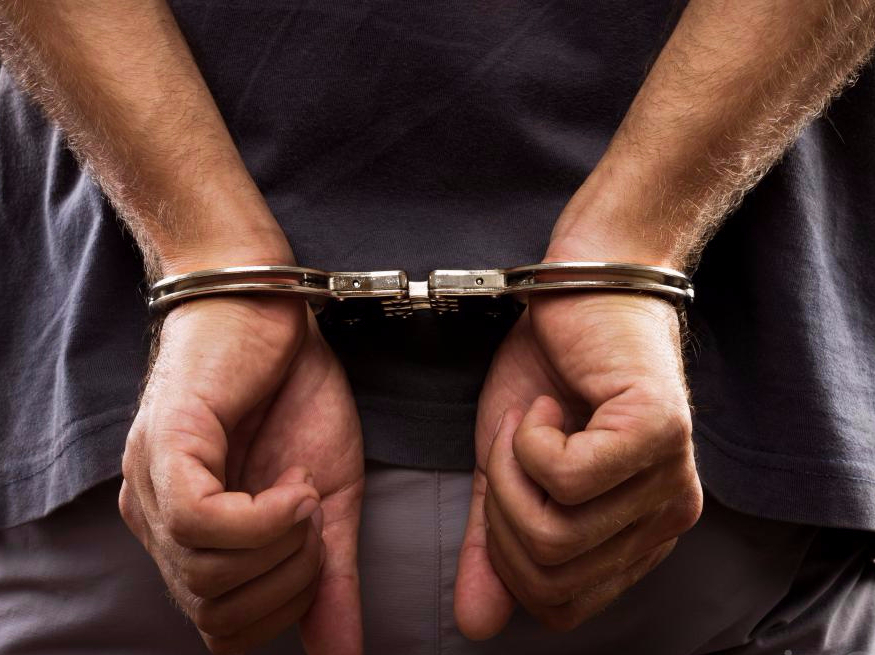
   When one-time CEO Alex Spirikaitis was arrested on the afternoon of Monday, October 21, 2013, he had been on the run for ninety-some days, accused of embezzling more than $10 million from the Taupa Lithuanian-American Credit Union in Cleveland, Ohio.

   It was almost half of the cash, assets, and member deposits of the small non-profit bank.

   He had changed his appearance by growing hair on his formerly shaved head and shaving his goatee. Despite speculation that he had fled to Europe or South America, he was apprehended in the Collinwood neighborhood on Cleveland’s east side.

   “He was actually walking down the street when we spotted him,” said FBI Special Agent Vicki Anderson. His disguise had only gotten him so far. Although he had left behind multiple semi-automatic weapons and 10,000 rounds of ammunition secreted away at the credit union, he was arrested without incident.

   “He did not put up a fight.”

   Stealing money with a smile and a fountain pen is one thing. Shooting it out with the Federal Bureau of Investigation is another thing. They aren’t the same thing, by a long shot.

   The FBI would not reveal how he been tracked to Collinwood, only that they had “developed information based upon advanced investigative techniques that led to his apprehension,” a brief statement said.

   He was less than three miles from closed down boarded up Taupa Credit Union.

   Modern credit unions date to mid-nineteenth century Germany, where they were conceived as people’s banks leveraging social capital to serve farmers and the working class. The first credit union in North America began operations in 1901 with a ten-cent deposit. Today more than 8000 of them in the United States serve over 90 million members with total assets of nearly $800 billion.

   Managed by their members, most credit unions are not-for profit cooperatives taking in deposits, promoting thrift, and making loans. Unlike banks, individuals combine to manage and control their own money. They are near and far in many shapes and sizes. Credit unions range from corporate entities to community institutions serving local schools and churches.

   When Augis Dicevicius emigrated from the homeland to Cleveland in the early 2000s, he soon opened an account at Taupa. It was in the neighborhood, the employees at the credit union were from the immigrant community, spoke Lithuanian, and over time became more like friends than bankers.

   “It was like loyalty,” he said, describing why he kept an account there.

   “There is a level of trust from both sides of the counter at Taupa because you know who you are dealing with,” said Algis Gudenas, former chairman of the credit union’s board of directors, three years before the National Credit Union Association liquidated it. “I think the slogan of Taupa more or less says it all, save with one of your own.”

   From the 1930s on when the federal government began to charter them, credit unions grew steadily, especially among immigrant groups. They were instrumental in helping establish Poles, Germans, Italians, and the more recent Asian and Hispanic immigrants in their new locales. When creating the Office of Ethnic Affairs in 1976 President Ford cited “the ethnic church, school, and credit union” as fostering “a sense of neighborhood.”

   Wherever Lithuanians have settled in the United States, from coast to coast, they have formed their own credit unions. Founded in 1969, the California Lithuanian Credit Union has assets of $72 million. The thriving Boston Lithuanian Federal Credit Union celebrated its 33rd anniversary in 2013. From its roots in the basement of a church hall in the early 1950s, Toronto’s Parama has grown to become the world’s largest Lithuanian credit unions.

   Already by 1906 in Cleveland the Lithuanian Building and Loan Association, sometimes simply known as the Lit bank, had been established, even though the community numbered less than a thousand at the time. After World War Two it evolved into the Superior Savings and Loan. In the 1980s, when Cleveland was by then home to more than sixteen thousand former Lithuanian natives and their children, Taupa was founded.

   It served the community for almost three decades.

   With approximately 1100 members and $24 million in assets, located a short walk from both their church and the Lithuanian Village cultural center, Taupa was a stable institution, healthy and growing, year after year, even in an economy often troubled by bank failures and recessions.

   At least it was until the evening of July 16, 2013, when police and federal agents surrounded Alex Spirikaitis’s $1.7 million home in Solon, a bedroom suburb 25 miles southeast of Cleveland. It was four days after the decision had been made by the state to liquidate the credit union, determining it was insolvent and had no viable prospect for restoring operations.

   Armed with a warrant for his arrest for fraud, when authorities approached the home they were met by his family, who told them he was inside, but was refusing to come out. He was going to tough it out.

   “Family members left the house with us and we thought, from the information we gathered, that he was not going to willingly come out,” said Special Agent Vicki Anderson.

   The police decided to regroup, the size and layout of the large house playing a big part in their decision to wait for daylight. After a night-long standoff, the neighborhood cordoned off for safety’s sake, and TV news crews at the ready, tactical teams entered the house in the morning.

   But the police came up empty. He was not there. He had run away, fled from the consequences, not that it did much good. “A horse may run quickly but it cannot escape its tail,” is how a Lithuanian proverb puts it.

   Before the first members made their first deposits in 1984, the credit union was just a hope and a dream.

   “We were in our kitchen having coffee one morning, talking about it like we had for months,” recalled Angele Staskus. “That was when my husband suddenly said yes, we were going to go ahead.”

   Believing Cleveland’s Lithuanian immigrants and descendants would be better off banding together for their savings and loan needs, Vic Staskus took his brainchild to an ad hoc committee made up of Vytautas Maurutis, Vacys Steponis, Gintaras Taoras, and Vincas Urbaitis. Taupa was coined as the bank’s name and they were shortly chartered by the state.

   At a meeting at Our Lady of Perpetual Help church attended by fewer than twenty people, they collected $4000.00 in deposits, convinced local Lithuanian attorney Algis Sirvaitis to donate space for an office, and hired Rimute Nasvitiene, who became Taupa’s first employee.

   “At first we did everything by hand,” said Vic Staskus. Later that year the Toronto credit union offered them their old computing machine. “It took four of us to bring it into our office, since it was as big as a table, and on top of that we lost most of our small office space to it.” Fortunately, through a friend at IBM, they were shortly able to secure a more modern system.

   After they purchased their own building from a retiring Lithuanian doctor in 1985, deposits began to pour in.  “That was a problem,” Vic Staskus recalled shortly before his death in January 2011. “We had no loans, so we were earning very little. We asked one of our board members to take out a loan. But he said he didn’t need anything. Every time we asked him, he said no. We were finally able to convince him and he took a loan out for $500, and gradually people began to realize we were lending.”

   By 1990, when Vic Staskus left Taupa, the credit union had nearly $8 million in assets and delivered most of the same services all banks did. “I knew we could offer better rates and interest, and I always believed we could offer as many advantages as banks to our members,” he said. Taupe was on solid footing and growing.

   Alex Spirikaitis joined Taupa in the early 1990s, at first working at the front counter as a clerk, later promoted to assistant manager, and eventually taking on the role of CEO, as the credit union quadrupled its assets in those years.

   “He lived on the same street as we did, in the neighborhood, just down the street from the credit union, when we were children,” said Rita Zvirblis, who served as secretary for Taupa’s board of directors in its early years. “He was a really nice kid, really quiet.”

   Former board director Ricardas Sirvinskas described the new CEO as well liked, especially by older members, because he spoke Lithuanian fluently. “The older generation of Lithuanians, they really liked Alex very much.”

   After he was arrested, U.S. Magistrate Judge Kenneth McHargh unsealed an affidavit revealing the extent of the embezzlement, which was more than $10 million, making it one of the largest cases of fraud against a credit union ever n the country. The largest, involving the St. Paul Croatian Credit Union, was coincidentally also in Cleveland, Ohio.

   The criminal complaint against Alex Spirikaitis was for allegedly making false statements to a credit union from 2011 through 2013.

   “He printed out numbers he wanted to report to auditors and the National Credit Union Association and taped them over the real numbers from the true Corporate One Federal Credit Union bank account statements,” the affidavit states. “Mr. Spirikaitis then photocopied the altered documents resulting in a document that mimicked the appearance of a statement coming directly from Corporate One.”

   The machinations were on the order of “Get Smart.”

   “Everybody accepted the financial statements Alex provided us, and everybody appeared to be happy with them,” said Vincas Urbaitis, a founding member of the credit union who sat on its board for more than 25 years until resigning in 2011.

   “I guess everybody just got duped.”

   During the summer, as Alex Spirikaitis remained on the loose, federal prosecutors seized his wife’s luxury SUVs and moved to take legal possession of his home. Court documents revealed that the down payment for the house, the construction of which took a year, was paid with two checks totaling $100,000 from the former CEO’s personal account at the credit union.

   “All remaining checks, totaling approximately $1,555,132, came from Mr. Spirikaitis in the form of Taupa Lithuanian Credit Union official checks,” court documents said. “While working at the Taupa Lithuanian Credit Union, Mr. Spirikaitis never made in excess of $50,000.”

   The luxury Adirondack-style house on a five-acre lot featured two full kitchens, an indoor swimming pool, entertainment room with big screen and movie projectors, five-and-a-half bathrooms, and an elevator.

   Alex and his wife had a luxury suite at FirstEnergy Stadium for Cleveland Browns football games. They drove one of their nine cars downtown for home games. They celebrated touchdowns with fancy drinks.

   “No Trespassing” signs surrounded the house on all sides.

   “I don’t think anybody from the board of directors knew or anyone within the Lithuanian community knew he was building a house,” said Vincas Urbaitis. “He was not very social. But he was not antisocial, either. He would talk to you about the business aspects of the credit union, but I don’t even know who his close friends were.”

   He was a kind of chameleon. Everybody noticed him, but nobody recognized him. He wasn’t a public man, after all. Ricardas Sirvinskas described Alex Spirikaitis as a quiet person, keeping to himself, and only rarely attending social events in the Lithuanian community.

   Although court documents were not completely clear regarding the final tally of money missing, Vincas Urbaitis was bewildered why examiners had not verified the statements prepared by Alex Spirikaitis.

   “They never went to the bank, Corporate One, and asked independently as to how much money was in the accounts,” he said.

   Vytautas Kliorys, board president of Taupa at the time it was closed and liquidated, also questioned the credit union’s third-party audit firm and examiners. “The board believed that it had all the procedures in place to prevent this sort of event,” he said. “We had received excellent and very good reports from the annual state exams, and we had even gone one step further than required and used an outside CPA firm to perform annual independent audits.”

   Paul Hixon, VP of marketing at Corporate One, had no comment other than to say the National Credit Union Association was investigating. Officials said it would take up to six months to complete a full forensic account process.

   The Lithuanian community reacted to the credit union’s closing with dismay. “For those in Cleveland that have been watching the news for the last few days know that the Lithuanian community in Cleveland has been in the spotlight,” said Regina Motiejunas-McCarthy, co-host of Siaurinis Krantas Lithuanian Radio.

   “Not because of something good but because of a tragedy.”

   The unexpected closure of the credit union affected all of its members, freezing their accounts for several months-and-more, even though they were insured, as well as severely impacting some businesses, including the Lithuanian Community Center.

   “Like many other businesses that have their accounts there, we are all scrambling to open new checking accounts with basically no liquid cash other than from sales over the weekend,” Ruta Degutis, president of the community center, said when news of the closure became official.

   “Alex assumed a public trust when he became CEO of Taupa, to help better the lives of others,” said one of the members. “It was not given to him as an opportunity to satisfy personal greed.” After thirty years Cleveland’s Lithuanian community lost one of the pillars of its community.

   Within days of his arrest U.S. Magistrate Kenneth McHargh found the former bank officer indigent and qualified for a court-appointed public defender. Since a “Go Bag” filled with blank identification cards, mobile phone cards, and stored value cards that could be used in lieu of cash had been found in his office, the magistrate also ruled he be held behind bars without bond. Assistant federal public defender Darin Thompson did not challenge the no-bond ruling.

   The defendant and his lawyer agreed to waive his right to a detention hearing. The case was bound over to a federal grand jury. Alex Spirikaitis left the U.S. District Court in downtown Cleveland as he had entered it, hands handcuffed behind him, a policeman beside him guiding him away.

   In the same courtroom the following year Alex Spirikaitis and Vytas Apanavicious pled guilty to bank fraud. Vytas Apanavicius of VPA Accounting, providing bookkeeping and accounting services, conspired with the group, depositing and transferring funds to hide overdrafts and withdrawals, according to Steven Dettlebach, United State Attorney. Michael Ruksenas of Naples, Florida, and John Struna of Concord Township, Ohio, were subsequently charged for their roles in the conspiracy.

   At the end of the day, Alex Spirikaitis was sentenced to eleven years in prison, not so much a punishment as a consequence, the wages not of sin but of breaking the faith.

A version of this story appeared in Draugas News.

Ed Staskus posts monthly on 147 Stanley Street http://www.147stanleystreet.com, Made in Cleveland http://www.clevelandohiodaybook.com, Atlantic Canada http://www.redroadpei.com, and Lithuanian Journal http://www.lithuanianjournal.com

A New Thriller by Ed Staskus

Cross Walk”

“A once upon a crime whodunit.” Barron Cannon, Adventure Books

“Captures the vibe of mid-century NYC.” Sam Winchell, Beyond Fiction

Available on Amazon: https://www.amazon.com/dp/B0CRPSFPKP

Late summer and early autumn. New York City. A Hell’s Kitchen private eye. The 1956 World Series. President Eisenhower at the opening game. A killer in the dugout.
Independent People

By Ed Staskus

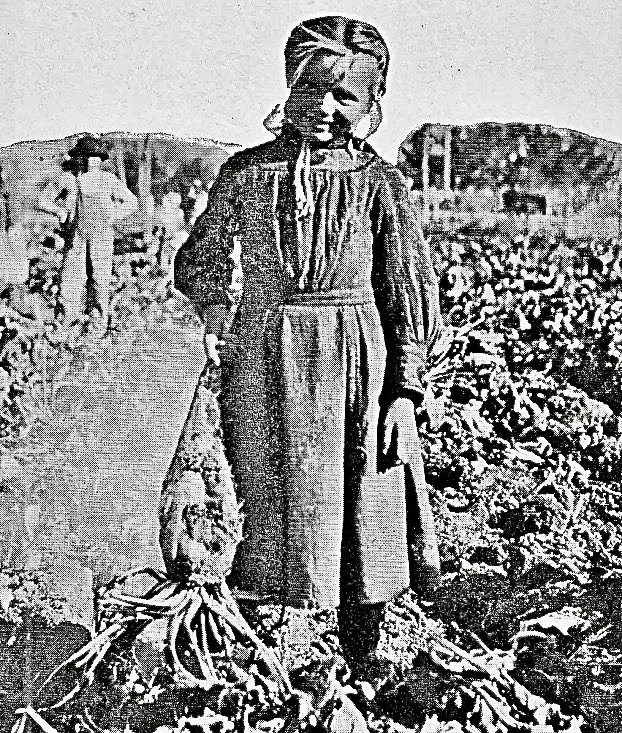
   “I started to help in the sugar beet fields when I was 9 years old,” my mother said. “My sister Irena started helping me two years later when she turned nine.” The year was 1939 when the sisters worked together for the first time. Six years later my mother was in a refugee camp outside of Nuremberg and my aunt was on her way to a slave labor camp in Siberia. My mother was lucky Americans ran the camp she ended up in. My aunt was unlucky Russians ran the camp she ended up in. She was lucky to survive her first year, much less the next decade.

   “We worked with our father, who had a one-row horse-drawn puller.” My grandfather Jonas Jurgelaitis followed on foot behind the puller, picked up the beets, scalping the tops with a small machete, and dropped them behind him as he went. He recycled the heads for animal feed. His daughters brought up the rear, shaking dirt off the beets, and loading them into a side slat cart. When it was full he made his way to Mariampole, the nearest market town, where there was a storehouse and a train station to later take the root vegetables to a sugar beet factory. 

   Their other major crop was cabbage. They could harvest upwards of ten thousand heads an acre. When they cut the cabbage head out of the plant they left the outer leaves and root in the ground. That way they got two crops. Jonas took them to Mariampole, too.

   “My older brothers Bronius and Justinas helped handle the livestock, and they did field work and repairs. Something always needed to be fixed. My younger brothers were still growing up. My father did everything outside the house and my mother did everything inside the house. All of us worked around the clock at harvest time, even the boys.” Most of the food and drink the family of eight ate and drank came from their own fields and pastures, although their sugar beets were grown on land they rented from a neighboring childless widow.

   The farm was in the Naujeji Gizai region hallway between Lake Paezeriu and Mariampole, although it was far closer in spirit to the lake than it was to the city. Some farmers had tractors. Most farmers had draft horses. They preferred tractors, but the Great Depression had put a dent into what they preferred. Some big land owners had cars. Everybody else had a horse and carriage to get the family to church on time on Sundays.

   My grandfather kept cows, pigs, and chickens. “We made our own bread and butter, made cheese, gathered eggs, and collected berries.” There were patches of wild blueberries at the edge of their fields. Although they didn’t have a cellar, my grandmother Julija still canned pickles and beets and stored them in the well. “We raised our own pigs and my father killed them.” When the time came, Jonas selected a pig for slaughter, walked it to a clearing beside the barn, hit the animal hard between the eyes with a club hammer, and cut its throat. With the help of his two eldest sons, he cleaned and skinned the pig with a sharp knife, keeping a knife sharpener at hand.

   Once the skin was separated from the muscle and fat, he cleaned out the guts and sawed the pig’s head off. After quartering the animal, Jonas found the hip joints and slid his knife into them, cutting off the two hams. He did the same thing when cutting off the shoulders of the pig. At the center, where the ribs are, he took whatever meat he could find. They made sausages, bacon, and cured slabs of pork with salt and pepper. Jonas had built a closet around the chimney in the attic of the house, which could be gotten to by ladder. There were no stairs. He smoked the pork in the closet, laying the meat on grates, opening a damper to vent smoke into the closet. “I was scared to death of the upstairs, of the fire up there, although the pig meat was delicious,” my mother said. “When we ran out of food, my father killed another animal. He was a serious man.”

   The dining room was big enough for all of them at once. There were no chairs. There were two long benches. My mother always sat cross-legged when eating. “I was scared that a Jew would sneak under the table.” She was afraid he would bite her legs and suck her blood. “Everybody said the Jews had killed God and they drank the blood of Christians.”

   One of my mother’s chores was killing chickens for dinner. She didn’t like chopping their heads off, so she grabbed them by the neck instead and swung them in a circle around her until their necks snapped. There were barn cats and a watchdog. They chained the dog up at night. There were potatoes and fruit trees. They grew barley and summer wheat, putting in a barnful of hay every autumn. Sugar beets were my grandfather’s number one cash crop, followed by cabbage and hemp. He grew some stalks of marijuana and tobacco behind the barn. He didn’t puff on pot himself. He smoked his homegrown tobacco instead, packed in a pipe, taking a break at the end of a long hard day. 

   “I let the young men smoke their stinkweed and get silly,” he said. My grandfather got silly in a different way. He brewed his own beer and krupnickas. My grandmother didn’t smoke or drink. She kept a close eye on her husband. He kept a close eye on her, never smoking in the house. She had chronic tuberculosis, coughing and running a fever, and wasn’t long for this world.

   Making home brew is the simplest thing in the world. Sumerian farmers brewed beer from barley more than 5,000 years ago. The Codes of Hammurabi, that were the laws during the Babylonian Empire, decreed a daily beer ration to everybody from laborers to priests. Laborers got two liters a day. Priests got five liters a day. In the Middle Ages Christian monks were the artisanal beer makers of the time. Since my grandfather had water, malt and hops, and yeast within easy reach, he had beer within easy reach year-round.

   Krupnikas is a spiced honey liqueur. The Order of Saint Benedict whipped it up for the first time in the 16th century. It can be spiced with just about anything, including cardamon, cinnamon, and ginger. If they had them, farmers added lemons, oranges, and berries. Honey was essential, although not as essential as a gallon or two of 190 proof grain alcohol. There was grain as far as the eye could see, and everybody knew somebody who made moonshine, so making krupnikas full-bodied was never a problem. Lithuanians pour it down on holidays and weddings. Everybody likes a warm snort of it in the dead of winter, whether they have a cold or not.

   Next to the lowlands of central Lithuania, the carbonate soils of the west are the best. That is where my grandfather was. More than half of the country’s land area was farmland. Most of the rest of it was meadow and forest. What was left was where the towns and cities were. The agrarian reform of 1922 promoted farmsteads. Landless peasants got some acres of land, if not a mule. Most holdings, except those Polonized, were between 5 and 40 acres. The Poles were Lithuania’s rural aristocracy. My grandfather had been a landless peasant. He got 10-some acres of his own and rented more of it. During the interwar years more than 70% of the population depended on agriculture for its livelihood. In the 1930s Lithuanians fed themselves and were the source of 80% of the country’s export income. Lithuania is roughly two-thirds the size of the state of Maine. The small country was the sixth-largest butter exporter in the world.

   My grandfather didn’t know anything about the legality of cannabis. He didn’t know it was called “Sacred Grass” three thousand years ago in India. He didn’t know the Romans had used it as medicine. He didn’t know Queen Elizabeth in 1563 ordered all English land owners with 60 or more acres to grow it or face a 5 pound fine. One year later King Philip of Spain ordered cannabis be grown throughout his empire from Spain to Argentina. George Washington cultivated it at Mount Vernon and smoked it when his teeth hurt too much to bear.

   After World War One some nations began to outlaw marijuana. It became seriously illegal in the 1930s. The United States led the way. The plow breaking new ground was “Reefer Madness” and the man behind the plow was William Randolph Hearst. His chain of newspapers ran one article after another demonizing marijuana. There were articles about Mexicans gone crazy after smoking it, running around with a “lust for blood,” and articles about reefer-mad Negroes dancing to voodoo jazz music and raping white women.

   Harry Anslinger, head of the Federal Bureau of Narcotics, turned the nativist, as well as racist, battle against marijuana into a war. “Reefer makes darkies think they’re as good as white men,” he said. He believed it had a bad effect on the weak-minded “degenerate races.” He was especially worried that white women might smoke it at parties and consort with black men. 

   “Most marijuana smokers are Negroes, Hispanics, and Filipinos,” he said. “Their satanic music, jazz, and swing, result from its usage. This marijuana causes white women to seek sexual relations with Negroes, and entertainers, and many others. I consider it the worst of all narcotics, far worse than the use of morphine or cocaine.” The soft drink Coca-Cola contained cocaine from 1894 until 1929. It was why kids could walk five miles to school, both ways, uphill in the snow, jumping barbed wire fences. 

   The town of Gizai is situated at a crossroad. There was a small school, church, police station, hardware store, and a coffee shop in the 1930s. “We went to church every Sunday and my father went to the store whenever he needed a tool or something he couldn’t make himself,” my mother said. “When he took us along he treated us to candy at the coffee shop while he drank coffee and had a slice of lazy cake.”  

   Back on the farm everybody slept on the ground floor of the house. The bedrooms were three side rooms. One was for Jonas and Julija. One was for my mother and her sister. The third room was for the four boys. There was no electricity. The house was lit by kerosene lamps. The dining room was the biggest room. It was lit by a big kerosene lamp that was raised and lowered from the ceiling by a pulley attached to a counterweight. Everybody washed their meals down with tea. My grandfather bought tea from a German smuggler rather than pay the taxes levied on it. In the winter the fireplace was stuffed with wood and turf. The boys had the chore of making sure it never died out November through March.  Once a year a chimney cleaner came with ladders, brooms, and brushes. The sweep used a long rope attached to a weight for pushing out the soot.  

   In Washington, D. C. Harry Anslinger could blow smoke with the best of them. “Under the influence of marijuana men become beasts. It destroys life itself,” he declared. He called for a nationwide ban on the weed. Just in case anybody had missed the point, he added, “Smoking it leads to pacifism and communist brainwashing.” The top pot cop got the Marijuana Tax Act passed in 1937. It effectively made the weed illegal from coast to coast. Other countries worldwide got on the bandwagon. Even the Netherlands criminalized cannabis for a few years. The American law was declared unconstitutional in 1969, but Richard Nixon replaced it with the Controlled Substances Act the next year. Darkies couldn’t catch a break any which way.

   The Nixon administration quickly changed the name of the Controlled Substances Act to the War on Drugs. The next Republican president dragged out the big guns. “I now have absolute proof that smoking even one marijuana cigarette is equal in brain damage to being on Bikini Island during an H-bomb blast,” said President Ronald Reagan. The First Lady consulted advertising executives and her astrologer and they came up with a snappy slogan: “Just Say No!” When asked what she meant she said she wasn’t talking about H-bombs but about marijuana.

   My grandparents couldn’t afford a washerwoman, so my grandmother did all the laundry. She put a tripod inside the fireplace and heated water in a copper kettle. After the clothes were washed she rinsed them in another kettle. She hung some of the clothes on a line in the attic to dry. She used a mangler on other laundry to get the wrinkles out. It was a wooden box with rollers like a wringer that squeezed and smoothed water-soaked clothes. When she was done she didn’t need any marijuana to help her relax. She fell asleep the minute she was done.

   My grandmother Julija died of tuberculosis in 1941. She had been in and out of a sanatorium in Kaunas. When she decided to go home for the last time it was to go home to die. My grandfather built an addition for her, which was a bedroom with a window. He built a new bed and stuffed a new mattress with clean straw. He moved their wedding cask to a corner of the bedroom. When the end was near he stood a coffin up beside the door. She was buried in a cemetery outside Gizai a few months before the German Army suddenly invaded.

   My grandfather Jonas died in 1947 after the Russians took the country over and collectivized everybody’s farms. The authorities told him he could keep one cow and one pig. They didn’t care about his chickens. They told him to stop growing marijuana and tobacco. All his crops had to be delivered to the state and the state would pay him whatever they thought was appropriate. He had differences with them about it, but what could he do? What he did was die soon afterwards of some kind of brain disease. His head probably exploded. Who wants to be a slave of the state? His farm disappeared down the Soviet sinkhole.

   Lithuania criminalized cannabis in 2017, a hundred years behind the times. The country was going against the grain. Almost everybody else in the world outside of China and Russia was decriminalizing it as fast as they could. They were sick of the drug gangs and lost tax revenue and prisons bulging with one-time losers. By then everybody knew marijuana didn’t make anybody sex-crazy or lust after blood. The country pivoted four years later and decriminalized small amounts for personal use. Growing any amount of jazzy stinkweed remains illegal. God forbid a seed in your personal Mason jar sprouts and flowers.

   My grandfather was a simple man with only a handful of overriding concerns, doing what had to be done, leaving the rest to take care of itself. He might have mulled the matter over on his front porch, drawing on his pipe to get it going, but I doubt he would have paid too much attention to whatever monocratic laws the boss men promulgated regarding his farm and crops, unless it was at the point of a gun. 

Ed Staskus posts monthly on 147 Stanley Street http://www.147stanleystreet.com, Made in Cleveland http://www.clevelandohiodaybook.com, Atlantic Canada http://www.redroadpei.com, and Lithuanian Journal http://www.lithuanianjournal.com

A New Thriller by Ed Staskus

Cross Walk”

“A once upon a crime whodunit.” Barron Cannon, Adventure Books

“Captures the vibe of mid-century NYC.” Sam Winchell, Beyond Fiction

Available on Amazon: https://www.amazon.com/dp/B0CRPSFPKP

Late summer and early autumn. New York City. A Hell’s Kitchen private eye. The 1956 World Series. President Eisenhower at the opening game. A killer in the dugout.

Farm Girl

By Ed Staskus

   When my mother Angele was born it snowed until it got too cold to snow anymore. By the end of the month the thermometer rose to ten degrees below zero. When it warmed up the next month and the snow melted, a half-foot of slush was left behind. The next week there was heavy rain and her father’s fields were left under water. If it froze again there would be acres of ice rink. It froze and everybody went skating.

   “I was born in an area we called the New Farm, in Suvalkija, near Gizai,” said Angele. It was mid-January 1928.

   Suvalkija is the smallest of the five regions of Lithuania. It is girdled by the Nemunas River to the north and Poland to the south. The region’s identity was molded in the 19th century when it was a part of Congress Poland. Suvalkija was an agricultural area, generating substantial sugar beet harvests. Sugar beet yield in Lithuania in the early 20th century was almost half what it was in the United States, even though the country is 151 times smaller than the United States.

   “My father’s name was Jonas Jurgelaitis. My mother’s name was Julija. I had four brothers and a sister. I was so happy when my sister was born. We lived on a small farm. It was three or four miles from Marijampole.”

   Marijampole is in the far south of Lithuania, bordering Poland and Kaliningrad. Lake Vistytis is nearby. The town was a center of book spreaders and freedom fighters in the long struggle leading to the country’s independence in 1918. Speaking Lithuanian was forbidden, but they did it anyway. Reading Lithuanian books was forbidden but they read them anyway. Many of them ended up in Russian prisons, where they spoke Lithuanian among themselves.

   Their farm was 10-some acres. The nearest neighbors were out of sight, even though they were nearby. Small woodlands of Scots Pine and Norway Spruce were scattered along the periphery of their land. Her father kept a pair of horses, three to four cows, lots of chickens, and a sounder of swine. Every week he loaded 10-gallon 90-pound milk cans into his wagon and took them to a local dairy. He rented croplands from a childless widow. The ground was devoted to sugar beets, a cash crop, harvested in early autumn.

   Suvalkija has less forest than any other part of Lithuania. It had long since been brought to bear for tillage. Kazlu Ruda, a large forest, nearly 230 square miles of it, is in Suvalkija, but it is on sandy soil that doesn’t work for farming. Rye, wheat, and barley have been cultivated in Lithuania for two thousand years. Potatoes got rolling three hundred years ago. The country has always been able to sustain itself with foodstuffs. After gaining home rule from the Russians, land reforms in 1922 turned over ground suitable for the plow to tens of thousands of new landowners. Two years later the Academy of Agriculture was established to oversee land exploitation and management.

   “My mother was tall and thin.,” Angele said. “She was pretty. She looked like a Romanian, even though she was born near where we lived. I didn’t look like her, at all. I looked like my father.” Her mother gave birth to eleven children in less than twenty years. Six of them survived infancy. Five of them survived World War Two, the forty-six-year subsequent Soviet occupation that happened next, and lived to see Lithuania regain its independence.

   Justinas was the oldest boy, born in 1919. “Justinas and my other older brother Bronius would invite their friends, and all the girls, to our house in the summer for dancing, before he joined the army.” Irena and the boys Sigitas and Jozukas were the youngest. Jozukas, the tenderfoot of the family, was two years old in 1938.

   Julija started suffering chest pains that year, losing her appetite and losing weight. She was diagnosed with tuberculosis, a major killer in the 19th and early 20th centuries. Almost ninety years later tuberculosis is still prevalent in Lithuania, one of the most highly TB-burdened countries in the world.

   “She went to the sanitorium in Kaunas the next year and got better.” When family responsibilities and the family’s finances called her back, she got worse. Angele helped with the housework and cooking. She kept up her schoolwork, kept up her chores, and with her two older brothers nursed their mother.

   “Irena and I went to a school in Gizai, which was less than a mile from our house. In the winter, when it was snowy, my father hitched one of the horses to a sled and took us there. I went for six years.” The family farm wasn’t far from Marijampole. It was forty miles southwest of Kaunas, the country’s second largest city. Vilnius, the largest city, home to nearly a half million, was eighty miles away. It might as well have been a million miles away.

   “Even though my father did everything, we all had to work, since we were poor.” There were no hired men or seasonal laborers. “I mixed feed for the pigs and fed them. We earned our money by growing sugar beets. Irena and I helped, but Sigitas and Jozukas were too small. We pulled them out of the ground in the fall and used a big knife to cut the leaves away. We threw them in a cart and when we had enough to fill our wagon, my father hitched a horse and took the beets to Marijampole.”

   The family home was a frame house, clapboard siding painted green, two stories, although the second story was an attic for storage and for smoking pork. “We had a barn, but we had another small house, too, a small barn where we kept wood for the fireplace.” They sawed and split their own cordwood. “On the second floor, up a ladder, there was rye and barley for bread. Justinas and Bronius slept in a room beneath the loft.” A brick-lined jumper duct fed heat from the house fireplace to the barn. Still and all, all winter long the young men gathered their blankets and warmed them up at the fireplace before going to bed. In deep winter in the Baltics the nights are 16 hours long. The stars twinkle but they are icy.

   Lithuania is a flat fertile country overlooking the Baltic Sea. The summers are mild, and the days are long, but the winters are longer. They are cold and dark. Temperatures often drop well below freezing. The ground is ice and snow-covered from mid-December to mid-March.

   “We had a dog, in a dog house next to the barn, whose name was Sargis.” Saugotis in Lithuanian means beware or watch out. “He was our guard dog, always tied up at night, who barked whenever a stranger came near. We had cats, too, who killed the mice and rats who ate our grain. We never let them into the house, though. They were only for the outside.” Barn cats lead a rough life, hunting vermin in outbuildings and fields. They sleep where they can, stay warm if they can. Living feral, they don’t live long. Whenever they could they snuck into the small, heated barn and slept under the blankets next to the two brothers.

   The family knew everybody in their neck of the woods. Everybody was wary of strangers. Although they had no immediate neighbors, her mother’s father, a tailor, lived nearby, and her father’s mother also lived within walking distance. “Whenever my mother made potato pancakes, she would give me a platter of them, and I took them to grandma’s house.” Her grandmother lived on the other side of the woods, with one of her father’s older sisters.

   After her mother got sick, from about the time she was ten years old, Angele did the cooking for the family. “My oldest brother Justinas helped me until he went into the army, and then Bronius helped.” She cooked pork logs, made soup, and served bread and butter every day. She washed the pots and pans and dishes and utensils twice a day.

   Justinas was apprenticed to a tailor, and learning the trade, but joined the army in the late 1930s. Every country cousin knew war was coming. “He became a cavalryman and was stationed near Marijampole. He rode home a few times, on his horse, in his uniform. He was so handsome.” He had just turned twenty-one. He didn’t know his horse was going to be useless in the coming war.

   When the Red Army invaded the Baltic states in June 1940, their troops numbering some fifty divisions, supported by armor and an air force, they swept the Estonian, Latvian, and Lithuanian forces aside in a matter of days. Justinas spent the rest of the war feeding his horse, and sewing and mending clothes, first under the thumb of the Russians, then the Germans, and then the Russians again.

   A woman whose husband had died and who lived nearby helped Angele learn to bake bread in their brick-lined oven. They made a half-dozen loaves at a time, kneading up to ten pounds of dough at a time, baking the free-standing loaves loosely arranged in front of a smoldering pile of coals that had been left burning for several hours. They kept the coals pushed to the back of the oven. They added wood as they needed it, shifting the fire from side to side. “We always had bread. We always had tea and sometimes coffee. When times were hard we collected herbs and had herbal tea.”

   The house did not have electricity or indoor plumbing. They had oil lamps and an outhouse and a well. There was a sink with a pump handle in the kitchen. “The outside well had a pulley and a bucket until we finally got a hand crank.” In January 1940 a bitter cold wave enveloped Lithuania, driving temperatures down to 40 degrees below zero Fahrenheit. The next month it crashed to 54 degrees below zero, the coldest in 160 years. The cats didn’t leave the small barn for weeks. The well froze. The Baltic Sea iced over. Some people froze to death and more than 10,000 throughout the Baltics were severely frostbitten, losing fingers and toes.

   When Julija had a relapse, she went back to the sanitorium in Kaunas, but returned home soon afterwards. “A taxi brought her back. My mother said she had to be with her children.” She was not fully recovered. When winter bore down again, she became run down and became bedridden. Jonas built an addition with a window, putting down rough planks over the packed dirt floor. He moved a free-standing cast iron furnace into the room. His wife died in her bed, the head of the bed facing the window, early the next spring. She was forty-three years old.

   Angele’s father re-married four months later. “He needed a woman to take care of Sigitas and Jozukas, my baby brothers.” Jonas had decided to ask the nearby widow with the farm, the woman who had helped Angele bake bread, but by then she was spoken for by another man. He found a single woman in Gizai and didn’t waste any time proposing.

   “Gizai was where we always went. My school was there, and there was a church, a police station with a policeman, and a hardware store that had everything. Whenever we had a coin we bought candy at the coffee shop there.”

   Jonas’s new wife was younger than Julija had been and healthy as a horse. She had a daughter a year older than Angele, even though she had never been married. The wedding was in early September. It wasn’t long after the move-in before Angele realized she couldn’t stay. “My new mother and my father started arguing. She loved the younger ones, and she loved her own daughter, but they started arguing about me. My father stood up for me, but he needed a wife. I don’t know what I was thinking, but one day I left.”

   It was late September. She packed a loaf of bread, some cold pork, what clothes she could carry, and a picture of her mother. She set off on foot in the morning for Alvitas, for her aunt’s house. Ona Kreivenas was her mother’s sister. Her aunt’s husband, a police captain, had been deported to Siberia by the Russians that summer, leaving her with three children and pregnant with a fourth. She could use a hand around the house.

   “I knew life wasn’t going to be any easier in Alytus, but I had to go,” Angele said

   Even though two German army groups smashed into the country in late June that summer, ousting the Russians, by then it was too late for Jonas Kreivenas, who didn’t come back from a slave labor camp in Siberia for nearly fifteen years, and when he did, found out his wife wasn’t in Lithuania anymore. She had fled post-war Europe. She was living in Philadelphia, in the United States.

   Alvitas is about fifteen miles from Gizai. It took Angele most of the day to walk there. She passed a prisoner of war camp crowded with Soviet soldiers captured by the Wehrmacht. One of them asked her for bread but she turned her head away. His war had amounted to little and ended in nothing. When she got to her aunt’s farm the sun was close to setting. 

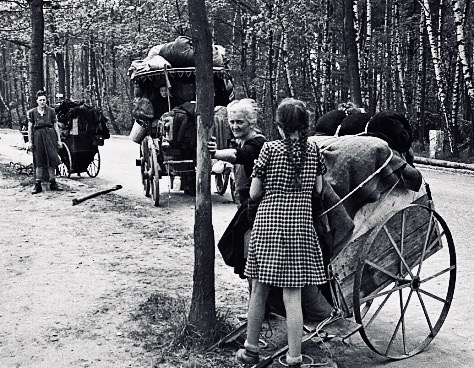
   “I lived with my aunt for the next three years, until the Russians came again, and we had to run to Germany. I never went back home, except to visit, as a guest. I loved my father, and my brothers and sister, but I couldn’t go back.” When Angele woke up early the next morning, she had a new home and a new mother. “She was my parent now. They were my family.” She helped her aunt make breakfast. There was strong black tea at the table. The first frost wasn’t far away, but that morning was an Indian summer morning.

A version of this story appeared in Draugas News.

Ed Staskus posts monthly on 147 Stanley Street http://www.147stanleystreet.com, Made in Cleveland http://www.clevelandohiodaybook.com, Atlantic Canada http://www.redroadpei.com, and Lithuanian Journal http://www.lithuanianjournal.com

A New Thriller by Ed Staskus

Cross Walk”

“A once upon a crime whodunit.” Barron Cannon, Adventure Books

“Captures the vibe of mid-century NYC.” Sam Winchell, Beyond Fiction

Available on Amazon: https://www.amazon.com/dp/B0CRPSFPKP

Late summer and early autumn. New York City. A Hell’s Kitchen private eye. The 1956 World Series. President Eisenhower at the opening game. A killer in the dugout.