Tag Archives: Vytautas Staskevicius

Bring Me the Head of Lenin

By Ed Staskus

   When my sister Rita told me our father was going to Lithuania to bring back the head of Vladimir Lenin, I was astonished. Lenin, who had died seventy some years earlier, was far more reviled than revered among Lithuanians. Most Lithuanians saw him as a callous ideologue whose policies led to another Russian occupation of their country in the 1940s. He was as bad as the Tsars. They blamed him for Josef Stalin, who ordered mass deportations whenever it suited him. They blamed him for the personal and political repressions that lasted nearly fifty years.

   “You mean, like a memento?”

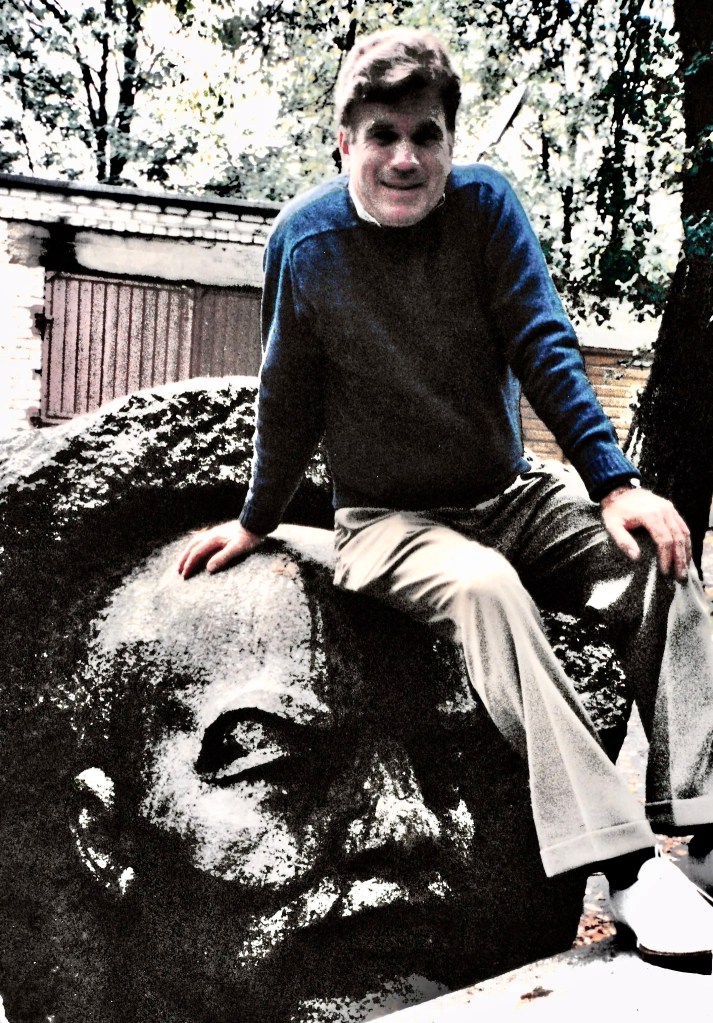
   “No, more like a boulder-sized bust of Lenin’s head that weighs more than two thousand  pounds.”

    The boulder was the size of a Kamchatka bear. The face had been carved out of one side of the rock. Lenin looked untroubled. The boulder looked indifferent.

   “What is he going to do with a head of Lenin once he gets it back to Cleveland?” My parents lived on the east side of Cleveland, near Lake Erie, a couple of blocks from the Lithuanian Catholic Church. They had a one-car  garage that barely fit their car and a lawnmower. “Where are they going to put it?”

   “It’s not for dad, it’s for Russell Bundy.”

   “Who’s Russell Bundy?”

    Russell Bundy was born during the Depression, the youngest of seven children. He would go on to have seven children of his own. At first, in the 1950s, he worked for a baking pan manufacturer but soon started selling pots and pans on his own out of the back of his car. Russell T. Bundy Associates was formed in 1964. They bought and sold refurbished bakery pans and equipment. They moved into what had been the Urbana Tool and Die Company building, about forty miles west of Columbus, Ohio, in 1972.  They soon expanded their services and product lines, getting into pan-coating . Ten years later the American Pan division was formed to manufacture custom baking pans. In the 1990s what was now Bundy Baking Solutions added Dura Shield non-stick coatings to its family of brands.

   As time went on Bundy Baking Solutions came to operate twenty six facilities in seven countries and employ more than one thousand people worldwide. The entrance to their headquarters was guarded by two grim looking stone lions. The beasts weren’t going to need a freshly baked hot dog bun if they decided to eat you.

   “He’s helping this Russell Bundy person get his hands on a bust of Lenin in Lithuania and get it delivered to Ohio? How did that happen?”

   Our father was born in Lithuania in the 1920s. His father was their district’s police chief. Our grandfather was swept up by the NKVD early during World War Two and transported to Siberia, where he was forced to work in a slave labor camp and died of starvation. Our grandmother was transported to Siberia in late 1944, for no apparent reason, and spent more than ten years trying to survive. When she was finally released she wasn’t allowed to return to Siauliai, where their home had been.  She was forced to live in a one-room cinder block apartment in the middle of nowhere.

   There was no love lost when it came to my father and the Russians. For all that, he was a retired certified public accountant and knew the value of a dollar. He was being well paid by Russell Bundy to go to the Baltics to help achieve his goals, although it was unclear what his goal was when it came to Lenin. 

   “Russell Bundy called me at the travel agency to get tickets to go to Lithuania.” My sister worked at Born to Travel in Beachwood, not far from where she lived in Cleveland Hts. “He asked me a hundred questions about towns and places, so I finally told him to call dad. He hired him go with him, to interpret, to navigate regulations, and find the right people.”

   “Find the right people for what?”

   “He was thinking of expanding into Eastern Europe.” It was the mid-1990s. He said Lithuania is ripe with business opportunities, the exchange rate is great, and there are lots of abandoned Soviet factories that could be converted to his use.”

   “He’s probably right about that.”

   They spent a week driving from the Zemieji Panieriai district in Vilnius to the Naujamiestis district in Kaunas to Klaipeda. The Baltic Sea port city of Klaipeda had become a major industrial hub during the Russian occupation of Lithuania from 1944 to the last troop withdrawals in 1993. In the end, Russell Bundy didn’t find what he was looking for. He did, however, find something else.

   “He met an older Lithuanian man in Vilnius who had been a general in the Red Army,” Rita said. When the Russians left, he stayed where he was. He wasn’t a true-blue Communist, after all. A truckload of Red Army paraphernalia stayed with him. “He had a whole bunch of uniforms, medals, and military watches.” He had an assortment of gear and ephemera. He also had a big bust of Lenin that nobody in Lithuania wanted.

   The day Lithuania declared independence in 1990 was the day they began to expunge the Russian legacy. They condemned the occupation as an illegal act. The display of Russian symbols and  imagery was officially banned. They started removing Moscow’s monuments, including all the busts and statues of Lenin. 

   Nobody knew how many there were, but since the Russians had been the controlling colonial power in Lithuania for almost five decades, everybody knew there were plenty. The busts and statues were a big part of the Communist Cult of Personality and their propaganda machine. Everybody knew where at least one of them was. They got pulled down, smashed to bits and pieces, and thrown into the dust bin of bad history.

   The Lithuanian general had hedged his bets and it was paying off. He sold everything he had to Russell Bundy, who had taken a great interest in the memorabilia. “He saw the bust and it was love at first sight,” Rita said. “He never said why, at least not to me. I don’t think dad knew, either. He took the collectables back to Urbana, got lots of mannequins, set up a room for them, dressed them in the Russian uniforms, and displayed them in the room. It wasn’t public. It was private. You had to be invited to see it. I saw it once. In the meantime, he waited for dad to bring the head of Lenin to him.”

   Our father got the necessary export papers rubber stamped and got the bust crated. It was taken by truck to Hamburg, Germany. From there it was loaded onto a freighter. When the freighter docked in Philadelphia it was unloaded and taken by truck to Urbana. Once there it was uncrated and set up for display. 

   I met Russell Bundy once, by accident, at my parent’s house. I had driven there to drop something off. He was talking to my parents about his daughter Beth, who was married to a man named Joe. They lived in Pennsylvania, where Russell Bundy was originally from. They wanted to adopt a child. Beth wasn’t able to have one herself. She wanted a newborn baby. It was proving difficult to find a newborn in the United States. It was much easier finding one in Eastern Europe. They were thinking of trying to find one in Lithuania.

   When I saw him my first thought was he looked like Robert Preston in the movie “The Music Man.” He had a similar manner, too, lively and engaging. “He has a huge personality,” my sister had already told me. He had a terrific, sincere-looking smile. He was wearing a sleeveless argyle knit sweater and a bow tie. He was also wearing  a wig, the kind of wig, like the kind Andy Warhol used to wear, that was obviously a hairpiece. 

   “His daughter Beth told me she never saw her father without his wig,” Rita said. “She said none of her brothers and sisters ever saw him without it, either.”

   “What about his wife?’

   Russell Bundy and his wife Elizabeth were married for fifty two years. “No, I never wanted to ask her about that and I never did.”

    Some people wear wigs to dress up their hair, which is in bad shape. Others wear wigs because they have gone bald. I didn’t know what it was with Russell Bundy, but since he was a salesman kind of man, I thought he probably lost his hair at an early age. The wig helped keep him looking young and vibrant. I couldn’t help wondering, since he was a big time businessman, if he ever flipped his wig like other big time businessmen are prone to do.

   The bald headed pate of Lenin wasn’t the only large object on display at Bundy headquarters in Urbana. There was the World’s Largest Loaf of Bread Sculpture, too. It is made of steel and fiberglass. “It’s exactly as it’s touted,” said Daniel Kan from Dayton. “It’s a large loaf of bread that is lit up from the street. You can pull in and take pictures. It’s definitely a two picture moment.”

   There are actually two monumental loaves of bread. “Formerly displayed upright, the larger of the two is now lying behind one of the factory buildings,” according to World’s Largest Things. “It attracted a lot of attention, painted with the package design of one of their customers, which you can still see on the leftover loaf. The second loaf acts as a sign for the factory itself, displayed by the entrance door. The larger of the two is a little more interesting, as the plastic bag is more irregular, and the twist-tie looks as if it’s been used a couple of times.”

   Russell Bundy had meant to deliver capitalism to a recently Communist country, but instead had brought a bit of Communism to a capitalist country. He was a dyed-in-the-wool entrepreneur but had paid good money for and transported a collectivist icon more than five thousand miles to Ohio, one of the more conservative states in the country. Urbana is in the 4th Congressional District. It is a Republican town. The combative MAGA man Jim Jordan represents the district in 2025. The locals call their home Mayberry as in TV’s once popular “The Andy Griffith Show.”

   Most Westerners have a negative view of Lenin, seeing him as the initiator of Soviet totalitarianism, political repression, and a failed economic system. He created the Cheka secret police force, which is considered a foundational instrument of state terror. There wasn’t much to like about Vladimir Lenin.

   Everybody liked the bust, however. There was something heroic about it, just like there was something heroic about Lenin. His early aims were rooted in the ideals of equality, freedom, and brotherhood. After his older brother was executed for his part in the attempted assassination of Tsar Alexander III in 1887, Lenin made a commitment to revolutionary change. He kept at it for thirty years. Then, to his surprise, just like that the Russian Revolution happened, ending centuries of imperial rule.  He embraced terror and violence to get what he wanted. He came to believe the ends justified the means. In the end what he achieved was a one-party autocratic state. By the time he became the top dog of the Bolsheviks, who became the Communists, he didn’t believe in equality, freedom, and brotherhood anymore. He believed in every man for himself and the state against all.

   The bust might have been a remarkable thing, but I never saw it. I wasn’t especially interested in looking at a boulder depicting a dead Big Brother. I asked my sister what she thought of it, since she had seen it.

   “I thought it was ridiculous,” she said. “But Russell loved it. He stood beside it smiling like the cat who swallowed the canary.”

.147stanleystreet.com, Made in Cleveland http://www.clevelandohiodaybook.com, Down East http://www.redroadpei.com, and Lithuanian Journal http://www.lithuanianjournal.com. To get the site’s monthly feature in your in-box click on “Follow.”

“Telling of Monsters” by Ed Staskus

“21st century folk tales for everybody, whether you believe in monsters, or not.” Sam Winchell, Beyond Fiction

Available on Amazon:

Oliver and Emma live in northeast Ohio near Lake Erie. The day they clashed with their first monster he was six years old and she was eight years old. They fought off a troll menacing their neighborhood. From that day on they became the Monster Hunters.

A Crying of Lot 49 Publication

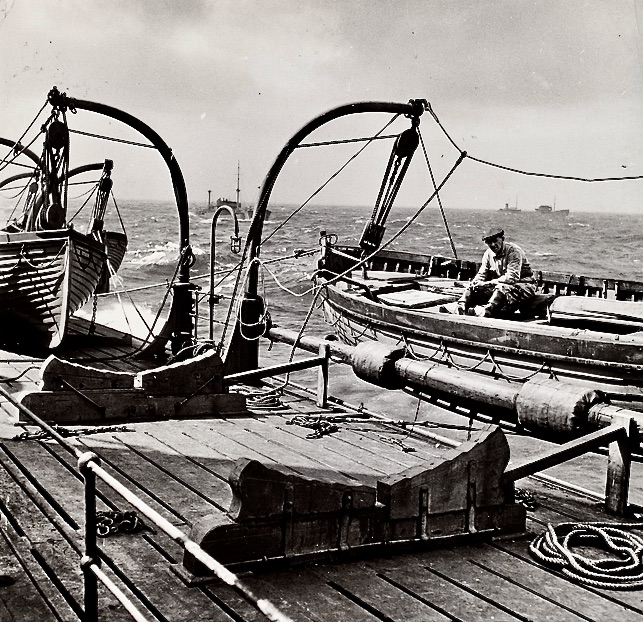
Life Boat

By Ed Staskus

   When Angele Jurgelaityte first saw Vytautas Staskevicius at the Nuremberg Army Hospital in 1947 he was 23 years old and flat on his back on an operating table beneath a white sheet. He was out cold. She was 19 and wearing a cotton dress with a button-on apron and a nursing cap. It was harsh and snowy outside the hospital, a hard wind rattling the windows and piling up drifts. The winter that year came to be known as ‘Hungerwinter’ in Germany and most of Europe.

   It was nearly two years after the end of World War Two and four months after the end of the Nuremberg Trials. They were both refugees from Lithuania. Vytas had injured a hand during the Nazi occupation of the Baltics. The surgeon told him it would never be the same, but he would have partial use of it within a year.

   The military hospital was built in 1937 and personally dedicated by Adolf Hitler. Just like 90 percent of Nuremberg, the city that was Hitler’s favorite and the spiritual capital of the Third Reich. it had been devastated by air assaults. More than 500 British Lancaster bombers carpet bombed the city during one raid and the six-story central section of the hospital was badly damaged. By the time Angele and Vytas met it had been re-built and taken over by the United States Army. “The Americans fixed everything,” Angele said. “They re-built Nuremberg. If it had been the Russians, it would have taken twenty years.”

   Vytas was living in a refugee camp near Hanau, 120 miles north of Nuremberg, and Angele was a nurse trainee at the Army Hospital. She shared a single room in an adjoining building with three other young Lithuanian nurse trainees. There was a bathroom at the end of the hallway. They were officially known as displaced persons, displaced from Lithuania, which had first been annexed by the Russians in 1940, then invaded by the Germans in 1941, and finally re-occupied by the Russians during the Baltic Offensive of 1944.

   They both fled Lithuania like jumping out of a window. Vytas was whisked up by a truck-full of Wehrmacht, stationed at a Russian prisoner-of-war camp nearby, who stopped at his farm and told him he had five minutes to decide whether or not to come with them as they retreated from the rapidly advancing Red Army.

   “I was born in Siaulia,” Vytas said. “My father was the Director of the Department of Citizen Protection there. He was in charge of the police department, and the police chief, too. We had a house in town and farm in Dainai. It was a model farm. We had all the newest tools, cutting and sowing implements, and the planning and methods. Excursions would come to our farm from all over the country.”

   Angele woke up the same morning the Red Army barreled into Lithuania while babysitting her aunt’s four children. She found her aunt hurriedly hitching a horse to a cart, tossing in rucksacks, blankets, and a small trunk of valuables, while tying the family cow to the back of it. The youngest child needed milk every day.

   “I was from Suvalkija, in the southwest, from a farm near Gizai, five kilometers from Marijampole,” Angele said. “My family was all still there, but I couldn’t go back, there was no time, so I went with my aunt. There wasn’t anything else I could do. On the way to Germany, we had to sell the cow and jump into ditches whenever planes strafed and bombed us.” She never saw her parents again and only re-united with any of her family more than forty years later. Vytas lost his parents to political persecution as the Nazis and Communists traded racial and ideological blows, and Angele lost her parents to the vagaries of an uncaring global war, and both were then cut off from what remained of their homeland by what was fast becoming the Iron Curtain.

   “The Communists took my father in 1940 because he was a government official,” Vytas said. “They took him in the summer just as he was, with only the shirt on his back and wearing sandals. He was working in the garden. Later the mass deportations started, and my mother was arrested. She spent fifteen years in Siberia and when she was released after Stalin’s death she wasn’t allowed to go back to Siauliai. They sent her to a small western town to live. My father had been sent to Krasnojarsk where he starved to death in the labor camp there in 1942.”

   Anton Chekhov, one of the most acclaimed writers of short stories in literary history, once wrote that Krasnojarsk was the most beautiful city in Siberia. He might have mentioned beauty is in the eye of the beholder. There is no beauty in slave labor except for the overseers.

   Three years after fleeing Lithuania Vytas and Angele were both in central Bavaria, biding time, like more than 7 million other Eastern Europeans who had decamped to Germany in 1944 and 1945. Vytas had seriously injured a hand in a hay mower accident in 1942 when he was 18 years old and been compelled to take over the operation of the family farm. He was at the Nuremberg hospital in 1947 for a series of surgeries to restore the use of the hand to him.

   “In 1940 in Siauliai the mood was very bad,” he said. “We all felt that something terrible was going to happen. After both my parents were sent to Siberia, I had to maintain the family farm. I was on a horse-drawn mower cutting hay one day when I saw that rain was coming. I jumped down to walk with the horses so they would be able to pull the mower faster. As we started, I fell down right on the blades.”

   The horses stopped. It started raining. His hand gushed blood. “My hand was almost cut off,” he said. “The farmhand who was helping me ran over, and seeing my injured hand, fainted.”

   One of Angele’s roommates told her there was a new arrival in Nuremberg, teasing her that he was a young and good-looking man from Lithuania, but it wasn’t until she was transferred to the bone section of the hospital that she met him. When she finally saw him, he was unconscious in an operating theater, having a small part of a bone taken from his leg and put into his hand.

   She saw him the next day and every day for the next three months on her rounds as he recovered, now fully conscious, and more than ever conscious of her. “She took care of me,” he said, while she remembers that, “It felt so right to be with that guy.” As winter gave way to spring, they began to take walks on the hospital grounds, and in the nearby wooded parks, and later into Nuremberg to the zoo and downtown to watch American movies.

   After several more operations, his hand patched up, he was eventually discharged. He went back to Hanau, where he gradually gave up black-marketing cigarettes and chocolate he bought from troops in the American Zone and found work as a bookkeeper for the International Refugee Organization. Angele and Vytas stayed in touch by writing letters to each other once a week. In the middle of the year he returned to Nuremberg for more surgery, staying two months as he recovered, as well as romancing her again with long walks and talks. When he went back to Hanau, they continued to write one another, dating by mail.

   By 1948 Europe’s refugee camps were rapidly emptying as people left for Canada, Australia, the United States, or anywhere they could get a visa to for a fresh start. “No one knew where they would end up,” Angele said.  “You couldn’t go home and there was no future in Germany. We had nothing and there were no opportunities.”

   She finally chose to go to Canada, sponsored by a French-Canadian family in Sudbury, Ontario, to be an au pair for their 13 children. She sailed in December 1948, and after landing in Nova Scotia wrote Vytas about where she was going and what she was going to be doing there.

   He had papers allowing him to enter the United States, papers that had been hard to get. He had an uncle and friends there and was tempted by the prospect. His best friend wanted to emigrate to Australia and suggested they go together. He debated with himself about what to do. The girl in the nurse’s hat won the debate. In January 1949 he wrote her a letter, proposing to come to Canada, and popped the question of marriage, starting a family, and trying their hands at a farm, since they had both grown up on farms. Vytas had a chicken farm in mind. He knew how to raise them, and she knew how to break their necks for dinner, since that had been one of her chores on the family farm

   Two months later he got her return letter and started searching for a way to get to Canada, rather than the United State or Australia. Almost 4,000 miles away in Sudbury, but on almost the same latitude as Hanau, Angele was sure she had made the right decision. “He wasn’t a lady’s man and I liked that,” she said. “He was a steady man. And he was interesting. I didn’t want a boring man. He was the right guy for me, except I was going to have to break it to him that a farm was out. When I left Lithuania, I promised myself I would never be a servant or a farmer if I could help it.”

   Once Vytas secured sponsorship to go to Canada, he took a train to Bremen in northwestern Germany, but couldn’t get a boat, and passed the time in a boarding house in the Altstadt. After several more dead ends he found himself traveling back through Bavaria, across the Alps, and south of Rome to Naples. He waited for three weeks, living on espressos and cheap Neapolitan pizzas, and finally managed to secure a berth on a boat going to North America. It was time to make another getaway. “There were millions of us trying to get out of Europe,” he said.

   He arrived in Sudbury after a two-day train ride from Halifax early on the morning of September 7, 1949, with the clothes on his back, five dollars in American money in his wallet, and a small suitcase more empty than full. When no one met him at the train station he asked a policeman for directions to Angele’s address on Pine Street. He walked the three miles from the Canada Pacific terminal to her doorstep. He found the house, stepped up to the door, and knocked.

   “What are you doing here,” she said when she opened the door, wiping her wet hands on a kitchen towel, surprised to see him. She hadn’t been expecting him until the next day, September 8th.

   Standing on the steps, looking up at her, nonplussed, he said, “I came to marry you.”

   The next day he moved into a nearby one-room apartment, sharing it with another man for the next two weeks. There was only one bed, but he worked during the day and slept at night, while the other man worked at night and slept during the day.

   His first job in Sudbury was making cinder blocks for the Lapalme Cement Works, owned and operated by the large family for whom Angele was the nanny. “Is This Sudbury’s Largest Family?” asked the Sudbury Star in a feature about the family. The day after his initiation into concrete he knocked on her door and told her he ached from tip-to-toe and was going back to Germany. She gave him a back rub and sent him packing back to the cinder block factory.

   They were married two weeks later, on a Saturday, on a sunny day in what was usually an overcast month, in a ceremony presided over by two Catholic priests, one French-speaking and the other Lithuanian-speaking. The next day they went on a picnic for their honeymoon. Monday morning both of them went back to work. Within a year they moved out of their rented rooms and bought a house at 147 Stanley Street. The two-story house was brand new and cost them $13,000. J. A. Lepalme lent them $500.00 in cash for the down payment. They started a family, but set aside their plans for a chicken farm, Angele explaining to Vytas that Sudbury’s rocky landscape was more suited to mining than farming.

   Vytas went to work in Sudbury’s vast nickel mines, the world’s largest, judging the work easier than cinder block making. It wasn’t, at first, but he eventually rose in the blue-collar ranks. “I worked in the mines for seven years, 3300 hundred feet underground,” he said. “There were many Lithuanians working in Canada. Some cut down forests, which was very hard, and some worked in the mines, which was dangerous., but not as hard. I started work setting dynamite, then laying track for the trains that carried the rocks, but later I got an easier job driving the tractors.”

   Angele became her own nanny within a couple of years, at the end of the day raising three children. She wanted a step ahead life for them. “Most of the Lithuanians we knew in Sudbury eventually started looking for better work. Many left for Montreal and Toronto,” Vytas said. “We all started to go our separate ways. As soon as our turn came, our opportunity to go to America, Angele and I started getting ready.” In 1957 they left Sudbury behind and went to the United States, settling in Ohio, where they lived together for the next fifty-three years. 

   They started at the bottom. Vytas operated an elevator during the day and went to school at night. He earned a degree in accounting from Case Western Reserve University and went to work for Weatherhead. They bought their first house, a duplex they shared with his sister’s family, and then a single-family house in the Lithuanian American neighborhood in Cleveland’s North Collinwood neighborhood. He got a better job with TRW and later helped found Cleveland’s Taupa Credit Union in the early 1980s.

   In 1979, after nearly forty years, he saw his mother Antanina again. “It was the first time I returned to Lithuania. She was living in Silute, but when I tried to go there in secret I was stopped at a roadblock in Ukmerge and told to return to Vilnius.” The authorities gave him a hard time, but finally relented. “The next day I got permission to go for one day and I was able to get a car. I visited my mother and we spent three hours together.”

   Angele and Vytas traveled to Lithuania many times after the country’s declaration of independence in 1990, and the collapse of the Soviet Union, but never again to the Army Hospital in Nuremberg, which had survived the war but was closed down and demolished in 1994, there being no further need for it. The grounds were used to build apartments and homes for the burgeoning city.  A new generation had come of age. The past was rubble and best left in the past.

   “We never forgot where we met in Nuremberg,” Vytas said. “All we had to do was close our eyes to go there. We had our memories and heritage, but where we were going, our family, home, and community, was always more important to us. Everything else was in the past. When we settled in Cleveland we finally had our own place.”

Ed Staskus posts monthly on 147 Stanley Street http://www.147stanleystreet.com, Made in Cleveland http://www.clevelandohiodaybook.com, Atlantic Canada http://www.redroadpei.com, and Lithuanian Journal http://www.lithuanianjournal.com

“Cross Walk” by Ed Staskus

“A once upon a crime whodunit.” Barron Cannon, Adventure Books

“Captures the vibe of 1950s NYC.” Sam Winchell, Beyond Fiction

Available from Amazon

Late summer and early autumn. New York City. A Hell’s Kitchen private eye. The 1956 World Series. President Eisenhower at the opening game. An assassin in the dugout.

A Crying of Lot 49 Publication