By Ed Staskus
Before the Battle of Blue Water was fought in the fall of 1363 the Russians had been under the thumb of Mongolia’s Golden Horde for more than a century. The Mongols invaded and conquered most of what is now Russia in the mid-1200s. They devastated the lands of the Kievan Rus. They cut down everyone in their way and sacked both Kiev and Chernigov, two of the largest cities. From then on the Russians paid bribes in gold and silver to the Golden Horde to keep them at bay.
After the Mongol Empire was divided into four Khanates, Genghis Khan’s grandson Batu Khan established his capital at Sarai on the Volga River. It was near enough to the principalities of the Russians to keep them under control and close enough, whenever the need arose, to speedily get back to Mongolia, which was across the treeless steppe of what is now Kazakhstan.
The Mongols were known in Europe as Hell’s Horsemen. They could ride up to eighty miles a day if they had to. Their horses were short, stocky, and shaggy. They were never stabled, even during Mongolia’s brutal winters when temperatures dropped to thirty below zero.
“They are not very great in stature, but exceedingly strong, and maintained with little provender,” a 13th century Italian missionary priest said about the horses. Deadly accurate composite bows and innovative tactics won them battle after battle. By the time Genghis Khan and his sons were done the Mongol Empire was the largest contiguous land empire in the world, then or now. It covered more than nine million square miles from Hungary in the west to China in the east.
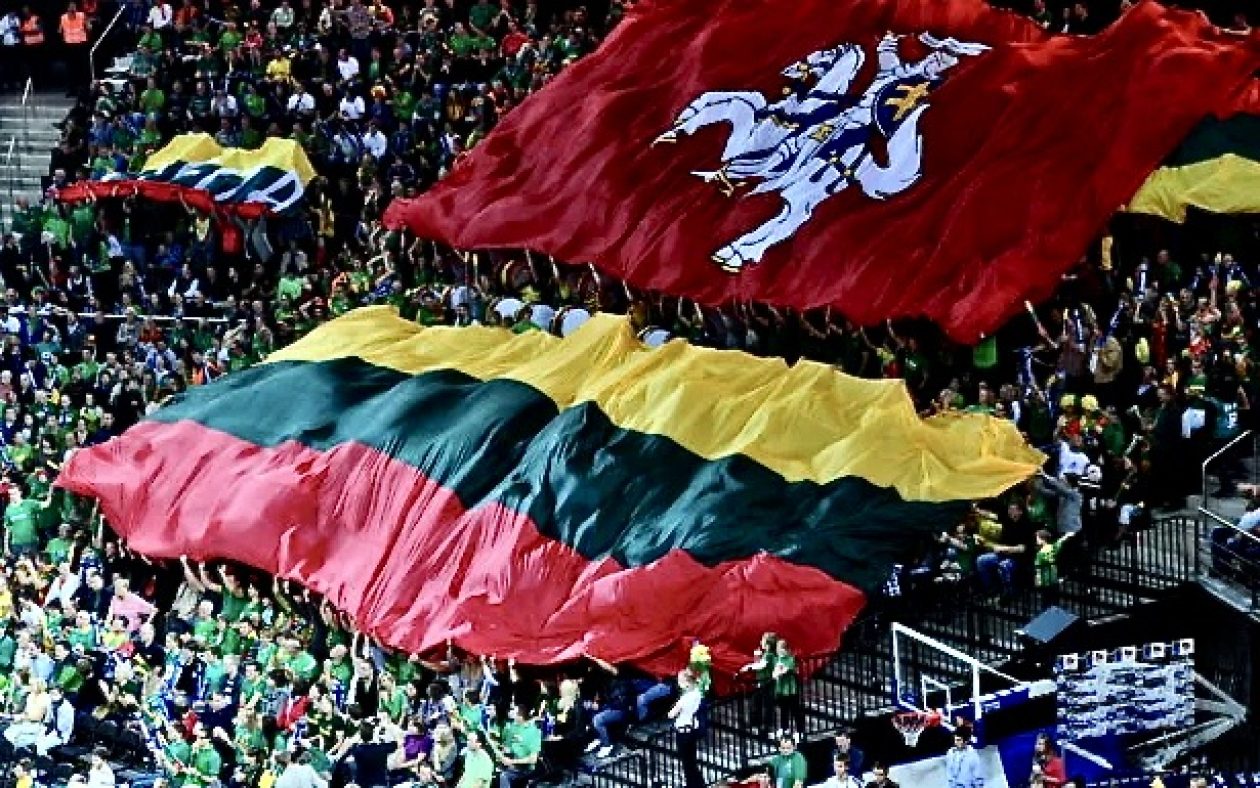
In the middle of the 14th century the Golden Horde was preparing to move against the Grand Duchy of Lithuania. It was the largest sovereign state in Europe, being the lands of present-day Lithuania, Belarus, Ukraine, as well as parts of Poland and Russia. The Mongols weren’t trying to bite off more than they could chew. They had already overrun Asia and the Middle East. Only the Turkish Mamluks had ever defeated them. When they invaded Europe Batu Khan inflicted a crushing defeat on King Béla IV’s Hungarian army, which had the best cavalry on the continent. The Mongols burned the city of Pest and seized control of the Hungarian plain. The Golden Horde wasn’t overly concerned about the Lithuanians.
Kochubey, the strongman of the Golden Horde in southern Russia, was sitting on his horse at the top of a knoll looking westward in the spring of 1363. He had a small group of his commanders with him, as well as two mercenary Russian warlords. They had overrun Poland six years earlier, destroying Lublin. They were feeling their oats. The Golden Horde had meant to engage the Lithuanians the year before, but the weather had been bad, wet and soggy. It didn’t suit the Mongol horses. The recent spring had been dry and the summer promised to be a good one for campaigning. Kochubey was eager to be on the move. He had dynastic issues with his brothers, who were trying to kill him, if he didn’t kill them first. He needed to be at war somewhere. It was what he did best.
Before the group broke up, their commitment and decisions made, the two Russians rode up to Kochubey. They had fought the Lithuanians before. One of the warlords leaned over his horse and said, “Beware the Lithuanians.” Kochubey snorted at the warning and puffed himself up. “The Lithuanians need to beware of us.” He wheeled his horse around and rode away. The Russians watched him go. They were hard men, but knew better than say anything more to their overlord. He was a harder man than them.
Grand Duke Algirdas of Lithuania didn’t give a damn how dangerous the Mongols thought they were. He knew that ever since their empire had been split after the death of Genghis Khan they had been plagued by internal discord. The Golden Horde was in the middle of multiple succession disputes. They were fracturing into separate domains. The resulting disorder was having a ruinous effect on their fighting men. It was a golden opportunity for Grand Duke Algirdas to expand his southern territories. He wasn’t like the Russians who were content to pay tribute in return for an uneasy peace. If the Mongols wanted to come to him, all the better. He would make it easy for them by marching to the Don River near where they were. He would wait there while putting together his plan of action.
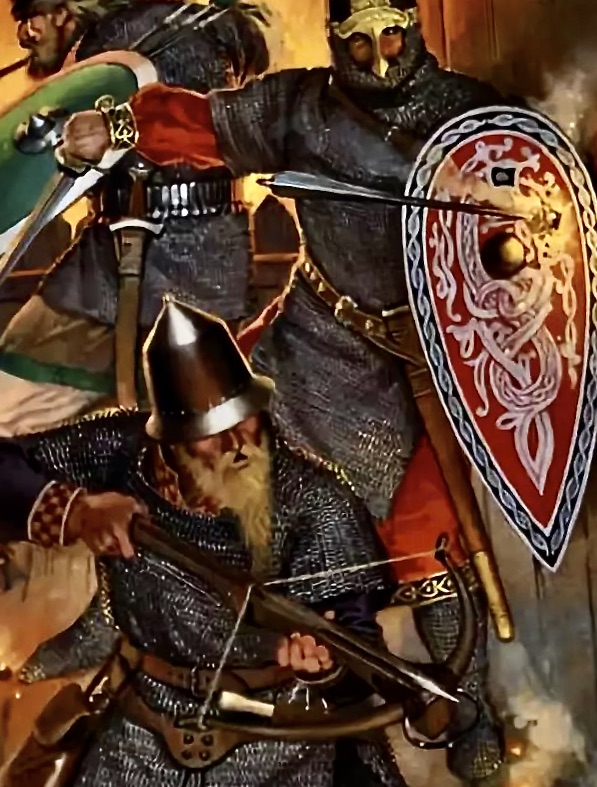
The Lithuanian forces were made up of lightly armored knights on fast horses, foot soldiers armed with swords and spears, and crossbow men. They were disciplined and determined. They were not under any illusions. They knew the Golden Horde, despite its problems, was a formidable force. Mongols were merciless on the field of battle. They took few prisoners. They had proven that at Samarkand and Bukhara. There would be blood. The Baltic men were confident it would be the blood of Mongol men.
Ianiunas was a crossbowman man. He was from western Lithuania, from near the Curonian Spit. For hundreds of years the Curonian Spit had been the location of a pagan trading center. The Teutonic Knights took it over in the 13th century, building a castle at Memel. It was where Ianiunas trained on the crossbow. He joined Grand Duke Algirdas’s forces after getting sick and tired of the Order of Brothers of the German House of St. Mary in Jerusalem trying to convert him to Christianity. He was a pagan. He wasn’t going to convert to the White Christ, now or ever. He was going to live and die by the light of his own gods.
Grand Duke Algirdas hadn’t converted, either. He worshiped the thunder god Perkunas. He was pagan to the core, like Ianiunas, even though he allowed Orthodox Christians living in Vilnius to build a church where the city’s gallows had once stood. It was the Grand Duke’s own private joke. He was a pagan, but he was a politician, too. He appointed Orthodox officials in the Slavic territories of Lithuania. He married one Orthodox princess after another. He didn’t need a weathercock to know which way the wind was blowing.
He was willing to bend but he wasn’t going to break. He and his brother Kestutis wanted the Teutonic Knights out of Lithuania. They were Germans. They were a threat to the throne. He had led Lithuanian and Slavic armies against them. During the Uprising of the Night of Yury in 1345 one of the leaders of a provincial rebellion told the Grand Duke he had been elected king of the rebels. He was a peasant farmer. He informed the Grand Duke that if he followed him into battle the Germans would be driven away. Grand Duke Algirdas didn’t wet nurse the man. He cut his head off right away. A peasant farmer pretending to be a king was as much a threat as the Teutonic Knights.
It was a sunny day in October when the Lithuanians engaged the Golden Horde. Grand Duke Algirdas moved his forces west and crossed the Dnieper River towards Podolia. The Mongols met the Lithuanians on the banks of a river near present-day Torhovytsia in southern Ukraine. The town was then known as Sinie Vody, or Blue Water.
The Lithuanians organized themselves into six groups arranged in a half circle. The Mongols began the battle with a barrage of arrows from their horsemen into both sides of the Lithuanian formation. The Lithuanians darkened the sky with bolts from their crossbows. Arrows from composite bows like what the Golden Horde fought with fly at 250 feet a second. Bolts from a crossbow fly at 350 feet a second. The leather armor many Mongols wore offered some protection from the bolts, at least until they didn’t.
A row of pikemen with shields protected the crossbowmen, as did a row of pavises. The crossbowmen fired from behind their wall. Every man had two men behind him loading crossbows and rotating them from the back to the front. They held firm, ignoring Mongolian feints. Ianiunas killed one Mongol after another until he ran out of bolts. When he did he unsheathed his sword and joined the foot soldiers.
The Lithuanians moved forward with pikes, lances, and spears, breaking the front line of the Mongol army. The men of the Naugardukas attacked the disorganized flanks of the Golden Horde with fresh crossbows. The liegemen of Karijotas Gediminas, the son of the former Grand Duke Gediminas, moved in for the kill. The Mongols weren’t able to maintain their formation and broke into a retreat which became a rout. The field of battle became a killing field, the soil wet with blood.
At the end of the day Grand Duke Algirdas achieved an open and shut victory. Without meaning to, the nascent threat to European Christendom had been forestalled by a pagan. The victory secured Kiev and the northern Black Sea lands for the Lithuanians. The Grand Duchy gained access to the Black Sea. Grand Duke Algirdas left his son Vladimir in charge. Vladimir became a bitter rival to the Grand Duchy of Moscow on the day he assumed power. From that day on there was no love lost between the Lithuanians and the Russians.
Ianiunas went home to his wife and children. He had a farmstead on the banks of the Nemunas River in the south of Lithuania. It was on the edge of an impenetrable forest. A fort had been built in nearby Alytus to protect against Crusader raids seeking cattle, slaves, and conversions. When he left the battlefield he walked while an ox pulled a two-wheeled tumbrel filled to the gills with spoils. It took him a month to get home. He got there in the middle of November in the middle of a snowstorm. He got hot kisses from his wife and fierce hugs from his children before they dug into the loot he had brought back. His favorite hound sniffed him up down and sideways before becoming his favorite hound again. The neighbors came over for tales of war told over a barrel of honey wine. Everybody got drunk as skunks.
Three years later Ianiunas celebrated the marriage of his eldest daughter to an immigrant Mongol by the name of Chagatai. He had fought on the losing side at the Battle of Blue Water. The train wreck that was the Golden Horde was hemorrhaging its own. Many of them went seeking refuge in faraway places, including Lithuania. Nearly fifty thousand Mongols migrated to the Grand Duchy in the 14th century. Their first settlements were near Grodno and Trakai.
The first thing they did was learn the Lithuanian language and where to pay their taxes. The Grand Duke didn’t in fact care what language they spoke, but he cared a great deal about taxes. They were permitted to build mosques, most of them being Muslims. They were allowed to marry Lithuanian women and raise Muslim children. In return, they were required to serve in the Grand Duchy’s soldiery. They had to provide their own weapons and horses. They patrolled borders and defended towns and castles from attacks.
When it came to warfare they rode with own kind. Although they admitted the power of bolts, they had grown up learning to stand on the back of a galloping horse and hit a moving target with their composite bows. Their weapon was made of wood, sinew, and laminated horn. It was what steppe warriors had been using for a thousand years. They carried two or three bows and multiple quivers holding hundreds of arrows. The arrowheads were hardened by plunging them into brine after heating them until they were red hot. The Mongols were adept at firing their arrows at the split second all four of their horse’s hooves were off the ground, affording them a split second of stillness.
Chagatai put his bows and arrows away the day of his wedding. By the time the spousal ceremony, the dinner of roasted wild boar, and the revelry were over, almost everybody’s feet were off the ground, except for Ianiunas and Chagatai. They stood on a grassy spot on the edge of a pond next to the family house. Ianiunas’s favorite hound had flopped down and was napping at his feet. Chagatai looked at the hound.
“I will have many dogs,” he said.
“Dogs are useful animals and good companions,” Ianiunas said.
“They are loyal, too.”
“Yes, dogs are the only creatures on this earth who will never betray you.”
Chagatai was of the same mind. The two men stood next to each other gazing at star clusters in the inky sky. When Ianiunas’s hound started growling in his sleep and suddenly farted, both their faces creased up. Chagatai leaned down and patted the hound’s flank, who rolled over onto his feet and shook himself. The three of them watched for shooting stars but there weren’t any, until suddenly there was one. It was gone in the blink of an eye. They went back to the family house for whatever karvojus cake and honey wine was still to be had.
Ed Staskus posts monthly on 147 Stanley Street http://www.147stanleystreet.com, Made in Cleveland http://www.clevelandohiodaybook.com, Down East http://www.redroadpei.com, and Lithuanian Journal http://www.lithuanianjournal.com. To get the site’s monthly feature in your in-box click on “Follow.”
More short stories can be found at Ed Staskus/WordPress. His books are available on Amazon and Apple Books.
“Bomb City”
It is 1975 in Cleveland, Ohio. The John Scalish Crime Family and Danny Greene’s Irish Mob are at war. Car bombs are the weapon of choice. Two police detectives are assigned to find the bomb makers. It gets personal. Revenge is always personal.
 Lithuanian Journal
Interesting story
LikeLike