All posts by Edward Staskus

Edward Staskus is a freelance writer from Sudbury, Ontario. He lives in Lakewood, Ohio. His crime thrillers "Cross Walk" and "Bomb City" can be found on Amazon.

Bring Me the Head of Lenin

By Ed Staskus

   When my sister Rita told me our father was going to Lithuania to bring back the head of Vladimir Lenin, I was astonished. Lenin, who had died seventy some years earlier, was far more reviled than revered among Lithuanians. Most Lithuanians saw him as a callous ideologue whose policies led to another Russian occupation of their country in the 1940s. He was as bad as the Tsars. They blamed him for Josef Stalin, who ordered mass deportations whenever it suited him. They blamed him for the personal and political repressions that lasted nearly fifty years.

   “You mean, like a memento?”

   “No, more like a boulder-sized bust of Lenin’s head that weighs more than two thousand  pounds.”

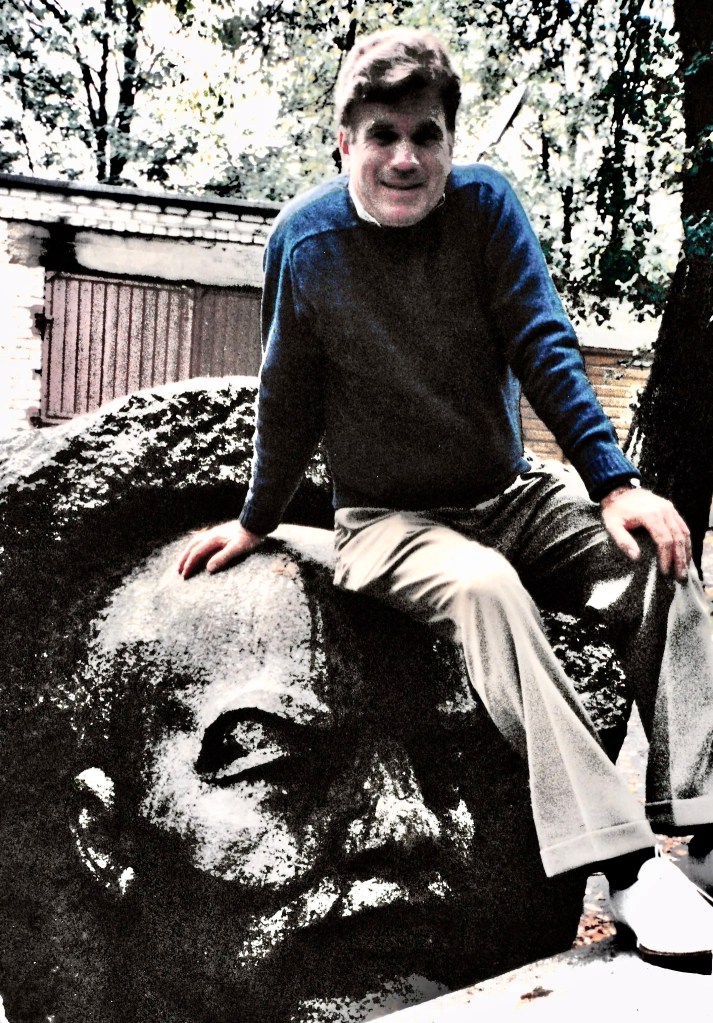
    The boulder was the size of a Kamchatka bear. The face had been carved out of one side of the rock. Lenin looked untroubled. The boulder looked indifferent.

   “What is he going to do with a head of Lenin once he gets it back to Cleveland?” My parents lived on the east side of Cleveland, near Lake Erie, a couple of blocks from the Lithuanian Catholic Church. They had a one-car  garage that barely fit their car and a lawnmower. “Where are they going to put it?”

   “It’s not for dad, it’s for Russell Bundy.”

   “Who’s Russell Bundy?”

    Russell Bundy was born during the Depression, the youngest of seven children. He would go on to have seven children of his own. At first, in the 1950s, he worked for a baking pan manufacturer but soon started selling pots and pans on his own out of the back of his car. Russell T. Bundy Associates was formed in 1964. They bought and sold refurbished bakery pans and equipment. They moved into what had been the Urbana Tool and Die Company building, about forty miles west of Columbus, Ohio, in 1972.  They soon expanded their services and product lines, getting into pan-coating . Ten years later the American Pan division was formed to manufacture custom baking pans. In the 1990s what was now Bundy Baking Solutions added Dura Shield non-stick coatings to its family of brands.

   As time went on Bundy Baking Solutions came to operate twenty six facilities in seven countries and employ more than one thousand people worldwide. The entrance to their headquarters was guarded by two grim looking stone lions. The beasts weren’t going to need a freshly baked hot dog bun if they decided to eat you.

   “He’s helping this Russell Bundy person get his hands on a bust of Lenin in Lithuania and get it delivered to Ohio? How did that happen?”

   Our father was born in Lithuania in the 1920s. His father was their district’s police chief. Our grandfather was swept up by the NKVD early during World War Two and transported to Siberia, where he was forced to work in a slave labor camp and died of starvation. Our grandmother was transported to Siberia in late 1944, for no apparent reason, and spent more than ten years trying to survive. When she was finally released she wasn’t allowed to return to Siauliai, where their home had been.  She was forced to live in a one-room cinder block apartment in the middle of nowhere.

   There was no love lost when it came to my father and the Russians. For all that, he was a retired certified public accountant and knew the value of a dollar. He was being well paid by Russell Bundy to go to the Baltics to help achieve his goals, although it was unclear what his goal was when it came to Lenin. 

   “Russell Bundy called me at the travel agency to get tickets to go to Lithuania.” My sister worked at Born to Travel in Beachwood, not far from where she lived in Cleveland Hts. “He asked me a hundred questions about towns and places, so I finally told him to call dad. He hired him go with him, to interpret, to navigate regulations, and find the right people.”

   “Find the right people for what?”

   “He was thinking of expanding into Eastern Europe.” It was the mid-1990s. He said Lithuania is ripe with business opportunities, the exchange rate is great, and there are lots of abandoned Soviet factories that could be converted to his use.”

   “He’s probably right about that.”

   They spent a week driving from the Zemieji Panieriai district in Vilnius to the Naujamiestis district in Kaunas to Klaipeda. The Baltic Sea port city of Klaipeda had become a major industrial hub during the Russian occupation of Lithuania from 1944 to the last troop withdrawals in 1993. In the end, Russell Bundy didn’t find what he was looking for. He did, however, find something else.

   “He met an older Lithuanian man in Vilnius who had been a general in the Red Army,” Rita said. When the Russians left, he stayed where he was. He wasn’t a true-blue Communist, after all. A truckload of Red Army paraphernalia stayed with him. “He had a whole bunch of uniforms, medals, and military watches.” He had an assortment of gear and ephemera. He also had a big bust of Lenin that nobody in Lithuania wanted.

   The day Lithuania declared independence in 1990 was the day they began to expunge the Russian legacy. They condemned the occupation as an illegal act. The display of Russian symbols and  imagery was officially banned. They started removing Moscow’s monuments, including all the busts and statues of Lenin. 

   Nobody knew how many there were, but since the Russians had been the controlling colonial power in Lithuania for almost five decades, everybody knew there were plenty. The busts and statues were a big part of the Communist Cult of Personality and their propaganda machine. Everybody knew where at least one of them was. They got pulled down, smashed to bits and pieces, and thrown into the dust bin of bad history.

   The Lithuanian general had hedged his bets and it was paying off. He sold everything he had to Russell Bundy, who had taken a great interest in the memorabilia. “He saw the bust and it was love at first sight,” Rita said. “He never said why, at least not to me. I don’t think dad knew, either. He took the collectables back to Urbana, got lots of mannequins, set up a room for them, dressed them in the Russian uniforms, and displayed them in the room. It wasn’t public. It was private. You had to be invited to see it. I saw it once. In the meantime, he waited for dad to bring the head of Lenin to him.”

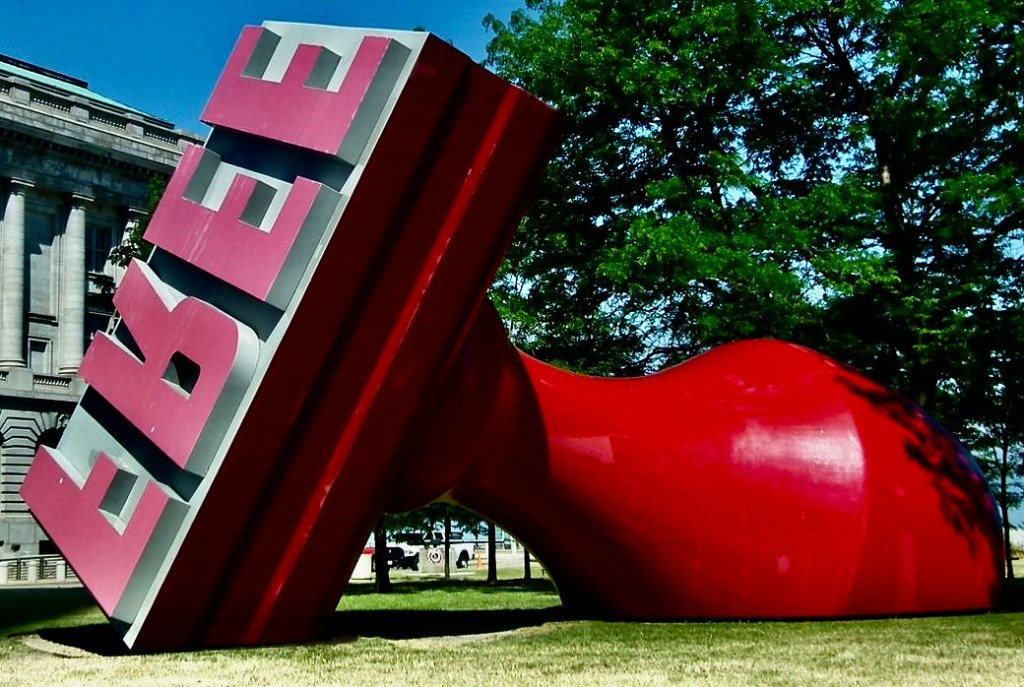
   Our father got the necessary export papers rubber stamped and got the bust crated. It was taken by truck to Hamburg, Germany. From there it was loaded onto a freighter. When the freighter docked in Philadelphia it was unloaded and taken by truck to Urbana. Once there it was uncrated and set up for display. 

   I met Russell Bundy once, by accident, at my parent’s house. I had driven there to drop something off. He was talking to my parents about his daughter Beth, who was married to a man named Joe. They lived in Pennsylvania, where Russell Bundy was originally from. They wanted to adopt a child. Beth wasn’t able to have one herself. She wanted a newborn baby. It was proving difficult to find a newborn in the United States. It was much easier finding one in Eastern Europe. They were thinking of trying to find one in Lithuania.

   When I saw him my first thought was he looked like Robert Preston in the movie “The Music Man.” He had a similar manner, too, lively and engaging. “He has a huge personality,” my sister had already told me. He had a terrific, sincere-looking smile. He was wearing a sleeveless argyle knit sweater and a bow tie. He was also wearing  a wig, the kind of wig, like the kind Andy Warhol used to wear, that was obviously a hairpiece. 

   “His daughter Beth told me she never saw her father without his wig,” Rita said. “She said none of her brothers and sisters ever saw him without it, either.”

   “What about his wife?’

   Russell Bundy and his wife Elizabeth were married for fifty two years. “No, I never wanted to ask her about that and I never did.”

    Some people wear wigs to dress up their hair, which is in bad shape. Others wear wigs because they have gone bald. I didn’t know what it was with Russell Bundy, but since he was a salesman kind of man, I thought he probably lost his hair at an early age. The wig helped keep him looking young and vibrant. I couldn’t help wondering, since he was a big time businessman, if he ever flipped his wig like other big time businessmen are prone to do.

   The bald headed pate of Lenin wasn’t the only large object on display at Bundy headquarters in Urbana. There was the World’s Largest Loaf of Bread Sculpture, too. It is made of steel and fiberglass. “It’s exactly as it’s touted,” said Daniel Kan from Dayton. “It’s a large loaf of bread that is lit up from the street. You can pull in and take pictures. It’s definitely a two picture moment.”

   There are actually two monumental loaves of bread. “Formerly displayed upright, the larger of the two is now lying behind one of the factory buildings,” according to World’s Largest Things. “It attracted a lot of attention, painted with the package design of one of their customers, which you can still see on the leftover loaf. The second loaf acts as a sign for the factory itself, displayed by the entrance door. The larger of the two is a little more interesting, as the plastic bag is more irregular, and the twist-tie looks as if it’s been used a couple of times.”

   Russell Bundy had meant to deliver capitalism to a recently Communist country, but instead had brought a bit of Communism to a capitalist country. He was a dyed-in-the-wool entrepreneur but had paid good money for and transported a collectivist icon more than five thousand miles to Ohio, one of the more conservative states in the country. Urbana is in the 4th Congressional District. It is a Republican town. The combative MAGA man Jim Jordan represents the district in 2025. The locals call their home Mayberry as in TV’s once popular “The Andy Griffith Show.”

   Most Westerners have a negative view of Lenin, seeing him as the initiator of Soviet totalitarianism, political repression, and a failed economic system. He created the Cheka secret police force, which is considered a foundational instrument of state terror. There wasn’t much to like about Vladimir Lenin.

   Everybody liked the bust, however. There was something heroic about it, just like there was something heroic about Lenin. His early aims were rooted in the ideals of equality, freedom, and brotherhood. After his older brother was executed for his part in the attempted assassination of Tsar Alexander III in 1887, Lenin made a commitment to revolutionary change. He kept at it for thirty years. Then, to his surprise, just like that the Russian Revolution happened, ending centuries of imperial rule.  He embraced terror and violence to get what he wanted. He came to believe the ends justified the means. In the end what he achieved was a one-party autocratic state. By the time he became the top dog of the Bolsheviks, who became the Communists, he didn’t believe in equality, freedom, and brotherhood anymore. He believed in every man for himself and the state against all.

   The bust might have been a remarkable thing, but I never saw it. I wasn’t especially interested in looking at a boulder depicting a dead Big Brother. I asked my sister what she thought of it, since she had seen it.

   “I thought it was ridiculous,” she said. “But Russell loved it. He stood beside it smiling like the cat who swallowed the canary.”

.147stanleystreet.com, Made in Cleveland http://www.clevelandohiodaybook.com, Down East http://www.redroadpei.com, and Lithuanian Journal http://www.lithuanianjournal.com. To get the site’s monthly feature in your in-box click on “Follow.”

“Telling of Monsters” by Ed Staskus

“21st century folk tales for everybody, whether you believe in monsters, or not.” Sam Winchell, Beyond Fiction

Available on Amazon:

Oliver and Emma live in northeast Ohio near Lake Erie. The day they clashed with their first monster he was six years old and she was eight years old. They fought off a troll menacing their neighborhood. From that day on they became the Monster Hunters.

A Crying of Lot 49 Publication

Saving Ernest Hemingway

By Ed Staskus

   The day Frank Domscheit pulled Ernest Hemingway out of the de Havilland Rapide, the day it crashed and caught fire, he didn’t know who the man in the airplane was, although he knew who Ernest Hemingway was. He had read one of his books before the war and liked it. It was about bullfighting. The man he pulled out of the airplane was covered in blood and babbling. He beat out the flames on the man’s arms and hands. He pulled him away from the airplane as fast as he could. The man was big and heavy but able to stumble forward with his help.

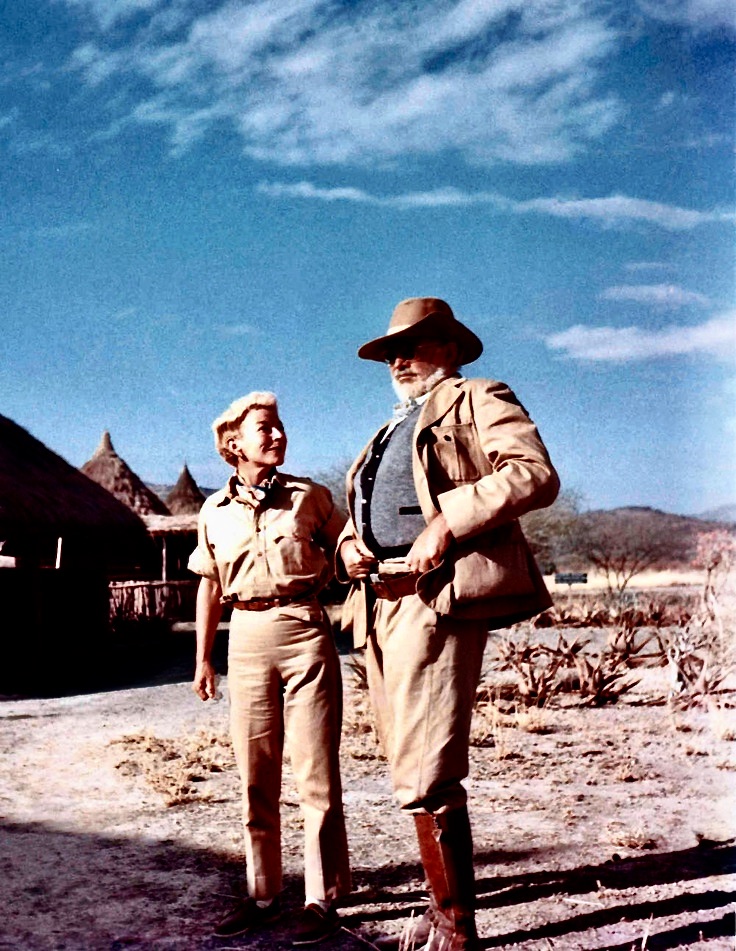
   Frank was in the Upper Nile country of Uganda the last week of January 1954 tending to the wife of an Egyptian businessman, getting her ready to fly back to Cairo, when Ernest Hemingway’s airplane crashed and caught fire. It was more bad luck for the writer. It was his second airplane accident in two days. The Cessna 180 he and his wife had been on the day before, sightseeing the wilds surrounding the Great Rift Valley and Murchison Falls, encountered a large flock of birds. The pilot dove to avoid them but clipped an abandoned telegraph line, lost control, and crashed. Mary Hemingway, the writer’s fourth wife, suffered two cracked ribs, and Ernest Hemingway banged his head. Roy Marsh, the pilot, was unhurt. 

   They couldn’t send a distress call. Their on-board radio was broken. They walked away from the airplane where it was wedged in scrub trees. They walked to the Victoria Nile River. When night came they built a fire. They had some apples and biscuits. They had bottles of Carlsberg beer and  a bottle of Scotch that survived the crash. The men drank warm beer while Mary eased the pain of her cracked ribs with whiskey. Elephants trumpeted and hippos snorted at the waterline.

   “We held our breath while an elephant twelve paces away was silhouetted in the moonlight, listening to my wife’s snores,” Ernest Hemingway said.

   The British Colonial Administration sent search planes. They found the Cessna 180 soon enough. “One wheel of the undercarriage was broken, but otherwise the plane appeared little damaged,” said Capt. R. C. Jude, the pilot of the British Overseas Airways Corporation plane that circled the crash three miles below Murchison Falls. “The chap did a neat job getting her down.” When a ground rescue team reached the airplane, however, they discovered the Hemingway’s and their pilot were not there. 

   Uganda was more than 2,000 miles from where Frank Domscheit lived and worked in Cairo. He wasn’t an Egyptian. He was a Prussian Lithuanian. He had settled in Cairo after deserting the Afrika Corps. During World War Two the Afrika Corps was the 15th and 21st Panzer Divisions. There were some Italian armored and infantry divisions, as well. The Germans were highly skilled at desert tactics and noted for their esprit de corps. The Italians didn’t want to be in North Africa, surrendering whenever they could. When the British Eighth Army broke through the Axis defense lines and minefields at El Alamein, forcing General Erwin Rommel to withdraw, the war ended for Frank. The Afrika Corp went west, retreating to Tunisia. Frank went east, escaping to northern Egypt. 

   His family were fish merchants south of Klaipeda in Lithuania Minor on the Baltic Sea. They were herring wholesalers. He had been conscripted by the German Army in 1940, ending up as an ambulance driver. He served during the assault on France until France fell. After that he stayed in Paris. It might have been the best year of his life. He shipped out to North Africa in September 1941. The next year was the worst year of his life.

   Soldiers desert for many reasons, including home sickness, harsh conditions, and fear of combat. Frank deserted because he was sick of the day-to-day bloodshed. He didn’t know enough about why the war had started or why it was still going on. He didn’t disagree with German military policies or the leadership of his superiors. But he wasn’t invested in victory like they were. He didn’t care anymore. It seemed like a pointless struggle. He was sick of stitching some men up and burying the rest of them.

   When Ernest Hemingway, his wife and their pilot, were reconnoitering the morning after the crash, the writer spotted a launch on the river. “We had seen mirages when the sun got high, and at the sight of the launch, I thought, I must check my eyesight,” he said. “I called Mary and told her it looked like a launch was coming up the river. She looked and said it was.”

   The launch was the SS Murchison, the same boat that had been used in the 1951 movie “The African Queen.” It was piloted by Edwiges Abreo, a Goan from the west coast of India. “It was an excellent launch, fairly old-fashioned in lines,” Ernest Hemingway said. The captain told them it would cost one hundred shillings per person for the rescue. The writer paid the captain and they set off downriver to Butiaba on Lake Albert.

   When they got to Butiaba they disembarked and sat down under a silky oak tree to keep the sun off them. They waited for another airplane to arrive and take them to Nairobi for medical attention. It was a little-used airstrip. It was very hot and humid. When a de Havilland Rapide arrived they boarded it with their pilot and a policeman. They were near the end of the runway, a few seconds from liftoff, when the airplane hit an anthill, lost its balance, and crashed. The fuel tank exploded and they were engulfed in flames.

   Frank was watching the take-off from an open thatched-roof hut. His Egyptian patient was napping in a folding canvas chair. She had fallen off a horse while on safari and hurt her head. When she didn’t improve, but rather got worse, Frank was eventually sent for. He was a neurologist, some said among the best in Egypt. He had studied medicine at Cairo University, starting before the war ended. He spoke German, Lithuanian, and English. He learned to speak Arabic. He became a doctor and trained at the Qasr El-Eyni Hospital. He was going to take his patient there for treatment.

   When he saw the airplane crash and explode he leapt to his feet and ran towards it. By the time he got to the airplane the policeman had gotten out, the bush pilot was dragging Mary Hemingway out through a broken front window, but Ernest Hemingway was trapped. The doors were jammed. He was banging on a side window with his head, trying to break it and get out that way. Frank could see that he would never get through the window frame, being too large of a man. He found a stick, jimmied the door with it, and when the door popped open, quickly frog marched Ernest Hemingway to safety. 

   He sat him down on the dry black Nile mud. The writer had a scalp wound and burns up and down his arms. A part of his face was burned. Frank found out later he had suffered a crushed vertebra and damage to his liver, spleen, and kidney. Their passports, all their money and clothes, and three pairs of the writer’s glasses were lost in the fire.

   He removed the rings on Ernest Hemingway’s fingers. He carefully cut away his shirt. He cooled his burns with water and covered them loosely with gauze. He checked him for shock, but his skin wasn’t clammy and his pulse was good. He thought the man might be in his 60s, although he seemed strong enough. He later found out he was in his 50s.

   His eyes were glassy, however. He was disoriented. There was something wrong.

   “How is your head?” Frank asked.

   “My head hurts,” Ernest Hemingway said.

   “You might have a concussion.”

   “I probably do.”

   “Have you had one before?”

   “I’ve had half-a-dozen, maybe more. I  tore my shoulder and banged my head yesterday when we went down at the falls. My head hasn’t killed me yet. I’m a writer. I need my head on straight. My luck is still good.”

   What he didn’t know was his luck was running out fast. It wasn’t ever going to be as good as it had been. His luck was going to get worse and worse.

   “Do you have a headache?’

   “Yes.”

   “Are you dizzy at all?”

   “Yes.”

   “I want you to look to the right of the sun.”

   The African sky was clear and the sun was high. When Ernest Hemingway looked in the direction Frank indicated, he quickly looked away.

   “Are you sensitive to the light?”

   “Yes.”

    “Let me stand you up for a second.”

   “All right.”

   “How’s your balance?”

   “Not very good.”

   “That’s fine, let’s sit you down again.”

   “I need a drink.”

   “That would be a bad idea.”

   “My father was never the same after those two plane crashes,” Patrick Hemingway said. “When he visited me in Shimoni afterwards the atmosphere was bad.”  Patrick was Ernest Hemingway’s second son. Shimoni was a small village on Kenya’s south coast, popular with divers and fishermen.

   “It was like King Lear. He would shout, ‘What’s going on here? Aren’t I king?’” Ernest Hemingway had been a heavy drinker most of his life. He was drinking heavier in Shimoni. “I sympathized with his problems but you have to show some restraint. The last few weeks in Africa, he lost all restraint. I finally had enough. We never saw each other again.”

   The policeman who had been on the de Havilland Rapide stepped up and stood beside them. He was a native. His black face was shiny with sweat. There was blood on his shirt.

    “How is he?”

   “He’s got some burns that need to be treated as soon as possible. I think he’s got a concussion too. He needs to be examined in a hospital.”

   “Are you a doctor?”

   “Yes.”

   “He’s a famous writer,” the policeman said.

   “That’s what he said, that he’s a writer. I once read one of his books.”

     “I don’t read anything. I don’t know how to read.”

   A dark green Land River pulled up beside them. Two British Colonial Police Officers stepped out. Uganda was a British protectorate. They were wearing khaki jackets and short pants, black knee-high boots, black Sam Browne belts, and shiny billed black caps.

   “Is he fit enough to travel?”

   “Yes,” Frank said. “But he needs a hospital.”  

   One of the policemen led Ernest Hemingway to the Land Rover. Frank walked beside the writer, offering his arm in support. The native policeman helped Mary Hemingway into the back seat next to her husband. They were both quiet. They looked very tired.

   “I liked your book about Spain, about bullfighting,” Frank said, breaking the quiet.

   “Thank you but I’m not getting into the ring with Tolstoy,” Ernest Hemingway said. “I love bullfighting, have for a long time. Bullfighting is the only art in which the artist is always in danger of death.”

   “Take care of yourself,” Frank said.

   “I’m happy you liked the book,” Ernest Hemingway said.

   The Land Rover took them to Masindi, which was on the road from Murchison Falls towards Entebbe. They stayed at the Masindi Hotel, the oldest hotel in Uganda. That night the bar ran short of gin and Scotch while Ernest Hemingway entertained a pack of reporters with tales about his near death. “I’ve never felt better,” he said. “It was just a bump on the head.” When they got to Entebbe he was admitted to a hospital where he stayed for several weeks. His head was leaking cerebral fluid. Doctors told him he had fractured his skull.

   Three months later Frank got a hand-written letter from Ernest Hemingway thanking him for his help. He opened it after stopping for lunch at the Tahrir Café opposite the Egyptian Museum. He had a bowl of koshary, which was vermicelli, fried rice, and brown lentils topped with garlic vinegar, and tomato sauce. He read the letter while he was eating.

   “I want to thank you for your help, even though I can’t write letters much on account of right arm which was burned to the bone third degree and it cramps up on me. Fingers burned and left hand third degree too, so can’t type and can’t get any work done. The big trouble is inside where right kidney was ruptured and liver and spleen injured. I am weak from so much internal bleeding. Being a good boy and trying to rest.”

   Seven months later Frank was reading the International Herald Tribune when he saw a news item about Ernest Hemingway. He had won the 1954 Nobel Prize for Literature. The prize cited ‘The Old Man and the Sea,’ which was his last novel. As it turned out, it was his last novel. He never wrote another book.

   Frank bought a copy of the book and read it. He didn’t like it. It seemed solemn and maudlin. The old man was a Christ-like fisherman. The book was full of Christian symbolism. It was about redemption, as if there were such a thing. The only parts of the book he liked were the parts about Joe DiMaggio. Baseball players weren’t symbols. They were like the bullfighters in the other book he had read.

   He had seen the flesh and blood of Ernest Hemingway in Africa. The only sense of it in ‘The Old Man and the Sea’ was the sharks who devoured the marlin the old man had landed. The book didn’t feel true to him. The writer had once been able to take the bull by the horns. He had been a correspondent during the Spanish Civil War and World War Two. The writing was clear-headed and hard-eyed. Frank wondered if the man’s concussions had made him sentimental. He wondered if his pen had dried up.

   When he had been talking to Ernest Hemingway in Butiaba, leaning into the Land Rover, he heard him say, “I never knew a morning all my years in Africa when I woke up and was not happy. I’m always happy to be alive, but I’m not happy about anything else anymore.”

   It was a broken-hearted thing to say. It ached of loneliness. Frank had never gone back to Lithuania, even though he was lonely for it. He couldn’t go even if he wanted to. The Iron Curtain was securely in place. Eight years after helping save the writer, when Frank read about him again in the International Herald Tribune, he read that Ernest Hemingway had committed suicide. He wasn’t surprised. Committing suicide is braving death, although there is rarely anything brave about it.  It is a desperate act. “There is no lonelier man in death except the suicide,” is what Ernest Hemingway said. It was a desperate man’s way of escaping ills that had no remedy.

Ed Staskus posts monthly on 147 Stanley Street http://www.147stanleystreet.com, Made in Cleveland http://www.clevelandohiodaybook.com, Down East http://www.redroadpei.com, and Lithuanian Journal http://www.lithuanianjournal.com. To get the site’s monthly feature in your in-box click on “Follow.”

“Telling of Monsters” by Ed Staskus

“21st century folk tales for everybody, whether you believe in monsters, or not.” Sam Winchell, Beyond Fiction

Available on Amazon:

Oliver and Emma live in northeast Ohio near Lake Erie. The day they clashed with their first monster he was six years old and she was eight years old. They fought off a troll menacing their neighborhood. From that day on they became the Monster Hunters.

A Crying of Lot 49 Publication

Eat Sleep Scout Repeat

By Ed Staskus

   “Scouting is a man’s job cut down to a boy’s size.”  Robert Baden-Powell

   My father was born on a family farm outside Siauliai in 1924, six years after Lithuania’s Declaration of Independence and two years before the start of what is known as the Smetonic Era. The small city, the capital of northern Lithuania, is home to the Hill of Crosses, a spiritual statement and folk-art site of about one hundred thousand Christian crosses.

   Siauliai goes back to 1236 to the Battle of Saule against the Teutonic Knights. The merciless war between the Teutonic Order and Lithuania was one of the longest in the history of Europe. The first Cristian church was built in 1445. Until then Lithuanians were steadfast pagans. They believed Hell was a fine place to end up, if it came to that, since Lithuania was cold, and Hell was warm.

   In the 19th century Jews were encouraged to go to Lithuania for its entrée and their prosperity. The city was majority Jewish by 1910. Šiauliai was famous for its leather industry. The biggest leather factory in the Russian Empire was there. A battleground during both World Wars, it saw tens of thousands run for their lives during the wars, never to come back.

   My grandfather was a native and a former officer in the Czarist Army. My grandmother was Russian and a former schoolteacher. They met when he was stationed far southeast of Moscow. “In those days drunks went into the navy and dimwits into the infantry,” he said. He thanked God every day he had been impressed as an officer by Lithuania’s overlords.

   Vytas Staskevicius was a Boy Scout early on. Since his father was the police chief of their province, and since Antanas Smetona, the President of the country, was the Chief Scout, and since there were privileges provided to scout troops in schools by the Ministry of Education, Antanas Staskevicius, back from the Russian badlands, involved his son in scouting as soon as he grew to be school age.

   I found myself a Boy Scout in the early 1960s in Troop 311, the Cleveland, Ohio troop my father became Scoutmaster of. We wore official Boy Scouts of America neckerchiefs and carried unofficial knives in scabbards on our belts. We hiked trails through woods, although most of us were hapless with a compass, instead relying on ingenuity, stamina, and dumb luck to find our way.

   Boy Scouts got their start in 1907 when a British Army officer gathered up twenty boys and took them camping, exploring, and pioneering on an island off England’s southern coast. The next year the army officer, Robert Baden-Powell, wrote “Scouting for Boys.” That same year more than ten thousand Boy Scouts attended a rally at the Crystal Palace in London.

   The first scout patrol of ten boys and two girls in Lithuania was organized in 1918. The next year there were two patrols, one for boys and another for girls. During the inter-war years more than 60,000 boys and girls participated in scouting, making it one of the most popular activities among youth culture at that time. In 1939, just before the start of World War Two, there were 22,000 Lithuanian scouts, or almost one percent of the country’s population.

   Four out of five Lithuanians were farmers or lived in the country and camping was everyone’s favorite part of scouting. It’s what probably accounts for my father’s fondness for the outdoors and all the scout camps he was later Scoutmaster at. They weren’t all sun-kissed and starlit summer camps, either.

   Winter Blasts were camps in thin-skinned cabins in the highlands of the Chagrin Valley at which the scouts earned cold weather Merit Badges. We were reassured that exploring outdoors in December was fun. We always built a fire first thing in the morning in the cabin’s Franklin stove, kept it well stoked, and hoped we wouldn’t freeze to death in the long night.

   In the summer a grab bag of Merit Badges was up for grabs. There were more than a hundred of them, from sports to sciences. I learned the six basic Boy Scout knots, from the sheet bend to the clove hitch, and earned my Pioneering Badge, although I never learned to properly knot a tie, even later in life, when my wife always helped me with it.

   My father was forever putting up and tearing down tents, finding lost stakes and poles, and persuading my mother to repair rips in canvas. He told us sleeping outdoors was manly robust healthy, no matter how much rain leaked onto our sleeping bags. He thought fresh air was a tonic for boys.

   He led us searching for adventure in duck puddles. He had a maxim that a week of camp was worth six months of theory. To this day some of his former scouts are lousy at theory but always vacation in either the woods or at the seashore.

   It wasn’t just the Boy Scouts, either.

   For many years he was the boss at Ausra, a two-week sports-related, Lithuanian-inflected, and Franciscan-inspired summer camp at Wasaga Beach on the Georgian Bay north of Toronto. Although the campers did calisthenics every morning, went to Mass after breakfast, and spoke Lithuanian whenever they had to, what we actually did most of the time was run around in the woods like madmen, play tackle football in the bay, and sing off-key long into the night at the nightly bonfires.

   Singing around a bonfire is even better than singing in the car or the shower.

   When Vytas was nine years old he was one of the nearly two thousand homeboys at the 1933 Reception Camp in Palanga when Robert Baden-Powell, founder of the Boy Scouts, came to Lithuania. Palanga is a seaside resort on the Baltic Sea known for its beaches and sand dunes. Then a sleepy resort, today it’s a summer party spot.

   He never forgot having been at that camp, seeing scouting’s leader and guiding light, if only on that one occasion. “He was a hero to us, someone who gave his life to something bigger than himself, even though we were all smaller than him,” he said.

   The scout founder’s son, who was with him in 1933, didn’t forget, either. “I particularly remember the warm and friendly welcome we received as we came ashore on Lithuanian soil,” recalled Peter Baden-Powell in 1956.

   Five years later Vytas was at the Second National Jamboree in Panemune, the smallest city in the country, which commemorated both the 20th anniversaries of the foundation of the Lithuanian Boy Scout Association and the restoration of Lithuania’s independence.

   Things change fast, though. Two years later the Soviet Union invaded, the country’s independence was overturned, and scouting was outlawed. During the war and successive occupations, first by the Russians, then the Nazis, and then the Russians again, both of his parents were arrested and transported to concentration camps. His father died of starvation in a Siberian labor camp. His mother spent 20 years in the Gulag.

   In 1ate 1944 he fled to Germany, made his way buying and selling black market cigarettes, and after the war worked for relief organizations dealing with the masses of displaced people. He met his wife-to-be in a hospital in Nuremberg, where she was a nurse’s aide, and he was being operated on several times for a wound that almost cost him his right hand.

   He found passage to Canada in 1949, married Angele Jurgelaityte, who had emigrated there a year earlier, and by 1956 was the father of three children. In 1957 he left Sudbury, Ontario, where he had worked in nickel mines for almost seven years, first as a black powder blaster and then as an ore hauler, and moved to Cleveland, Ohio. We followed a half-year later. He worked as an elevator operator for seventy-five cents an hour, less than half of what he had been making in the mines, swept floors stocked warehouses did whatever he could for a paycheck, and took classes in accounting at Western Reserve University at night.

   While in Canada he wasn’t involved in scouting.

   “There weren’t any children, or they were all still babies,” my mother said. “All of us from Lithuania, and there was a large community of us in Sudbury in the early 1950s, were all so young. We were just starting to rebuild our lives, getting married and having children, but it was taking time for them to grow up to scouting age.”

   Robert Baden-Powell always counseled that Bot Scouts should be prepared for the unexpected and not be taken by surprise. “A scout knows exactly what to do when anything unexpected happens,” he said. By that guiding light scouting stood my father in good stead through the 1940s.

   When his parents were arrested by the NKVD and deported, he took over the family farm. He was 17 years old. When he fled their farm in 1944 with ten minutes notice about the Red Army being on the horizon, he barely crossed the border before it was closed for good. When he landed in Halifax, Nova Scotia, in 1949, everything he had was in a small suitcase and there were twenty dollars in his wallet. In the event, he still had five dollars left when he knocked on Angele’s door in Sudbury, almost six hundred miles away.

   In Cleveland, living in a Polish double he bought and shared with his sister’s family, who had also fled Lithuania, he found work full-time at the Weatherhead Corporation, went to school at night, and after earning a degree in accounting went to work for TRW. He made his way up the ladder, finally managing his division’s financial operations in South America.

   After taking early retirement in the late-1980s he helped found the Taupa Lithuanian Credit Union and as director built its assets into the tens of millions. In the 1990s he formed NIDA Enterprises and managed it through 2008, when he was in his 80s. He believed the workingman was the happy man. “Nothing works unless we do,” he said. He believed there was value in work. He believed work without effort was valueless.

  Because of World War Two and its dislocations, living rough and subsequent emigration overseas, as well as the demands of rebuilding a life and building a family, he didn’t participate in scouting for many years. But once a scout always a scout. “What you learn stays with you long after you’ve outgrown the uniform,” he said.

   When he took over from Vytautas Jokubaitis as Scoutmaster of Troop 311 they were big shoes to fill. Vyto Jokubaitis was a tireless advocate for his countrymen who became director of Cleveland’s Lithuanian American Club. He was awarded the Ohio Governor’s “Humanitarian of the Year” award in 1994.

   My father worked with Cleveland’s Lithuanian scouts for nearly twenty years, although even after giving up scouting, until his death in 2011, he never really stopped scouting. While Scoutmaster he helped affiliate Troop 311 with the American Boy Scouts, opening up camping and jamboree venues, as well as linking it to the traditions and activities of scouting worldwide. In the late 1960s he established an ancillary scouting camp at Ausra, the campsite on the Georgian Bay, where Cleveland’s scouts enjoyed two weeks of camping, and by many accounts, some of the biggest nighttime bonfires they ever experienced.

   “Dad loved bonfires,” recalled my brother Rick, who was also a scout. “It was a rule with him, that there be one every night. Some of his log cabin-style fires were as big as dining room tables and were still smoldering in the morning when we got up for our morning exercises and raising the flags.” When asked what bonfires meant to him Vytas said, “Sometimes it takes looking through campfire smoke to see the world clearly.”

   Although they never exactly warmed to it, he introduced winter camping and hiking to his troop, even encouraging them to try snowshoes. “I don’t remember ever falling down as much as when I tried walking on top of snow drifts wearing snowshoes,” recalled one of his scouts. “But he said it didn’t matter how many times we fell down, it only mattered that we get up and try again, although getting up while stuck in snowshoes is easier said than done.”

   He stressed achievement by encouraging the pursuit of Merit Badges, especially those that involved self-reliance and taking your chances. “One summer at a Canadian camp at Blue Mountain we were taken on a two-night canoe trip,” my brother said. “We were supervised, but only given a compass, a canteen, and a big bag of chocolate chip cookies. We had to make the round-trip up the bay and back to the camp ourselves without any help. They told us it was both a duty and a challenge to find our way, and we did it, and I still remember how accomplished we all felt when we did that.”

   In the 1970s he inaugurated Scautiu Kucius, a kind of Boy Scout’s Christmas Eve, a tradition that endures to this day. Every year, a weekend before Christmas, Cleveland’s Lithuanian scouts gather and feast on twelve foods representing the twelve apostles, sing carols, and kick their shoes off over their heads to see what girl they will land near, which is old-school marriage-making..

   Another annual event he was invested in was the Kazuke Muge, a scouting craft fair, fund-raiser, and parade held every March in the community hall of Our Lady of Perpetual Help, Cleveland’s Lithuanian church. He organized and promoted it for many years, making sure stalls were assembled for the craft sales, arranging indoor games and entertainment, and encouraging everyone to support the scouts.

   Although he did much for the movement, as a Scoutmaster he didn’t try to do everything for his charges. He thought it better to encourage boys to educate themselves instead of always instructing them. “When you want a thing done ‘Don’t do it yourself’ is a good motto for a Scoutmaster,” said Robert Baden-Powell. Like him my father believed that to be true.

   “There is no ideal way to do things,” he explained to Gintaras Taoras, one of his scouts. “There is no absolute wrong way to do things. Everyone has different ways to accomplish something. It will just take some faster to accomplish the task and others longer, but you both end up at the same end point. Learn through your mistakes.”

   Gintaras, who would become a Scoutmaster in his own right, when asked what person had made a difference in his scouting career, said it was Vytas Staskevicius. “Brother Vytas was never afraid to try anything new. He always gave us the chance to do things ourselves, like getting our camps organized and set up. If we got it wrong, he didn’t harp on us getting it wrong. He would ask us how we could have done things differently, what we learned, and we would then move on.”

   After World War Two the Lithuanian Boy Scouts Association began to re-organize. In 1948 a National Jamboree was held in the German Alps. More than a thousand displaced Boy Scouts and Girl Scouts were there. In 1950 there was a Lithuanian presence at the Boy Scouts of America Jamboree in Valley Forge, Pennsylvania.

   In 2014 Gintaras Taoras was in the front ranks when the 65th anniversary of scouting for Lithuanian immigrants on four continents was recognized at the Lithuanian Embassy in Washington, D. C.  “Scouting is a powerful movement providing life-changing opportunities to today’s Lithuanian youth,” said Zygimantas Pavilionis, the Lithuanian ambassador.

   “I wish to personally congratulate the Lithuanian Scouts Association,” said Robert Gates, former Secretary of Defense under Presidents Bush and Obama and National President of the Boy Scouts of America.

   The Centennial of Lithuanian scouting was celebrated in 2018. My father was one of many Scoutmasters who kept scouting alive. Although he passed away before the celebration, whatever scout camp in the sky he is at, he is sure to be smiling through the smoke of a celestial bonfire at how Lithuanian scouting has resurrected itself one hundred years later.

Ed Staskus posts monthly on 147 Stanley Street  http://www.147stanleystreet.com, Made in Cleveland  http://www.clevelandohiodaybook.com, Down East http://www.redroadpei.com, and Lithuanian Journal  http://www.lithuanianjournal,com. To get the site’s monthly feature in your in-box click on “Follow.”

“Bomb City” by Ed Staskus

“A police procedural when the Rust Belt was a mean street.” Sam Winchell, Beyond Books

Available on Amazon: https://www.amazon.com/dp/B0F1LM1WF9/ref=sr_1_1?crid=2MYAQAOZIC2U9&dib=eyJ2IjoiMSJ9.hTm7BGbiQbSe5ZapFwYPPfcwOpTe-Vdg6VLE4aGyTyk.Z0R-VNBWWEcvKcNaO9LdCOUnNIOOXgvYkRS_FXiXuHk&dib_tag=se&keywords=bomb+city+ed+status&qid=1742136726&sprefix=bomb+city+ed+staskus%2Caps%2C84&sr=8-1

Cleveland, Ohio 1975. The John Scalish Crime Family and Danny Greene’s Irish Mob are at war. Car bombs are the weapon of choice. Two police detectives are assigned to find the bomb makers. Revenge is always personal. It gets personal.

A Crying of Lot 49 Publication

Knees Up Mother Brown

By Ed Staskus

   The mid-summer day I walked across the Rainbow Bridge the sky was getting dark and stormy. I had gotten to the border by leaving the driving to Greyhound. The driver wore a uniform and a cap. It made him look like a mix of state trooper and doorman. Since the bus had no acceleration to speak of, once he got it up to speed leaving the downtown terminal he kept it at speed all the way from Cleveland, Ohio to Niagara Falls, New York. We passed sports cars and station wagons.

   The driver’s seat was high up with a vista vision view of the highway. The transmission was a hands-on four-speed. There were only a few instruments on the panel on the other side of the steering wheel, a speedometer, air pressure gauge for the brakes, oil pressure gauge, and a water temperature gauge.

   When I stepped foot on the Canadian side of the Rainbow Bridge it wasn’t raining, yet. The Border Patrol officer asked me where I was from, where I was going, for how long, and waved me through without any more questions. I found the bus station and bought a ticket for Toronto, where I was going. I was going to see a girl, Grazina, who I had met at a Lithuanian summer camp on Wasaga Beach a couple of years before.

   It rained steadily all the way there, past Hamilton and Mississauga on the Queen Elizabeth Way, until we got to the big city, where the clouds parted and the sun came out. Everything smelled clean. I picked up a map of the bus and subway system and found my way to my friend Paul’s house where I was going to stay. His family was friends with my family from back when we lived in Canada.

   Paul lived in a two-story brick row house off College St. near Little Italy. I was polite to his parents and ignored his two younger sisters. I roomed with him, but ditched him every morning after breakfast, hopping a bus to Grazina’s house. Girls came first. Her house wasn’t far, 5-or-so minutes away near St. John the Baptist Church. Lithuanians had bought the church in 1928 and redesigned it in the Baltic way in 1956. They tore the roof off and replaced it with a traditional Baltic village house roof with a sun-cross on top.

   Grazina, whose name meant “beautiful” in English, met me on her front porch and took me on a guided tour of Toronto. We went by tennis shoe, streetcar, and the underground. We looked the city over from the observation deck on top of City Hall and went to the waterfront. We strolled around Nathan Philips Square. We had strong tea and swarm cones at an outdoor café. Grazina popped in and out of shops on Gerrard St. checking out MOD fashions. At the end of the day I was dog tired. I begged off a warmed-over dinner that Paul’s mother offered me back at home away from home and fell into bed. 

   The next morning Grazina had a surprise for me. We weren’t going wandering, even though I felt refreshed. We were going to a funeral. 

   “Who died?” I asked.

   “Nobody I probably know and for sure nobody you know,” she said.

   She was dressed for death, all in black. I wasn’t, wearing blue jeans and a madras shirt. We stopped at a second-hand clothes store. I bought a black shirt so I wouldn’t stick out like a sore thumb.

   “Why are we going to this funeral?” I asked.

   “Because it’s Friday and it’s a Greek funeral,” she said as though that explained everything.

   I was an old hand at funerals, having swung a thurible at many of them when I was an altar boy at St George Catholic Church. I had only ever been to Lithuanian funeral services. “Because it’s Friday and a Greek funeral” were obscure reasons to me, but I was willing to go along.

   Toronto was full of immigrants. Immediately after the World War Two both war-time brides and children fathered by Canadian soldiers showed up. Post-WW2 refugee Italians, Jews, Poles, Ukrainians, Central Europeans, and Balts poured in. In 1956 after Soviet tanks rolled through Budapest, many Hungarians came over. Through the 1950s and 60s the old-stock Anglo-Canadianism of Toronto was slowly transformed.

   The church, Holy Trinity Greek Orthodox, in the former Clinton Street Methodist building, was somewhere up Little Italy way. We got on a bus. When we got there a priest sporting a shaggy beard, Father Pasisios, was leading the service. He wore a funny looking hat. The church was small on the outside but big on the inside. We sat quietly in the back. When the service was over I finally asked Grazina, “Why are we here?”

   “For the repast.”

   “What’s that?”

   “Food, usually a full meal.”

   “Doesn’t your family feed you?”

   “It’s not that,” she said. “I went to a Romanian funeral with a friend a few months ago, and they served food afterwards, and it was great, the kind of food I had never had before. After a while I started going to different funerals whenever I could, always on Fridays. It didn’t matter if they were Sicilian, Czechoslovakian, Macedonian, only that I could sample their national food.”

   “How do you know where to go?”

   “I read the death notices in the newspaper.” I had heard of wedding crashers, but never a funeral crasher.

   The repast was at the next-door community hall. Grazina was dodgy when asked who she was, telling both sides of the family she was distantly related to the other side of the family. “Memory eternal” is what she always said next, shaking somebody’s hand. She knew the lingo. The lunch was delicious, consisting of moussaka, mesimeriano, and gyros. We had coffee and baklava for dessert. By the time we left we were well fed and ready for the rest of the day..

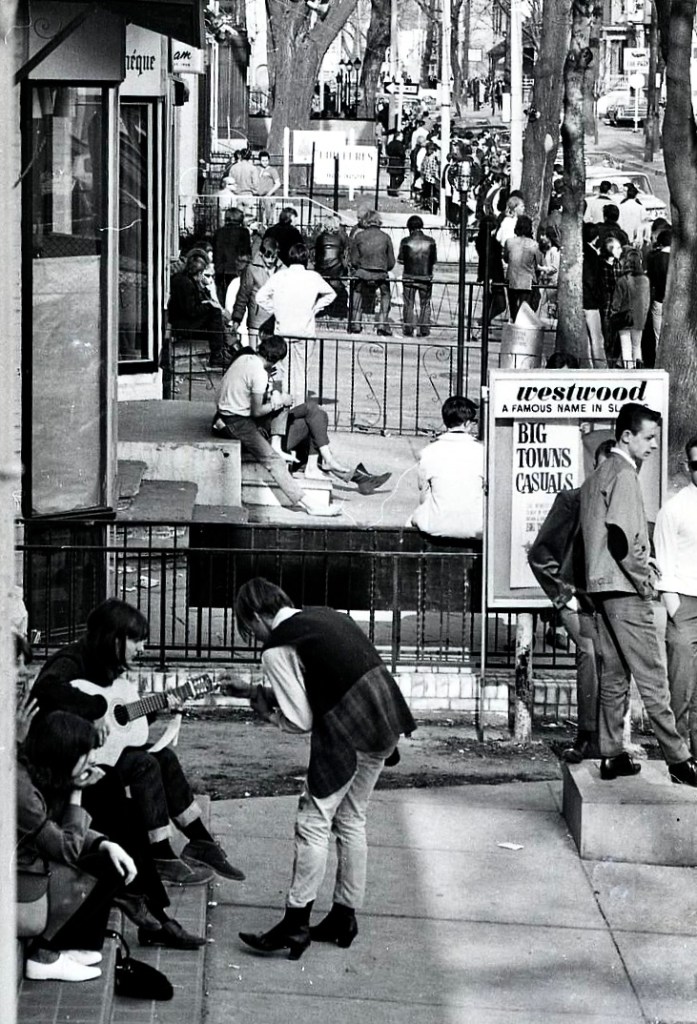
   We went to Yorkville and hung around the rest of the day. There were coffee houses and music clubs all over Yonge and Bloor Streets. The neighborhood went back to the 1830s when it was a suburban retreat. Fifty years later it was annexed by the city of Toronto and until the early 1960s was quaint and quiet turf. Then it morphed into a haven of counterculture.

   “An explosion of youthful literary and musical talent is appearing on small stages in smoky coffee houses, next to edgy art galleries and funky fashion boutiques offering trendy garb, blow-up chairs, black light posters and hookah pipes, all housed in shabby Victorian row houses,” the Toronto Star said.

   It was fun roaming around, hopscotching, ducking in and out of stores, even though a police paddy wagon was parked at the corner of Hazelton and Yorkville. There had been love-ins, sit-ins, and so-called “hippie brawls” in recent years. Some of the city’s leading citizens were up in arms. The politician Syl Apps said the area was a “festering sore in the middle of the city.” 

   There were wide-eyed teenagers and tourists, hippies and bohemians, hawkers and peddlers, and sullen-looking bikers selling heroin. There were black-haired girls playing guitars and preppy guys wearing elbow patched sport jackets. There were bookstores and head shops. A young man was slumped on the sidewalk. We stopped to take a peek at him lying dazed against a storefront. An old woman wearing a babushka and walking with a cane crept carefully past him. I couldn’t tell who was more over a barrel. We went our own way.

   We weren’t able to get into the Riverboat Coffeehouse, which wasn’t really a coffeehouse, but a club with the best music in town. We peeked through the porthole windows but all we saw were shadows. The Mynah Bird featured go-go dancers in glass cases. Some of the glass cases were on the outside front of the club. We saw Rompin’ Ronnie Hawkins perform back flips across the stage while doing guitar solos at Le Coq d’Or.

   Starvin’ Marvin’s Burlesque Palace was upstairs in a brick building, but we didn’t go there. All the music clubs were small and most of the doors open to catch a breeze. We sat on curbs and heard a half-dozen bands free of charge. Grazina called it a ‘Knees Up Mother Brown’ day. We stayed until midnight. By the time I got back to Paul’s house I was more than tired again and fell into bed. I caught my fair share of forty winks.

   The sky on Saturday morning was clear and bright over Lake Ontario. Grazina and I went to the Toronto Islands. We took the Sam McBride ferry and rented bikes. There were no cars or busses. We stopped at the new Centreville Amusement Park on Middle Island and rode the carousel. When we found a beach we changed, threw a towel down, and spent the remainder of the afternoon in the sun. We ate bananas and threw the peels to the seagulls, who tore them apart and downed them like it was their last meal.

   Grazina invited me over for dinner. She told me her mother was a bad cook, and it was my choice, but I went anyway. She set the table while her mother brought platters of cepelinai with bacon and sour cream on the side, serving them piping hot and covered with gravy. They were fit for a king. I told Grazina her mother was the queen of the Baltic kitchen.

   The next morning was Sunday. After going to mass at St. John the Baptist Church with Grazina and her family I caught a bus for home. At the border I waited my turn to answer the Border Patrol man’s questions. I had all the answers except one. When he asked me for I. D., I said I didn’t have any.

   “How did you get into Canada?”

   “I walked over the bridge.”

   “Didn’t they ask you for I. D.?”

   “No,” I said.

   “Jesus Christ! Well, you can’t come into the United States without identification.”

   I was born in Sudbury, Ontario and had returned to Canada many times since for visits and summer camps, but had never overconcerned myself with the legalities. I left that to whoever was driving the car, who were my parents or somebody else’s parents.

   I was speechless. Distress must have showed on my face. The Border Patrol man told me to call my parents and ask them to bring identification. It sounded like a good idea, except that it wasn’t. My father was out of town on business and my mother was a cashier at a supermarket. Even if she could get time off, she had never driven a car that far in her life.

    “Is there any place I can stay?”

   “Do you have any money?

   “Just enough for a bus ticket home.”

   He said Jesus Christ a few more times and finally suggested what he called a “hippie flophouse” on Clifton Hill. He gave me directions and I found it easily enough. I used the pay phone to call my mother, reversing the charges. After she calmed down, she said she would send what I needed the next morning by overnight mail. I was in for two nights of roughing it.

   The flophouse was an old motel advertising “Family Rates.” It was next to a snack bar selling hot dogs and pizza by the slice. There were young guys and girls loitering, lounging, and smoking pot in the courtyard. One of them offered me a pillow and the floor. I accepted on the spot before he drifted down and out. It was better than sleeping in the great outdoors.

   I spent the next day exploring Niagara Falls. There were pancake houses and waffle houses. There were magic museums and wax museums There were arcades and Ripley’s Odditorium. I took a walk through the botanical gardens and to the Horseshoe Falls. That summer the Horseshoe Falls were tilting water over the edge like there was no tomorrow. The American Falls, on the other hand, had been shut down by the Army Corp of Engineers to study erosion and instability. They had built a 600-foot dam across the Niagara River, which meant 60,000 gallons of water a second were being diverted over the larger Canadian waterfall. It was loud as a mosh pit and a vast mist floated up into my face. 

   The Niagara River drains into Lake Ontario. I lived in Cleveland a block from Lake Erie. If I threw myself into the Niagara River I would first have to avoid the falls and then swim upstream all the way to Buffalo before I could relax and float home on Lake Erie. It was an idea, but the practical side of me discarded the idea.

   Many people have gone over the falls. As far as anybody knows, the first person to try it was Sam Patch, better known as the Yankee Leaper, who jumped 120 feet from an outstretched ladder down to the base of the falls. He survived, but many of the daredevils who followed him didn’t. The first person to successfully take the plunge in a barrel was schoolteacher Annie Taylor in 1901. Busted flat, she thought up the stunt as a way of becoming rich and famous. The first thing she did was build a test model, stuff her housecat into it, and throw it over the side. When the cat made it unscathed, she adapted a person-sized pickle barrel and shoved off. It was her birthday. She told everybody she was 43, although she was really 63.

   After she made it to safety with only bumps and bruises she became famous, but missed out on riches. Everybody said she should have sold tickets to the show, but it was Monday morning quarterbacking. She never tried it again. Two years later the professional baseball player Ed Delahanty tried it while dead drunk. The booze didn’t help. He drowned right away. About twenty people die going over the falls every year. Most of them are suicides. The others amount to the same thing.

   The last person in the 1960s to go over the falls with the intention of staying alive was Nathan Boya in a big rubber ball nicknamed the “Plunge-O-Sphere.” When it hit the rocks at the bottom it bounced and bounced. He didn’t break any bones, although he had friction burns all over him.

   I got my official papers on Tuesday, dutifully displayed them at the border, and walked into New York. I bought a bus ticket home. I sat in the back of the Greyhound bus and stretched my legs out. When it lumbered off, I took a look back, but it was all a blur through the smudgy window.

   Grazina and I wrote letters to one another that winter until we didn’t. We slowly ran out of words and by the next year were completely out of them. She was enrolled in a Toronto university full-time by then while I was working half the year and going to Cleveland State University the other half of the year. She found a hometown boyfriend and I found an apartment on the bohemian near east side of Cleveland.

   It was a few years later that Henri Rechatin, his wife Janyck, and friend Frank Lucas rode across the Niagara River near the downstream whirlpool on a motorcycle, riding the cables of the Spanish Aero Car. The friend piloted the motorcycle while Henri and Janyck balanced on attached perches. Since they didn’t have passports, when they got to the far side, they hauled the motorcycle and themselves into the aero car and rode back to the Canadian side in comfort.

   The Border Patrol was waiting for them. They were arrested for performing a dangerous act, but formal charges were never filed. They were free to go. For my part, I made sure to always have something official with my picture on it whenever I went anywhere foreign after that. I had learned my lesson in Niagara Falls. Getting stuck in limbo, no matter if it’s one of the ‘Seven Natural Wonders of North America’ or not, is captivating for only so long.

Ed Staskus posts monthly on 147 Stanley Street at http://www.147stanleystreet.com, Made in Cleveland at http://www.clevelandohiodaybook.com, Atlantic Canada at http://www.redroadpei.com, and Lithuanian Journal at http://www.lithuanianjournal,com. To get the site’s monthly feature in your in-box click on “Follow.”

“Bomb City” by Ed Staskus

“A police procedural when the Rust Belt was a mean street.” Sam Winchell, Beyond Books

Available on Amazon: https://www.amazon.com/dp/B0F1LM1WF9/ref=sr_1_1?crid=2MYAQAOZIC2U9&dib=eyJ2IjoiMSJ9.hTm7BGbiQbSe5ZapFwYPPfcwOpTe-Vdg6VLE4aGyTyk.Z0R-VNBWWEcvKcNaO9LdCOUnNIOOXgvYkRS_FXiXuHk&dib_tag=se&keywords=bomb+city+ed+status&qid=1742136726&sprefix=bomb+city+ed+staskus%2Caps%2C84&sr=8-1

Cleveland, Ohio 1975. The John Scalish Crime Family and Danny Greene’s Irish Mob are at war. Car bombs are the weapon of choice. Two police detectives are assigned to find the bomb makers. Revenge is always personal. It gets personal.

A Crying of Lot 49 Publication

Bumping Into Big Al

By Ed Staskus

  By Ed Staskus

   I hadn’t seen Al Ezerskis for fifteen-some years, so when we met I hardly knew what to say. We bumped into each other on the corner of Ontario St. and Lakeside Ave. opposite the Lakeside Court House. I had come out of the court house where I had gone to drop off a  document. As I was leaving I noticed an inscription carved in a wall. It said, “Justice is the end of government. It is the end of Civil Society. It ever has been and ever will be pursued until it be obtained or until liberty be lost in the pursuit.” It seemed both quaint and appropriate in the Age of Make America Great Again.

   The Republicans had controlled Washington, D.C. more often than not in my lifetime. How had they managed to screw things up so much that America’s greatness evaporated? Gasbags are always complaining. It was time for them to stop complaining and start explaining.

   Downtown Cleveland was back up and running after the thunderstorm and high winds that had torn through the metropolis a week before. Five tornadoes and widespread straight-line winds wreaked havoc across Northeast Ohio. Thousands of trees and utility poles were knocked down. Hundreds of thousands were left without power. The shoreline of Lake Erie, near where I lived, was hit especially hard, with more than half of everybody experiencing power outages. Many of them still didn’t have power five days later. It was the worst storm to hit the city in thirty years. 

   Al had come out of the Justice Center across the street. “How are you doing?” I asked when I unwittingly happened upon him.

   “I’m between everything annoys the crap out of me and I don’t give a rat’s ass,” he said.

   He had gotten cranky after coming into his maturity. He hadn’t changed, although he had gotten older. He was the same age as me. We both grew up in North Collinwood’s Lithuanian community. We were both in Boy Scout Troop 311. We both went to St. Joseph’s High School in the 1960s, although he was an Honor Student and I wasn’t. He was walking with a slight limp. I had walked with a limp, at first slight and then full-blown, for five or six years before I finally had joint surgery two years earlier. I was never overly concerned about the limping, but the pain of the arthritis in my left hip finally drove me to distraction. After the surgery I walked more than ever, breaking in my after-market replacement.

   The Cleveland Clinic’s Lutheran Hospital had been as high-tech as it could be. The operating theater looked like the flight deck of the USS Enterprise. The road to recovery, however, was strikingly old fashioned. “Walk as much as you can every day” was what all the physical therapists said. It was a no-tech solution.

   “What are you doing downtown?” I asked.

   “Jury duty,” Al said. “Although all I’ve been doing for the past two days has been sitting in a room with a couple hundred other people waiting to hear if I’ve been chosen to be on a jury. If I get picked, whoever did whatever they did is going to be sorry to see me.”

   The jury pool had been released for lunch. It was a breezy mid-August day. The storm had broken the oppressive humidity of the past few weeks. Al was on his way to the Warehouse District. “I have an hour and a half before I have to be back to decide somebody’s fate,” he said.  

   I was of the opinion that there never was anybody worth a damn who wasn’t irascible, except for maybe Mother Teresa and Willie Mays. Perhaps Al was worth a damn. He was irascible enough. On the spur of the moment I asked if I could join him for lunch.

   “We can catch up on old times,” I said. 

   He gave me a peevish look, but said all right. I fell into step with him. He took long strides, one stride with a hitch to it, and I recalled that we had called him Big Al back in the day. He was six feet and a few more inches tall. He had been lanky as a teenager but wasn’t lanky anymore, He was still big, though, and bigger still. He had packed on 40-or-more pounds. We walked down Lakeside Ave. and then up W. 9th St. The Warehouse District’s eateries were buzzing. Curbside tables were filling up. Waitresses were taking orders. Lawyers were tossing back booze.

   “There’s a place here called Taza,” I said. “My wife and I eat there sometimes. It’s a Lebanese grill.”

   “I don’t eat food made by Arabs,” he said.

   We went to Cleveland Chop on St. Clair Ave., a sports bar where they served steaks and handcrafted burgers. Al ordered bacon wrapped shrimp and a Tom Hawk pork chop. The pork chop looked to be at least a pound of pig. I ordered a plate of Ahi Poke tacos, even though I had no idea what Ahi Poke was.

   “What do you think about that Harris wanting to be president?” he asked out of the blue, stirring the Manhattan in front of him with a swizzle stick. I wanted to say “Shaken not stirred” like James Bond, but I didn’t. Big Al had never been known for his sense of humor. He had been class president in high school and twice ran for mayor of Brecksville, a south side suburb where he had long lived. He had twice lost but never lost his preoccupation with politics.

   I was of the Mark Twain school of politics. “Suppose you were an idiot, and suppose you were a member of Congress, but I repeat myself,” the writer once said. I didn’t repeat that bit of doggerel at the lunch table. I suspected Al would be sensitive about that kind of wisecrack.

   “I haven’t thought much about the election” I said. “I’ll think about it in a month-or-two.”

   “You still have that beatnik attitude,” he said, spearing a shrimp.

   I let it pass. I had long ago lost whatever concern I ever had about what people thought of me. Everybody is entitled to their own opinions, if not necessarily their own facts, although that was changing.

   Joe Biden, the incumbent in the Oval Office, had decided to not run for a second term and his vice president, who was Kamala Harris, had thrown her bonnet into the ring. “I will say this,” I said, “she’s got about three months to campaign while Donald Trump has been campaigning for almost four years. I don’t see that she has much of a chance. Donald Trump can’t beat another man at the polls, but he’s gangbusters when it comes to beating women.”

   “I’m glad to hear you say that,” Al said. 

   “Why is that?” I asked.

   “The last thing this country needs is a half breed broad in the White House,” he said. “Or any broad, for that matter.”

   “How’s everything?” our waitress asked, gliding up to our table. She was a looker. Al looked her up and down. He didn’t keep it a secret. He wanted to be her long lost pal. I watched him while he watched her.

   “This country is going to hell,” Al said, cutting his pork chop into bite-sized pieces. It reminded me of what mothers do for their small children at the dinner table. He was a fastidious man. There probably wasn’t much that satisfied him.

   “Take that waitress,” he said. “What is she doing in this country? You know she’s from down there somewhere.” He pointed at the floor with his fork. The waitress was brown skinned with black hair. I couldn’t tell if she was Mexican or Middle Eastern. “They’re lazy and shiftless. All they want to do is live on welfare, which we have to pay for. They’re stealing our jobs.”

   I wondered why she was working if she was lazy and shiftless. Why was she taking jobs from Americans? Why wasn’t she on welfare, instead? Was she all mixed up?

   “I tell you, they’re polluting the blood of our country.”

   “Your parents were immigrants, just like mine,” I said.”They made this country better, not worse.”

   “That was different,” Al said. “They weren’t Latinos, they were Lithuanians.” 

   I was aware that many people conflated the word ‘immigrant’ with the word ‘Latino.’ Immigrants from Europe were acceptable. Immigrants from anywhere else were either suspicious-looking or unacceptable.

   “There’s millions of them here, tens of millions, undocumented, smuggling in drugs, committing crimes, raping our women. They’ve got to be kept out, one way or another. Kamala Harris will let them in. Donald Trump will make sure we keep them out.”

   The Chinese Exclusion Act of 1882 was one of the earliest pieces of legislation aimed at excluding foreigners based on their nationality. Congress said the Chinese were “lowering the cultural and moral standards of American society.” The law stayed in effect for more than 60 years. Even though it was eventually repealed, anti-immigrant sentiment remained alive and well. Fans of the sentiment routinely cite national security, the economy, and cultural preservation.

   When the play “The Melting-Pot” premiered in 1908 it portrayed America as a land “where all races and nations come to labor and look forward.” Ellis Island that year admitted nineteen hundred foreigners into the country every day, day after day. The New York Times called the play  “sentimental trash masquerading as a human document.” A few years later the newspaper complained that “the melting pot, besides having its own color, begins to give out its own smell. Its reek fills New York City and floats out rather widely in all directions.”

  In our own day the Know Nothing Party of the 19th century had become the Make America Great Party of the 21st century. Their aim seemed to be to keep the home of the brave and land of the free on edge day and night by menacing it with non-stop threats about scary immigrants.

   “Damned right, we should all be scared,” Al said, ordering another Manhattan. The Manhattan demands respect. It is a heavy pour of bourbon, sweet vermouth, and bitters. It is strong stuff. Big Al seemed to be hanging in there. I was impressed with his capacity for the bottle.

   “Donald Trump is doing God’s work. God knows somebody’s got to do it.”

   He wasn’t the only one doing the heavy lifting. From 2020 to 2024 there were hundreds of anti-immigrant proposals across 45 states. During the 2021-2022 legislative session there were 145 proposals, which ballooned to 365 proposals in the 2023-2024 session. For every anti-immigrant proposal in 2020 there was an average of 4.6 proposals in 2024.

   “What about the economy” I asked. “It seems to me that immigrants are one of the driving forces when it comes to that. They only have one thing on their minds and that’s improving their lot on life. Isn’t their new blood and new energy exactly what’s good for this country?”

   “Grow up!” Al blurted, spitting some of his Manhattan on his shirt. “They’re lazy and rotten, I’m telling you.”

   The National Academies of Science, Engineering, and Medicine released a report in 2017 called “The Economic and Fiscal Consequences of Immigration.” The report found that new immigrants tended to earn less than the native-born and so were more costly to government, but their children exhibited higher levels of upward mobility than the native-born and “are among the strongest economic and fiscal contributors in the population.” 

   I could have grown up there and then and told him about the report, but I didn’t. I thought he would probably dismiss it as “fake news.” I didn’t think Big Al was big on hearing anything he disagreed with. I could have cheered him up by telling him that Benjamin Franklin had proposed restrictions way back when on Germans coming to America, saying, “We’re going to be overrun by them.” I could have, but I didn’t. Al’s forebears had lived in Prussian Lithuania Minor on the Baltic Sea coast for generations.

   He ordered a triple chocolate cheesecake. I ordered coffee. When he was done with dessert he stretched his legs out, almost tripping the waitress as she walked past. “Watch your step,” he said. She gave him a wary look.

   “They game the system,” Al said. “Believe me, I know.” I wondered if he knew it first-hand. Was he gaming the system himself? “They get paid in cash, don’t pay taxes, but still want government benefits. Their kids go to our schools which have to cut programs to free up room in the budget for their special classes. Our kids suffer while their kids get ahead. It’s not fair. They fill up our hospitals and our prisons. Who pays for that? We do. You can’t deny the financial toll. It’s got to stop.”

   “Immigrants have always come here to work,” I said. “America was built by immigrants.”

   “You’re a  fool,” Al said.

   I don’t like being insulted anymore then the next guy, although it did mean I didn’t have to be friendly anymore. I stood up and looked down at Big Al. He looked like a rosy cheeked troll with the Manhattans in his blood stream. Maybe he would go easy on whatever poor sap he was going to be sitting in judgment of at the Justice Center, but I doubted it.

   “It’s been fine having lunch with you,” I lied, walking out of Cleveland Chop without paying my share of the bill. I don’t know if I meant to stick Al with the bill, but that’s what happened. I knew that wasn’t going to put me on his good side, but I didn’t expect to bump into him again anytime soon. Besides, by then I would know better and it wouldn’t be any more than a close call.

Ed Staskus posts monthly on 147 Stanley Street http://www.147stanleystreet.com, Made in Cleveland http://www.clevelandohiodaybook.com, Down East http://www.redroadpei.com, and Lithuanian Journal http://www.lithuanianjournal.com. To get the site’s monthly feature in your in-box click on “Follow.”

“Made in Cleveland” by Ed Staskus

Coming of age in the Rust Belt in the 1960s and 1970s.

“A collection of first-person street level stories blended with the historical, set in Cleveland, Ohio. The storytelling is plugged in.” Sam Winchell, Beyond Books

Available on Amazon:

A Crying of Lot 49 Production
Shake a Leg

By Ed Staskus

   “Rhythm is something you either have or don’t have, but when you have it, you have it all over.”  Elvis Presley.

   On a Saturday morning in mid-fall, Olga Capas, Rita Zvirblis, and Vanessa Staskus ordered late breakfast early lunch at the Diner on Clifton, finding a table on the outdoor patio and easing into their seats twenty minutes after their ever first Zumba class. Over cups of steaming coffee, three-cheese omelets, patty melts, and shared sweet potato fries, they caught up with their breath and with tuning in to the sunny-side up movement exercise scene.

   “We got to class early and found our space in the back,” said Vanessa, “but then every minute somebody went behind us, so in no time we went from being in the back row to being in the front row.”

   If you’re in the front row you’re leading the parade. It wasn’t what they planned, but once the class started, they had to look alive. If you stop, you’re going to melt back into the tuba section, where you might get laid low.

   “I thought they were going to kick me out,” said Rita, “I have no rhythm, but it’s so fast, you can’t think about anything else besides keeping your feet moving.”

   She was being modest. She danced with the Grandinele folk dancers as a teenager and young adult. She traveled with the troupe to Chicago and Toronto, Europe, and South America. Folk dancing reflects the life of people from a place or country. It can be the upbeat southern Italian Tarantella, the rhythmic Turkish Haly, the Polish carnival party dance Polonaise, Kentucky clogging, and Korean sword dancing. Zumba is along the lines of a street dance.

   Grandinele was formed in Cleveland in the early 1950s by Liudas Sagys, who began his career as a professional dancer with the National Folk Dance Ensemble in Lithuania. He taught the steps and choreographed Grandinele’s country hoedowns while his wife Alexandra made the costumes and kept the books. He was the longtime director of the Cleveland Folk Dance Festival which in 1976 was recognized as “the best ever.”

   “I loved the Zumba, the music and moving,” said Olga. She always had tennis shoes at the ready in her hallway when she was ready to move.

   The three women are all of Lithuanian descent, one of them from the homeland, two of them immigrant stock, living west of the Cuyahoga River, on the west side of Cleveland, Ohio, active and fit enough. Plump pale and healthy as an ox without batting an eyelash was the touchstone once upon a time, but the signs of the times have long since changed. Never fit and trim enough is where walking jogging running working out and Zumba come in.

   Zumba is a dance and fitness program created by exercise instructor and choreographer Alberto “Beto” Perez in Colombia during the 1990s when he improvised salsa music into an aerobics class. Since the turn of the century, it has expanded to 125 countries, taught by more than 20,000 certified instructors. Practiced weekly by approximately 14 million people worldwide it is today’s most popular dance fitness phenomenon.

   In 2012 Zumba was named the”‘Company of the Year” by Inc. Magazine and is today one of the largest fitness brands in the world, practiced everywhere from big-box gyms to church halls to community centers.

   At the Harrison Elementary School, sponsored by the Lakewood Recreation Department, classes are taught by Amy Annico, a hale hearty black-haired young woman sporting a quick smile, bright blue sneakers, and hauling a yellow Dewalt boom box about the size of an air compressor from her car to the class.

   “One minute she was monkeying with that big yellow thing,” said Rita, “and then at nine o’clock in the morning exactly it was blasting.”

   It was the blast off.

   “I’m not really for nightclubbing first thing in the morning,” Rita said, “but she makes it a lot of fun. It’s like partying yourself into shape.”

   Zumba is different than many other fitness programs because people don’t always take it for the fitness benefits, more often than not for the boogie and socializing, even though the results can be transforming.  It is a cardiovascular calorie-burning hour of twisting and turning in varying states of synchronization to loud bouncy infectious music.

   “They are taking it for the happiness and joy that they feel while they are doing it, and the fitness is just the result of this,” said Alberto Perlman, who with Alberto Perez was a co-founder of the Zumba enterprise.

   Zumba is essentially an aerobic fitness program, including basic core fitness, married to dance routines. Set to full of life Latin American beats, it burns up to 600 calories an hour, according to Harvard Health Publications. Sweating is not optional, since everybody starts sweating within a couple of minutes and doesn’t stop until the end of class.

   “Zumba is hard,” said Olga, “but it’s not hard like going to the gym. Sometimes I have to force myself to do that, but with Zumba the music is going, and you just want to move.”

   “It’s fast-paced and you’re watching Amy’s feet up on the stage,” said Rita between bites on a Reuben sandwich. “It’s those blue shoes she wears the whole time, trying to follow what she’s doing, and then you immediately start sweating.”

   “Immediately!” echoed Vanessa. “Sweat was dripping down the small of my back before the warm-up was even over.”

   Amy Annico, a music teacher as well as part-time actress, has taught Zumba since 2008 at area YMCA’s, Live Well Lakewood, health fairs, and retirement homes. She attends the annual Zumba Instructor Convention in Orlando, Florida, every year, upgrading her skills

   “I’m trained in Zumba, which is for everyone,” she said, “and Zumba Gold, which is for older, active adults, and Zumbatomic for kids.” There is even Aqua Zumba, a water-based workout integrating Zumba with aqua fitness themes. A great deal of jumping and splashing is involved. Strapless bathing suits are strongly discouraged, for good reason.

   “The Harrison school class is a great community class,” Amy said. “Everyone’s dancing, it’s like a party, people are hooting and hollering and shaking, and the hour flies by and you don’t even know it.”

   By all accounts shimmying, shaking and sliding, hooting and hollering, as well as chest pumping and bootie shaking, are encouraged subscribed to and applauded. You may not get a gold star, but you’ll be a shooting star.

   “I always say, don’t be shy, give it a try,” said Amy Annico. “It’s all about spreading the joy of music from around the world with fantastic fitness and dance moves.”

   The word zumba is Colombian slang and means “move fast and have fun.” It has been described as exercise in disguise. Set to four basic rhythms based on salsa, merengue, cumbia, and reggaeton, it is a non-stop workout that works all your endorphins out endorphins as well as working out your muscles.

   Some people lose inches off their waistlines, others see their cholesterol drop and their energy levels rise, while still others simply reduce their stress levels. Some men even learn to dance and not make fools of themselves at weddings anymore.

   Just as sweating is mandatory, so is staying hydrated.

   “I told Vanessa to bring water, even though she doesn’t like water, because I heard you get really thirsty at Zumba,” said Rita.

   “My whole bottle of water was gone before half the class was over, and I never drink water,” said Vanessa. “Everybody was going back and forth to the water fountain getting more of it all class long. You don’t get totally winded, even though it’s non-stop dancing, but you do get totally thirsty.”

   Their dishes cleared off the table at the diner, coffee cups re-filled, and lingering over their lunchtime, the three women agreed that Zumba was the best way they could think of to exercise without actually exercising.

   “The salsa moves are really good for you, your whole body is going, your hips are going,” said Rita. “Amy is so animated, she makes all these noises, those sounds of hers, like she is definitely having fun doing it, and she makes it the same for everybody.”

   “It’s loke dancing from beginning to end, but it’s exercise, too. You do it with joy, and afterwards you feel so good,” added Olga. “It’s guaranteed to put a smile on your face.”

   They all agreed Zumba was the best of both worlds. There are shortcuts to happiness and dancing is one of them. “Your whole body is moving, and you don’t have time to think about working out,” said Rita while walking back to their car. “It’s like having your cake and eating it, too.”

   Some words are triggers. Cake is one of them. If staying healthy and fit is a priority, since vegetables are a good way of getting there, there is always pumpkin pie and carrot cake.

   “Why don’t we drive down to Tremont, have some dessert, and go for a walk along the river?” Vanessa suggested. “It’s going to start getting cold soon.” The winter in Cleveland was only six weeks away, when the sky would go dark gray and storms started blowing in over Lake Erie.

   That’s what the three Baltic hoofers doing Columbian slimnastics for the day did, before the sun set, and the night’s new frost crept in unnoticed.

Ed Staskus posts monthly on 147 Stanley Street at http://www.147stanleystreet.com, Made in Cleveland at http://www.clevelandohiodaybook.com., Atlantic Canada at http://www.redroadpei.com, and Lithuanian Journal at http://www.lithuanianjournal, com. To get the site’s monthly feature in your in-box click on “Follow.”

“Ebb Tide” by Ed Staskus

“A thriller in the Maritimes, out of the past, a double cross, and a fight to the finish.” Sam Winchell, Beyond Books

Available at Amazon: https://www.amazon.com/dp/B0CV9MRG55

Summer, 1989. A small town on Prince Edward Island. Mob money on the move gone missing. Two hired guns from Montreal. A constable working the back roads stands in the way.

A Crying of Lot 49 Publication

Hill of Crosses

By Ed Staskus

   When Wally Jogaila wrapped up his work several days early he decided he would do what he had promised his mother he would do, even though at the time he hadn’t been sincere making the promise. His mother was dying slowly but surely and it mattered when she asked him to do something. Most of the time whatever she asked him to do was easy enough, especially when she asked him to stop by, stay and sit, and talk about something she wanted to talk about. It was usually about the past. The present meant less and less to her. The future meant giving up the ghost.

   “Go see your father when you are in Poland,” she asked when he told her he was going to Gdansk. “It’s not far.”

   Wally was a chemical engineer in Cleveland, Ohio and was going with an American and British team to Gdansk to help expand the capacity and product range of Nitro-Chem S.A. in the Zarnowiec Economic Zone. It was near what had been the Lenin Shipyard, where in1980, 16 years earlier, a series of strikes and demonstrations led by Lech Walesa sparked the Solidarity movement, eventually leading to the collapse of the Soviet Union.

   When he decided to go see his father in Lithuania he took a bus from the Dworzec Autobusowy in Gdansk to the Autobusu Stotis in Vilnius. The ride took 12 hours, even though the distance was less than 400 miles. The roads were bad from one end to the other end. He could have driven the same distance when home in Ohio in half the time.

   He checked into the Hotel Karolina, overslept, had a late breakfast of beet pancakes with farmer’s cheese and sour cream, and half a cup of bad coffee. He sent the coffee back and ordered black tea. It was very good. He asked at the front desk about hiring a private driver to take him to Kairivaza.

   “I don’t know that town,” the clerk said. 

   “It’s somewhere near Siauliai,” Wally said. It was where his mother had told him his father had moved to after the Russians left Lithuania and he was cut loose from their boot strings.

   His father had joined the Communist Party in the 1950s and risen in the ranks to become the top apparatchik of the Siauliai District. He arrested and executed so many resistance fighters, subversives, and intellectuals that he came to be known as the Hangman. He was proud of the sobriquet. He never considered that hangmen might also die.

   The more he liked his job the less his mother liked him. She fled the Baltics in the mid-1960s, evading border guards, their dogs, and machine guns. She made it over barbed wire to West Germany with him in tow. He had been a child. A distant cousin in the United States sponsored them and they emigrated there.

   The clerk went outside and came back with a private driver.

   “How much will you charge to take me to Kairivaza?” Wally asked.

   “I’m not sure I know that town.”

   “It’s near Siauliai.”

   “Are we staying overnight?”

   “No.”

   “I charge you sixty litai.”

   “Round trip?”

   “No, that is the price one way and the same price the other way.” 

   What Wally didn’t know was that private drivers earned between a hundred and two hundred litai a month. What he did know was that one hundred and twenty litai amounted to about thirty American dollars. He could easily afford it. 

   “All right,” he said. “When are you available?”

   “Right now.”

   “I want to explore Vilnius today. Is tomorrow OK?”

   “Yes.”

   The driver picked Wally up at the front door of the Hotel Karolina at six thirty the next morning. He was a bony man with a round head and a meager chin. He wore a wedding ring and leather fisherman’s sandals. There was a tin statue of St. Christopher taped down on his dashboard.

   “What is your name,” Wally asked.

   “My name is Zenius.”

   He smoked incessantly. They were Bulgarian cigarettes. Wally rolled his side window down to vent the poisonous smoke. The car was a Lada. It groaned and rattled in its old age. Zenius drove like he was making a getaway from an insane asylum. They were stopped twice on the way by policemen who demanded a cash payment on the spot for his bad driving. Both times they were reluctantly allowed to go free when Zenius explained he had an American in the back seat on an important mission for the American Embassy.

   “Kairivaza is not on the map, but there are many towns and villages in Lithuania not on the map,” Zenius said. “I have a nose for forgotten places and even places that never existed. I will find it.” He drove through the middle of the country and past Siauliai, a city founded the day after Lithuanian knights defeated the Livonian Order at the Battle of Saule in 1236. A wooden church was built there in 1445. A stone church replaced it in 1625.

   Zenius was as good as his word. He found Kairivaza north of Siauliai and dropped Wally off at a crossroad in the middle of town. It was very humid. Wally’s armpits were soon sopping and started smelling like onions. The wind was no help. It felt hot and sticky on his face.

   “I am going to drive to the Hill of Crosses and pay my respects,” Zenius  said. “I will be back before nightfall. Meet me here. Don’t be late. It would not be wise.” The Lada burned oil as he accelerated and sped away.

   All the houses were empty in every direction Wally looked. Some of the doors flapped open and shut in the wind and most of the windows were heartsick. The front yards were choked with bindweed and stinging nettle. A woman wearing an old dress and a babushka stretched her long neck out of one of the windows. He walked over to her. The skin of her face was translucent. Her veins were bluish purple, He could see the bones of her jawbone.

   “I am looking for my father, Andrius Jogaila,” Wally said. He showed the woman a black and white photograph of his father. It was a square Brownie camera kind of snapshot, worn and creased. His mother had given it to him the night before he left for Poland. He had never seen the photograph before. He had never seen any photographs of his father before he saw that one.

   “Yes, he lives here in Kairivaza, although nobody lives here.”

   “What do you mean?”

   “Nobody has lived here for one hundred years.”

   “But my father lives here?”

   “Yes, I am his housekeeper.  My name is Irena. He went for a walk. It might be all day before he comes back. Most of the time he does not come back at all. He never says what his plans are. He has a bad temper. He thinks he is a Perkunas but he is a devil.”

   “Perkunas?”

   “Yes, the Thunder God.”

   Perkūnas is the Baltic god of thunder, lightning, mountains, and oak trees. He is often represented as a medieval warrior, armed with an axe or a war hammer, and riding in a chariot drawn by goats.

   “Do you know where he went?”

   “He walks in the boglands. He stays in the shadows. Don’t search for him. You will get lost in the teeth of the alders.”

   “I’m sure you’re right,” Wally said.

   “Would you like to take a nap after your long trip?” Irena asked. “Your father always kept a spare room ready for you, with clean sheets and a brand new pillow.”

   Before Wally could say he was ready for a nap a man stepped up behind him. The man tugged at his sleeve. Wally turned around. The man had one glass eye. The glass eye was the most alive thing about him.

   “Don’t listen to her,” he said. “The Hangman hanged himself four years ago, right here in this house, in the spare bedroom.”

   “How did my father know I was coming?”  Wally asked the woman in the window when the man had gone.

   “He knew you would come sooner or later.”

   “Did my mother call and tell you I was coming?”

   “No, we don’t have telephones here.”

   “Did she write to you?” 

   “No mail has been delivered here for a very long time.”

   Wally took a nap in the spare bedroom. It rained while he slept. The water gurgled on the window sill. He heard a voice say “Forgiveness of sins and resurrection of the flesh.” He couldn’t tell if the voice was in his dreams or if it was his father’s voice, which he had long since forgotten the sound of.

   When he woke up his dreams disappeared into thin air. There wasn’t anybody in the room. The air felt cooler after the rain. He washed his face and hands in a basin of water which was next to a pitcher on a stand beside the window. He went into the front room. He could hear Irena in the kitchen. There was some ham, black bread, and butter on the table. Irena buttered the bread and laid slices of ham on it. She stood beside the table while he ate.

   “Please sit down,” Wally said.

   “I would rather stand,” Irena said. “Besides, it is almost time for you to leave.”

   “What about my father?”

   “Do not concern yourself about him. He is not a good man. He will never be informed by God’s grace, even if he lives until the end of time. Nothing will come of seeing him again, even if he does return, which is uncertain.”

   “You sound like you hate him.” 

   “I knew you for almost a year before you took your first breath and I knew Andrius long before that,” Irena said. “I love you but I hate him with all my heart. He betrayed himself  during the war, betrayed his  marriage, and betrayed his homeland doing the devil’s work in Siauliai.”

   Irena talked as though she was his mother. He could see her heart beating in her thin chest. Her voice was wheezy.

   “It is important to my mother that I see him,” Wally said.

   “I heard from your mother this morning. She now thinks it best you leave Kairivaza without trying to see him. It would be foolish. He can be dangerous, even though he is powerless. Don’t forget to latch the door on your way out.”

   Wally heard a car’s gears grinding and smelled oil burning. He went to the front door. Zenius was holding the passenger door of the Lada open for him. A lazy Bulgarian cigarette was stuck between his lips. Wally looked back to say goodbye to Irena, but she was gone. He latched the door and slid into the car. They drove south towards Siauliai.

   “I met your father at the Hill of Crosses,” Zenius said.

   “Take me there,” Wally said.

   The Hill of Crosses is a pilgrimage site outside of Siauliai. There used to be a hill fort there. The first crosses and statues of the Virgin Mary appeared after the failed 1831 Uprising. It became a place of remembrance. Rosaries, medallions, effigies, and carvings  of Lithuanian patriots were brought to the hill. The Russians repeatedly removed them, only to find them repeatedly brought back to life. There were so many crosses bristling on the hill in 1996 nobody knew how many there were.

   Zenius stopped the Lada at the bottom of the hill beside a ditch that went nowhere. He set the parking brake so the car wouldn’t roll into it. A man was in the ditch shoveling dirt out of it.

   “What is that man doing there?” Wally asked.

   “That’s your father,” Zenius said.

   “A man with a glass eye in Kairivaza said he hung himself not long after the Russians left the country.”

   “That may be, but he lives here, although he is more dead than alive,” Zenius said. “God spared him from hellfire in return for setting the crosses back upright when they fall over and keeping the paths in good repair. He sleeps in the ditch. Every morning it fills itself up and every evening he has to dig it out again.”

   Wally turned in the car seat to open the car door and go see his father. Zenius put his hand on Wally’s shoulder.

   “Your father doesn’t want you to see him making ends meet in a hole in the ground. It would be better if you didn’t go over there. Besides, he has it on his mind to run away any minute to Kaliningrad, where everybody is an atheist. He thinks he will be safe there, but he is mistaken. What he doesn’t know is that God will find him and he will then wish he was more dead than he already is.”

   Wally’s father pulled himself out of the ditch and wiped his brow. He moved as quietly as mercury in a thermometer. He wrapped himself up in a wool blanket and lowered himself back into the ditch. He looked in all directions over the lip of the hole in the ground. His eyes were black dots. He lay down and started snoring, long in the tooth.

   Zenius turned the key in the ignition of the Lada and drove away. He kept his eyes on the rutted road. He was a bad driver but didn’t want to break an axle. The car was his livelihood. A thunderstorm had blown in from the Baltic Sea. He turned on the windshield wipers. Rain filled the ditch Andrius Jogaila was sleeping in. Wally sat quietly, listening to himself breathing. He didn’t look back. There wasn’t anything for him to see.

Ed Staskus posts monthly on 147 Stanley Street http://www.147stanleystreet.com, Made in Cleveland http://www.clevelandohiodaybook.com, Down East http://www.redroadpei.com, and Lithuanian Journal http://www.lithuanianjournal.com. To get the site’s monthly feature in your in-box click on “Follow.”

“Made in Cleveland” by Ed Staskus

Coming of age in the Rust Belt in the 1960s and 1970s.

“A collection of first-person street level stories blended with the historical, set in Cleveland, Ohio. The storytelling is plugged in.” Sam Winchell, Beyond Books

Available on Amazon:

A Crying of Lot 49 Production

Crossing at Nuremberg

By Ed Staskus

   “The holy bishop from Kaunas fixed it up for us,” Angele Jurgelaitis said when she arrived in Berlin in the middle of the night. There was nothing holy about the ferocious last days of World War Two. It was a godless maelstrom. It helped to have a man of the cloth on your side when the devil was doing his best on the other side. There was more than enough hellfire on earth that winter.

   When Angele, 16 years old, Ona Kreivenas, who was her aunt, and Ona’s four children got off one of the last trains that the Prussian Eastern Railway ran from East Prussia to Germany they were met at the station by Bishop Vincentas Brizgys. The clergyman was Ona’s husband’s cousin. Her husband, a Chief of Police in southern Lithuania, had been arrested by the Russians in 1941 and deported to Siberia, where he was stuck in a slave labor camp. By the early fall of 1944 Bishop Brizgys and more than two hundred other priests had already fled the Baltics on the heels of retreating German forces.

   Many Lithuanians barreled out of the Baltics in the fall and winter of 1944 as the Red Army overwhelmed the Wehrmacht and overran the land. The fighting was tenacious and terrible. Wartime losses of Estonians, Latvians, and Lithuanians were among the highest in Europe. They didn’t go down without protest. They were out-gunned, though.

   Ona had somehow located the bishop by telephone from East Prussia and he arranged to meet them at the train station. He was wearing a dark suit and a homburg. He was carrying a basket of hot buns. He looked like the churchman he was. Berlin didn’t look like what it had once been. It looked like a wasteland.

   “He gave one of the buns to each one of us,” Angele said. “I was so happy.”

   What the churchman fixed up for them was passage to Bavaria. They ended up in the north of the southeastern state. Bavaria shares borders with Austria, Switzerland, and the Czech territories. The Danube and Main flow through it, the Bavarian Alps border Austria, and the highest peak in Germany is there. The Bohemian forests are nearby. The major cities of the region are Munich and Nuremberg. 

   “The bishop found a pig farm for us, people he knew,” Angele said. “We lived in a two-room apartment above the slaughterhouse. There was another Lithuanian with us, a woman in her 20s, a fancy woman.” One of the two rooms was a kitchen. They lived and slept in the larger room, two adults, a teenager, and four children. The fancy woman kept to herself. There was barely enough room to stand. There were three cots. 

“We took turns sleeping on them. We worked for our keep, helping with the cows, and cutting clover. There was no town, just country everywhere. The German family we stayed with fed us. They were good people.” There was no combat in their corner of the world. “We didn’t see any fighting all winter long,” said Angele. “The war ended when the Americans came. They wore nice uniforms, not like the Russians, who were filthy and stank. They were friendly, completely different. They threw candy to us as they went past.”

   Bavaria was one of Adolf Hitler’s favorite places during the twelve years of the planned one thousand year Third Reich. He had a lavish residence at the Obersalzberg. Bavaria had been the scene of protests against Nazi rule in the late 1930s, but it didn’t matter to the Fuhrer. He had his own dog-eat-dog security men. Their orders were to shoot first. They didn’t bother about questions. After the war Nuremberg was chosen for the military tribunals trying Nazi war criminals because it had been the ceremonial birthplace of the party. It was where their annual propaganda rallies were held.

   Allied air forces bombed the hell out of the city in 1944 and 1945. One night in January 1945 more than 500 British bombers dropped six thousand high-explosive bombs and more than a million incendiary devices. The historic old town was destroyed. Half of the rest of the city was destroyed. What wasn’t blown to bits or burnt down was damaged. Surviving the bombing meant you had to then survive the aftermath. The city was left with practically no heat, no electricity, and  no water supply in the middle of winter. The Palace of Justice and the prison that was part of the sprawling complex were spared. It was a sign of what was in store. It was spared because justice and revenge were in store.

   “In the fall after the war ended, we had to leave the pig farm and went to an American refugee camp near Regensburg. We had two rooms, but there was a Lithuanian man in the other room, so we had one room. We lived there and didn’t do anything. We waited and waited.”

   Before the Russians closed the borders, padlocking the Baltics behind the Iron Curtain, about 70,000 Lithuanians were able to escape the country, almost all of them ending up in Germany. By the time the war ended nearly 11 million refugees had flooded the country, more than the total population of Austria. Many of them ended up in Displaced Persons camps in Bad Worishofen, Nordlingen, and Regensberg.

   In the spring of 1946, Angele, Ona, and the children moved to a new camp. “It was a castle that you went to down a long road through a forest in front of a lake. There was a big chapel and two big barracks. There were no owners anymore, and no workers, nobody. There were only the Americans and refugees. There were many of us, all of us homeless. We were almost all Lithuanians.”

   The Schwarzenberg castle on the outskirts of Scheinfeld in Bavaria is northwest of Nuremberg. From 1946 until 1949 thousands of Lithuanians were housed at the DP camp there while they waited for their chance to get to Australia, Canada, the United States, anywhere somewhere else. “There was no future for us in Germany,” Angele said. There was flat out no going back. The system of revolving displacement the Russians proposed would have meant the end for many of them and suspicion and persecution for the rest of them. The Russians had no plans of letting repatriated Lithuanians off easy. They had no plans of letting any Lithuanians of any kind, unless they had converted to Communism, off easy. Even then it was dicey. If they wanted you to live and die in Siberia, the far east is where you went.

   The camp outside Nuremberg was administered by an American Army officer of Lithuanian descent. The military’s concern was providing shelter, nutrition, and basic health care. Although the Americans looked after vital supplies, everybody in the camp had to lend a hand, The refugees prepared their own food. They sewed new clothes from old cloth. They printed their own daily newspaper. They printed their own money, too. The currency could be earned by working around the camp and spent at the canteen, where you could buy shaving cream, combs, and cigarettes.

   “We had our own doctors, our own church, and even a school. My best friend was Maryte. Her parents were teachers. They taught the high school classes in the camp. Her mother knew how to sew.. She would take hand-me-downs that had been donated to us by the Red Cross, take them apart, and make new dresses. Whenever she made a dress for Maryte she made one for me, too.”

   Angeles’s aunt talked to her about becoming a seamstress. “She wanted me to learn how to sew, like my older brother Justinas, so I would have some way to make a living, but I said no.” She had already turned down her aunt’s advice back home about becoming a farmer’s wife. She wasn’t sure what she wanted to do, but she knew for sure what she didn’t want to do, which was no sewing and no farming.

   After her friend Maryte moved to Nuremberg, taking classes in x-ray technology, and was on the way to becoming a nurse assistant at the Army Hospital there, she wrote Angele. “She told me about it, told me it was a 10-month course, and told me to come join her.” Angele packed a satchel with her clothes and slipped away as the weather warmed up in 1947. She waved goodbye to Ona and her four children. “By then my aunt was teaching kindergarten at the camp and she had her kids around her.” The boy Mindaugas had grown a few years older, was now a full-fledged teenager, and could take care of his three sisters.

   She hitchhiked the forty miles to Nuremberg. Even though there were travel restrictions, a German government barely existed to enforce its own laws, and the only thing she had to worry about was an over-zealous American officer in a Jeep who might take her back to where she came from. When she got to Nuremberg she asked where the hospital was and found her way there. It had been rebuilt after the bombings two years earlier. She was assigned a bed in a small room, which was twelve feet by twelve feet. She shared it with three other women.

   “There was Ele, who was 24 and tall, Koste, who was 28 and stocky, Monica, who was the oldest and had been a nurse in Kaunas, and me. One of our teachers was Lithuanian and she helped me. We lived in the barracks. I worked in the hospital, cleaned, changed beds, and did whatever they told me to do. I studied whenever I could. There wasn’t time to do much else.”

   They had to do something, though. Most of them were young and raring to go. They staged dances at the hospital. “Somebody would play the accordion and we would all dance. There were never enough men to go around, so many had died.” Whenever they could they went to town on Saturdays. “We took a train, went to the movies, and the music shows. We loved it. Everything was so clean. It was all smashed during the war but two years later you wouldn’t have believed there had ever been a war.”

   There had not only been repeated bombing and shelling of the city, especially the medieval part of it, there had been street-by-street, house-to-house, and room-by-room fighting in April 1945. The city was rebuilt after the war and was partly restored to its pre-war aspect. “The Americans did it,” said Angele. “You could see them doing it every day.”

   The German government was being resurrected, as well, and order was the order of the day. “One day we were waiting in line for the movies, eating grapes, and spitting the seeds on the sidewalk. When a policeman saw us, he came over, and told us it was our responsibility to keep the city clean. He made us pick up all the seeds.”

   The circus was even better than movies or musical theater. It is in the movies and on stage that people fall in love and there is always a happy ending. The boy and girl kiss in a glowing haze. It is the circus, however, that leaves an in-the-flesh fantasy a vivid memory. “Whenever it came to town, none of us could sleep,” Angele said.

   The Nazi era was good for circuses since they were not considered subversive. They were left alone by the tyrants. Between the two wars, through the 1930s, Germany was the epicenter of  European circus companies and their large tents. There were more than forty of them on the road with clowns, acrobats, and animals. They were mostly family-run enterprises. The last year of World War Two, however, was bad for business. Many circuses lost all their equipment and animals. The postwar monkeyshines boomed after 1946. Circus Europa toured Germany in 1947. 

   “I loved the circus,” Angele said. “I would have gone alone if I had to.”

   In mid-summer 1948 she got a week’s vacation from the Army Hospital. She and her friend Benas, his best friend Porcupine, and two of the Porcupine’s friends took a train the 170 miles to Zugspitze on the border of Germany and Austria. On two sides of the Zugspitze are glaciers, the largest in Germany. Mountain guides lead climbers up three different routes to the summit at nearly ten thousand feet.

   “Benas had thick dark hair and his father was a minister back home. He was a good friend to me. Everybody called his friend Porcupine because my roommate Koste called him that, although nobody knew why. He thought he was Koste’s boyfriend, even though that’s not what she thought.”

   They got to the mountains at night and stayed in a small hotel. “There were two rooms at the end of the corridor. We three girls went into one of them. There were two beds, so we pushed them together and slept together. The boys took the other room. In the morning I went to the window and threw open the heavy drapes. I had to take a step back. The mountain was right there. I was astonished and frightened. For a second I thought it was going to fall in on us.”

   They rode a rack railway up the northern flank of the mountain the next day. “It went around and around.” At a landing they sunned themselves. “Even though there was snow everywhere, and people were skiing, looking like ants below us, we lay in the sun before going farther up.” They took the Eibsee cable car to an observation deck. “The gondola was all glass. You could see the whole world.” From the deck at the top a path led to a Cross of God.

   A 14-foot gilded iron cross had been lifted to the peak of the Zugspitze in 1851 by twenty-eight bearers under the direction of Karl Kiendl, a forester, and Christoph Ott, a priest. Father Ott was the brainstorm behind the cross, motivated by a vision of the mountain, “the greatest prince of the Bavarian mountains raising its head into the blue air towards heaven, bare and unadorned, waiting for the moment when patriotic fervor and courageous determination would see that his head too was crowned with dignity.”

   The Porcupine and his two companions wouldn’t go to where the cross was, patriotism or no patriotism. They said the path was too icy and narrow. “Only Benas and I went. There was a ladder attached to a rock face you had to climb to get to where the cross stood on a flat space.” In 1888 the cross had to be taken down and repaired after being struck by lightning. It had holes gouged out by the lightning bolts. A year later it was taken back to the top, onto the East Summit, where it had stayed ever since.

   The side rails of the metal ladder going up were secured by bolts to the rock. “I was near the top when a bolt came loose and the ladder jerked free,” Angele said. “I stopped and couldn’t go up or down. I stayed as still as I could. I was scared to death.”

   She had survived a Russian invasion, her mother’s untimely death, a subsequent German invasion, followed by another Russian invasion, making tracks out of Lithuania, the invasion of the Reich, the collapse of the German government, landing in DP camps in Bacaria, and finding her way to work at the Army Hospital In Nuremberg, all in the past 8 years, all by the time she was 19 years old. She was determined a broken ladder was not going to be the end of her. Benas helped her get down, extending his belt from the top, and another pilgrim helped her from below, coming partway up and slowly carefully easing her down. Benas slid down the side rails without incident.

   Faith can be church-going or it can be personal. Life and death at ten thousand feet is personal, Cross of God or no Cross of God. Who thinks about God when they are about to meet their maker? They took their time on the icy path back to the observation deck. The rest of the week they hiked, took local trains to nearby alpine towns, ate, drank, smoked, talked, and had fun while it lasted.

   At the end of their vacation they went back to Nuremberg. In her room, Angele thought about the men in her life. There were two of them. One of them was Vladas, who was a Baltic soldier. The other one was Vytas, a civilian, who worked for the Red Cross and worked the black market. They were both refugees from Lithuania, like her. Vladas brought her food and Vytas played cards with her. Vladas watched while she made dinner for him while Vytas let her win at the card table.

   Getting married might not be a matter of life and death, except when it is. She thought she was probably going to marry one of them, and thought she knew which one it would be, but she knew for sure she wasn’t going to be staying in Europe. She was going to break free of nowhere. Making her way some place where there was a future was the most important thing on her mind. She wanted a bright future, not a dark past. The only way was up the ladder, rung by rung. 

   No matter what, she was going to have to make what lay ahead worth its while. Nobody else was going to do it for her. When she got a visa to go to Canada and work as a nanny for thirteen children in Sudbury, an Ontario mining town, she took the chance. It was the chance she had been waiting for.

Ed Staskus posts monthly on 147 Stanley Street http://www.147stanleystreet.com, Made in Cleveland http://www.clevelandohiodaybook.com, Down East http://www.redroadpei.com, and Lithuanian Journal http://www.lithuanianjournal.com. To get the site’s monthly feature in your in-box click on “Follow.”

“Cross Walk” by Ed Staskus

“A Cold War thriller that captures the vibe of mid-century NYC.” Sam Winchell, Beyond Books

Available on Amazonhttps://www.amazon.com/dp/B0CRPSFPKP

Late summer and early autumn, New York City, 1956. Stickball in the streets and the Mob on the make. President Eisenhower on his way to Ebbets Field for the opening game of the World Series. A trigger man waits in the wings. A Hell’s Kitchen private eye scares up the shadows.

A Crying of Lot 49 Publication

Our Daily Bread

By Ed Staskus

   My mother started working at Pick-N-Pay when my sister was 7 years old and had reached the age of reason. It was 1964. My brother and I were a few years older than our sister, but listening to my mother anybody would have thought we were still trying to catch up to her in smarts. We told our mother we knew our way around.

   She was mending a skirt. She put her needle down and said, “Boys, the young know everything, the middle-aged are suspicious of everything, and the old believe everything. I’m not young but I’m not old, either. Do you understand what I’m saying?”

   “Come on mom, we’re not stupid.”

   “Good,” she said.

   The next day we found out what she was saying when we asked an older student at school what she was saying.

   “What she’s trying to tell you is, she suspects everything, especially you two,” he said, walking away and shaking his head.

   “Oh, right, that’s what we thought,” my brother improvised. 

   We were living in a two-family house in the St. Clair-Superior neighborhood. The house had been built in 1903. There were tornado doors leading into the basement from the backyard and an out-of-date coal room. The anthracite chute had been bolted shut. There was a sweet gum tree in the backyard. It was where we played William Tell with rubber arrows. We attended St. George’s Catholic School, taking two city buses there in the morning and two city buses back home in the afternoon.

   “Every day Vytas drove to work and the kids went to school,” my mother said. “I was left all alone. Most of my friends worked, helping provide, but Vytas said under no circumstances did he want me to go to work outside of the house. We didn’t agree about that. One day after I learned how to drive I thought I would try to find a job in a bank. I looked in the newspaper. There was an ad for a new bank opening on Noble Rd. in Cleveland Hts. Vytas didn’t know I was going, but I went.”

   By that time we had moved to North Collinwood and were living east of E. 185th St. The bank’s main office was on Rockside Rd., 25 miles away. She had yet to drive five miles in any one direction. It took her an hour to get there. She didn’t get the job, but there were Pick-N-Pay offices in a building next door. She saw a sign saying they were hiring cashiers for a new store on the same Noble Rd. as the bank.

   Pick-N-Pay got started in the 1920s when Ed Silverberg opened a dairy store in Cleveland Hts. During the Great Depression he surprisingly expanded and called his new stores Farmview Creamery. He changed the name to Pick-N-Pay in 1940 and by 1951 they had grown to 10 locations. When my mother went to work for the supermarket chain there were more than 40 locations.

   “There were maybe 50 people filling out applications. They asked me if I played the piano. No, I said. They asked me if I knew how to type. No, I said.”

    The interviewer looked up from his desk. “He asked me if there was anything at all that recommended me. I told him I worked nights with a relative, an immigrant like us, who was an accountant. He moonlighted doing the books for more than a dozen women who staged Tupperware home parties.”

   The sales parties took place in living rooms. Tupperware was a plastic storage container invented by Earl Tupper. They were going like gangbusters. Our next-door neighbor Arlene Noga had a full set. She put leftovers in them instead of throwing the food away. Only after she forgot about the leftovers and they finally spoiled in the containers did she throw the food away. 

   “I am very good on adding machines is what I said to the man interviewing me.”

   Four women were hired that day. My mother was one of them. She started her new job on Noble Rd. two weeks later.

   “When I got home it was late. Vytas had made supper. As soon as I walked in the door he wanted to know where I had been. I hadn’t left a note. When I told him I had gotten a job he was unhappy.”

   “Who’s going to take care of the kids?” he asked.

   “They’re old enough to take care of themselves,” she said.

    It wasn’t exactly true but our father didn’t know that. He had a full time and a part-time job on top of that. We hardly saw him Monday through Friday. On weekends he told us what we must do and must not do. We didn’t have to deserve our mother’s love. We had to deserve our father’s.

   “My first day on the job, after my training, the head cashier showed me around the store. ‘Do your best,’ she told me. ‘You’ll never be as good as me but do your best.’  Everything had to be rung up one at a time. If there was a sale, like seven for a dollar, I had to do the division. Very soon, I didn’t have to look at the keys on the register, just push the groceries with one hand while my other hand rang them up while I talked to the customer. I got to be as good as the head cashier. Even she said so.”

   Starting in the 1970s, after cashiers rang up orders, they gave customers S & H Green Stamps based on their total purchase. It was a loyalty program. Shoppers pasted the stamps into booklets and redeemed them for ash trays, bicycles, and appliances. “We had boxes on the floor next to us where we kept the booklets and rolls of stamps. I didn’t like the boxes because there wasn’t much room to move around in the first place, what with all the circulars down there.”

   One day my father was complaining about the competitive spirit in the land. “It’s dead in America,” he said. 

   “If you believe it’s dead,” my mother said, “you’ve never been in my grocery store when a cashier opens another check-out line.”

   My mother had a falling out with the manager at the Noble Rd. store. “I told him I needed time off every summer. We took the kids to a Lithuanian summer camp on the Georgian Bay north of Toronto. My husband and I were volunteers and stayed the whole two weeks. He said OK but when summer came he wouldn’t let me go. I said, I’m going, no matter what you say. He said no, again, although I didn’t listen. He had no choice, because I went, but he punished me. I worked eight-hour days three days a week, but never on Saturdays. He made me work on Saturdays, at least until he was fired. He got the ax when they found out he was stealing steaks.”

   Her intention was to work 20-some years and retire with a good pension. “It wasn’t hard work. I enjoyed it. We had to bag the groceries but on weekends we had kids bagging. I didn’t lift anything heavy. I just pushed it.” I spent a summer while in high school bagging at a Pick-N-Pay store on E. 72nd St. and St. Clair Ave. I did more heavy lifting than I expected. A gallon of anything weighs eight pounds. Hundreds of gallons a day weigh thousands of pounds a day.

   “Sometimes customers would help. Old people were always coming into my check-out line. I tried to remember their names and we talked because they often didn’t have anybody else to talk to. One lady believed in ancient aliens while another one liked describing the butterflies in her backyard. They had long faces whenever they saw me working the express line.”

   After we moved out of North Collinwood and were living in Euclid on the Lake Erie side of Lakeshore Blvd. she asked the new manager to be transferred. Pick-N-Pay had opened a new store within walking distance and my mother wanted to work there. “The manager was a good man, but because I was good worker he didn’t want to let me go. One day the guy who hired me was at the store, bagging groceries for the cashiers. He was married to the daughter of the man who owned the stores. He often went to them unannounced and got his hands dirty. I asked him if I could go to the new store. I lied and said I didn’t have a car. He said, ‘Wait until tomorrow.’ The next day he stopped in and said, ‘Monday, go to the new store.’”

   She walked home for lunch every day. One day before lunch she went into the basement to throw some clothes in the washer and discovered the basement was flooded. “Vytas didn’t know how to do anything around the house but I called him anyway. He didn’t know where the main shut-off was. I ran back to the store and told the manager. He ran back to our house with me and turned the water right off. He knew everything.”

   When my parents moved to Sagamore Hills she again had to ask for a transfer. The manager said, “No problem.” He threw a staff party for my mother. “He brought his wife and their triplets. He was a hands-on man but having triplets was no walk in the park. He said, ‘It’s a whole lot of love, a whole lot of diapers, and a whole lot of who’s crying now. It’s three times the blessings but three times the chaos, too.’”

   She went to work at the Pick-N-Pay store on Emery Rd. “The head cashier, Katie, and I became best friends. Her husband and she liked music shows. We often went to the Carousel Dinner Theater together.”

   The Carousel was in Ravenna a half hour away. It had opened in 1973 with Arte Johnson, a cast member of “Rowan & Martin’s Laugh-In,” starring in Neil Simon’s “Last of the Red Hot Lovers.” Arte Johnson called the show “ver-r-r-ry in-te-res-ting.” Performances ran Tuesday through Sunday at the 500-seat complex. Tickets ranged from $6.95 on weekdays to $10.95 on Friday and Saturday nights. The tickets were for dinner and a play. Entrees included roast beef, chicken almondine, ham steak, and seafood casserole. Seconds and thirds were included. My parents ate light to save room the day of the show. My mother never made breakfast the next day.

   Dave Fulford, the founder and manager of the Carousel, favored light comedies. He didn’t care for the “snob hits” of New York City, saying they were “so intellectual they go beyond entertainment. I don’t think dinner theater audiences want to work. They don’t want an algebra test after dinner.”

   My parents and their friends went to the last show in Ravenna in 1988 before the Carousel moved to Akron. The show was “Big Bad Burlesque.” It was an off-Broadway revue, a musical salute to the golden days of burlesque. The show was made up of skits and girls, lots of girls. The skits were based on one joke, which was unsatiated and unrequited lust. My father had trouble keeping his eyes on his dinner plate.

   “By today’s standards, burlesque is the only family show left in town,” Katie’s husband grumbled.

   After the show my mother told her friend she was retiring from Pick-N-Pay. “She tried to talk me out of it, but I had worked long enough. My husband had moved up at TRW and I wanted to start volunteering, especially at our church.”

   My mother worked three days a week every week her 24 years at the supermarket chain. What she didn’t know was that the trouble with retirement is you never get a day off. Her church sold frozen Lithuanian dumplings every Sunday to raise money, just like they hosted bingo on Friday nights. She worked the bingo games and twice a week made dumplings with six or seven other women. After mass she worked in the community hall selling them. After they were all sold she helped clean up. She worked at all the church’s special events.

   One evening while visiting my parents I observed that she was working more in her retirement than she had when she was a working woman.

   “I retire when I go to bed,” she said.

Ed Staskus posts monthly on 147 Stanley Street http://www.147stanleystreet.com, Made in Cleveland http://www.clevelandohiodaybook.com, Down East http://www.redroadpei.com, and Lithuanian Journal http://www.lithuanianjournal.com. To get the site’s monthly feature in your in-box click on “Follow.”

“Cross Walk” by Ed Staskus

“A Cold War thriller that captures the vibe of mid-century NYC.” Sam Winchell, Beyond Fiction

Available on Amazon: https://www.amazon.com/dp/B0CRPSFPKP

Late summer and early autumn, New York City, 1956. Stickball in the streets and the Mob on the make. President Eisenhower on his way to Ebbets Field for the opening game of the World Series. A trigger man waits in the wings. A Hell’s Kitchen private eye scares up the shadows.

A Crying of Lot 49 Publication

Juke Joint

By Ed Staskus

   When Matt Lavikka and I slowly but surely stopped playing chess and started playing Go we didn’t know we were sitting down to the oldest board game played continuously to the present day. The game was invented in China 3,000-some years ago. It is a contest for two players in which the goal is to capture more stones and surround more territory than your opponent. The way of the game is inexorable. The way anybody plays is one’s own choice.

   The playing pieces are called stones. One player uses the white stones and the other one the black stones, taking turns placing them on the vacant intersections of the board. The stones can’t be moved once placed, but are removed from the board if it, or a group of stones, is surrounded on all adjacent points, in which case it is captured. At the end the winner is determined by counting each player’s surrounded territory along with captured stones. 

   Games can and do end when one player is very tired or has gone brain dead. Our games usually went for two to three hours. The longest game ever played was played in Japan in 1938 between two Go masters. It lasted 54 hours. Shusai Meijin, the older of the two masters, died immediately after the marathon due to the aftereffects of the ordeal. He played the game with life and death determination. 

   The chess board starts with everything on it. The last man standing wins. The Go board starts with nothing on it. Whoever is the more ruthless and determined ends up on top. It’s the way of the world. Even though the rules of Go are simple, the play is complex, especially the longer the action goes on. It has a larger board than chess with more scope for play and more alternatives to consider. The number of board positions in Go has been calculated to be greater than the number of atoms in the observable universe. The Japanese believe no two matches have ever been or ever will be the same. They deem the game to be a microcosm of everything everywhere all at once.

   If we had known that we probably would never have started playing. By the time we found out it was too late. We had been sucked into the black hole of Go. Getting out of the hole meant going down to the Harbor Inn for a pick-me-up. It was another hole, on the west bank of the Cuyahoga River in the Flats. It either was or wasn’t the oldest bar in town. Either way, the place wore its reputation on its sleeve.

   “The place was always shoulder to shoulder with bikers and their molls,” said Dan Coughlin, a sportswriter for the Cleveland Plain Dealer. “Wally had a virtual armory behind the bar. He had pistols and shotguns. One night in the middle of the summer we stacked up cases of beer bottles and fired at them from the hip, with shotguns blasting away. I put a hole in the stop sign in front of his bar.”

   Wally was Vlado Pisorn, an immigrant from Slovenia who had taken over the Harbor Inn sometime in the indeterminate past. We called him Vlad the Impaler. He had the kind of beer we liked, the kind from Germany and Czechoslovakia. The wine came from a hose and died on the tongue. After a couple of near deaths, we never drank it again.

   Matt had served a tour of duty in the armed forces, was on a prolonged stretch of R & R, and in the meantime was boning up for the entrance exams for mailman, fireman, and policeman. He was hedging his bets. He finally found employment with the Bay Village Fire Department, which was like working at a posh nursery school. There were hardly ever any fires anywhere near the lakefront suburb. There were, however, lots of old folks having heart attacks and strokes and the EMS trucks kept up an endless shuttle to St. John West Shore Hospital.

   One night Matt and his duty partner Chuck were called to a house where the man of the house was having chest pains. He was on his back in bed, his eyes closed. When they stepped up to him in the bedroom his wife whispered that she thought he was dead. “The poor dear man,” she said. Chuck was in the lead. As he walked up to the bed, he slipped on a throw rug and went head over heels on top of the man, body slamming him, the bedsprings recoiling.

   “If he’s not dead yet, he’s dead now,” Matt thought. 

   “Is he OK?” the woman asked, alarmed. 

   “Your husband will be OK,” Matt said. 

   “No, not him,” the woman said. “I meant the other fireman.” 

   “What the hell is going on!” the dead man suddenly spat out, jolting awake. “Get your fat ass off me.” He rolled Chuck off the bed, who fell to the floor. From then on, Chuck was known as Lazarus back at headquarters. It took years for the sobriquet to fade away.

   Virginia Sustarsic introduced me to Matt. How they knew each other was beyond me. She was Slovenian and a hippie through and through. He wasn’t, not by a long shot. He was a cool customer and Finnish on top of everything else. He played chess, like me, and we got to know one another playing now and then. I had moved out of the Plaza Apartments, where Virginia still lived, and was living on a forgotten street in North Collinwood, a couple of blocks south of Lake Erie. I lived upstairs in a two-bedroom Polish double. Ray Sabaliauskas, a fellow Lithuanian, owned the house and lived downstairs with his Southeast Asian wife and a prize German Shepherd. He had come home safe and sound from the bright shining lie that was the Vietnam War.

   I found my Go game at a garage sale in the neighborhood. It was practically brand new, the instruction sheet still in the box. I paid a dollar for it in pocket change. Reading the rules took less than five minutes. Explaining the rules to Matt took less than one minute. Our first game took five hours. We played on the front porch. The contest was suspended due to darkness when the sun set.

   “The best strategy is to spread the pieces far apart and stretch them out, to encircle and attack the opponent, and thus win by having the most points vacant,” Go master Huan Tan said nearly two thousand years ago. We were both bug-eyed after our first game. We didn’t know the game’s strategy from a seesaw. It was like wrestling a gorilla. You don’t quit when you’re tired, you quit when the gorilla is tired. Go is considered the most difficult board game in the world. Sleeping became my new go-to after a long match.

   I started jogging on Lakeshore Blvd. west out of North Collinwood, where everybody was a working man in one way or another, through the village of Bratenahl, where everybody was tall, trim, and filthy rich. They oozed pride in their state of being. When I was running in their neighborhood I hesitated to even spit on the tree lawns. I had put exercise on the back burner in my early 20s. I never thought I would be working out again to be able to sit quietly hour after hour staring at a square board of intersecting lines.

   When I was a teenager I ran track and field as part and parcel of Zaibas. It was a Cleveland Lithuanian sports club formed in 1950. In 1951, at the 1st North American Lithuanian Games, members participated in basketball, volleyball, and table tennis. The next year the club hosted the games in our hometown and fielded a full team in track and field. 

   In the 1960s I ran around in circles encouraged by Algirdas Bielskus. He was a small man with a round face and a championship head of hair. He was the director of a men’s vocal ensemble, co-founder of a choir, and concertmaster of the Ciurlonis Ensemble. He was also the Zaibas track and field coach for sixty years. He had the voice to make himself heard loud and clear from the far end of any quarter-mile track. Every weekend fair or foul all I heard was “Go! Go! Go!”

   He always carried a briefcase, briefcases he was always losing, stuffed with notes about how we were progressing. Rita Kliorys, one of his top-notch runners, made him a Christmas gift of a new one in 1966. “It was the accordion kind,” she said. “I remember it cost $100.00, and I collected one dollar from many people. He actually did not lose it, either.”

   He coached thousands of youngsters who ran hundreds of thousands of miles. “I thought of him afterwards whenever I saw a turquoise and orange Howard Johnsons and would remember how he took us there for ice cream sometimes,” Regina Thomas said. “Although I was a klutz at sports, he never made me feel like one. I never thought much about it as a kid, but what a commitment to youth and sports.” The small man with the big voice was seemingly tireless, championing fitness among Cleveland’s Baltic off-spring.

   “He worked for my dad’s company, Transmission Research, in the basement of our house,” Dalia Nasvytis said. “Sometimes we would hear strange noises downstairs late at night and realize he was still down there running off schedules for the next athletic meet he was organizing.” He was unrelenting about the fettle of immigrant kids.

   Once we started playing Go, Matt and I made a commitment to it. We played all that spring, summer, and through the winter, two and three games a week. It wasn’t an obsession, although it was. We played on the front porch until it got too cold to play outside. After that we played in the living room at a coffee table, sitting opposite one another, all four of our eyes glued to the board.   

   The game demands concentration, which is born out of silence. Some of our best moves and long-term maneuvers were made quiet stealthiness. I found out the more time I spent noiseless, the more illumination lit me up. We hardly talked, going for a half-hour without saying a word. Every so often Matt smoked a Marlboro. Before long he would tap another one out of the red and white flip-top box. Whenever I joined him, the living room filled with smoke, a gray-white cloud stewing over the entanglements of Go.

   When we first started playing our plan of attack was capturing stones. We both saw that surrounding other stones and taking them prisoner yielded points. It was like taking a piece in chess. After a while we discovered the object of Go is not to surround and capture the opponent’s stones. The object is to surround empty territory on the board. The way to do it is by building walls around empty intersections. If your territory includes some opposing stones, all the better. Then it’s grab and go. From then on it became a contest to capture territory rather than simply capture stones.

   In the Eastern world Sun Tzu’s “The Art of War” reads as an introduction and exposition to the game. Real life warlords back in the day of every stripe were always big on blockading their enemies and capturing territory. The times they were not a-changing, not anytime soon. The Vietnam War was over, but there was always another war on the horizon.

   There’s an old saying, “Chess is a battle. Go is a war.” The more we played the more we discovered it was a war of attrition. It was like breaking stones in the hot sun. Both of us knew how to make the other guy sweat. There was no fighting the commandments of Go.

   Oskar Korschelt, a German chemist, brought the game from Japan to Europe in the 1880s. Even though it was slow to catch on, by the 1950s championship-level tournaments were being organized. By the early-70s it was filtering into the United States. I never met another Lithuanian who played the game. My kinsmen are instinctively suspicious, somewhat superstitious, sometimes curious, usually sensible, always pragmatic, hard-working, conformist, and punctual. They are often reserved except when they get together. Once they establish their bona fides it’s time to pick up a drink and run off at the mouth, getting communal. They play volleyball and basketball like nobody’s business. They probably couldn’t stand the prolonged silence of Go.

   One night after a long back-and-forth on the board we drove to the Harbor Inn. We were looking for some downtime. The two-story building was a home-away-from-home for dockworkers and salt-miners. A lonely man who didn’t mind a lumpy mattress could even grab some shut-eye upstairs. It might have been a dive way back when, but it was no ifs ands or buts about it still a dive, slinging suds to third shifters in the morning and anybody else who had a buck the rest of the day and night. There was a coin operated bowling arcade game downstairs and battered dart boards upstairs. We ordered bottles of Pride of Cleveland instead of imported European brew, being short on ready cash, and picked up a handful of house darts.

  Nobody knew how long the Harbor Inn had been there, but we thought it had to be from the day after Moses Cleaveland settled the land centuries before. It reeked of smoke from long-gone cigars and cigarettes. The shadows smelled even worse, like ammonia had been set on fire. Looking around there was no doubt some of the men at the bar only bathed once a month.

   The beer was cold and refreshing and playing darts was fun. We played 501 Up. Both players start with a score of 501 and take turns throwing three darts. Bullseye scores 50, the outer ring scores 25, and a dart in the double or treble ring counts double or triple. The tally is calculated and deducted from the player’s total. The goal is to be the first player to reduce the score to exactly zero, the only hitch being that the last missile thrown must land in a double or the bullseye. 

   Darts are front weighted for flight and are several inches long with a sharp point. A big part of playing darts is the throwing part. The rest of it is mental toughness, staying on the button, stinging the cork like a bee. It was like Go except we could let ourselves go. We wrote our names in chalk on the brick wall, adding them to the hundreds of other names reaching to the ceiling. After a couple more Pride of Cleveland’s we got sloppy, but it was no matter in the juke joint that was the Harbor Inn.

   When I took a good look at the dart board, there weren’t a hundred-or-more darts crowding it, like all the stones on a Go board. Every throw was always at an empty target, every throw a new chance to get it right, unencumbered by the past. Go was all about the past, the past of all the carefully placed stones on the board. Playing darts was right now. It was a relief to see the target and hit the target, except when we completely missed and the dart bounced off the brick wall. When that happened we yukked it up, not like the game of Go, which was never a laughing matter.

Ed Staskus posts monthly on 147 Stanley Street http://www.147stanleystreet.com, Made in Cleveland http://www.clevelandohiodaybook.com, Down East http://www.redroadpei.com, and Lithuanian Journal http://www.lithuanianjournal.com. To get the site’s monthly feature in your in-box click on “Follow.”

“Cross Walk” by Ed Staskus

“A Cold War thriller that captures the vibe of mid-century NYC.” Sam Winchell, Beyond Fiction

Available on Amazon: https://www.amazon.com/dp/B0CRPSFPKP

Late summer and early autumn, New York City, 1956. Stickball in the streets and the Mob on the make. President Eisenhower on his way to Ebbets Field for the opening game of the World Series. A killer waits in the wings. A Hell’s Kitchen private eye scares up the shadows.

A Crying of Lot 49 Publication